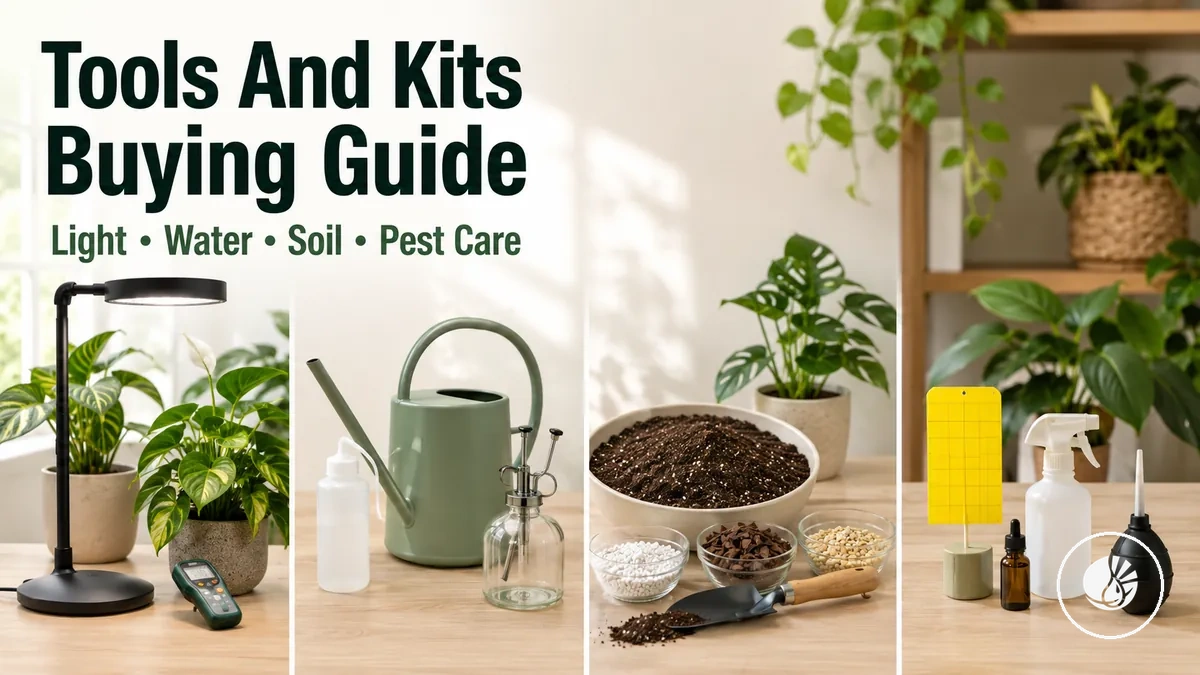
Indoor Tropical Plant Care Tools and Kits Buying Guide
Indoor tropical plant care tools and kits are useful when the plant care kit matches the care need, room condition and indoor setup. A good selection supports watering, moisture checks, humidity control, grow light use, potting work and pest prevention without replacing regular plant observation.
Indoor tropical plant care tools are support items used to observe, adjust and maintain plant conditions indoors. A plant care kit may include a basic tool set, a monitoring bundle or a task-focused care bundle, depending on what the user needs to manage. In this context, the main care dimensions are light, water, humidity, soil, clean handling and early pest prevention.
A starter kit may suit simple routine care, while a monitoring kit may help when moisture, humidity or room condition is hard to judge. A task-specific kit can be useful when the main issue is potting, pruning, leaf care or pest prevention. The selection should start with the care need first, then the tool category and indoor constraint.
The strongest choice is usually the kit that reduces one clear care risk without adding unused supplies. Before comparing products or checking price, preview the kit by care function, condition and expected decision value.
- Watering and moisture: choose tools that help check soil condition and support routine watering decisions.
- Humidity and room condition: consider humidity tools when dry indoor air or inconsistent room conditions affect care judgment.
- Grow light support: use light-related tools when natural light is uncertain or the indoor setup needs more consistent exposure.
- Potting and clean handling: match potting, pruning and leaf care tools to cleanup space, plant size and handling comfort.
- Pest prevention: treat pest-related supplies as conditional support for inspection and prevention, not as a diagnosis or cure.
Essential Indoor Tropical Plant Care Tools
Essential indoor tropical plant care tools are support items used for observing, adjusting and maintaining plant conditions. These essential tools help users make care decisions related to watering, moisture, humidity, pruning, potting and routine maintenance. Core supplies support ongoing care, while optional supplies may depend on plant type, indoor conditions or personal preferences.
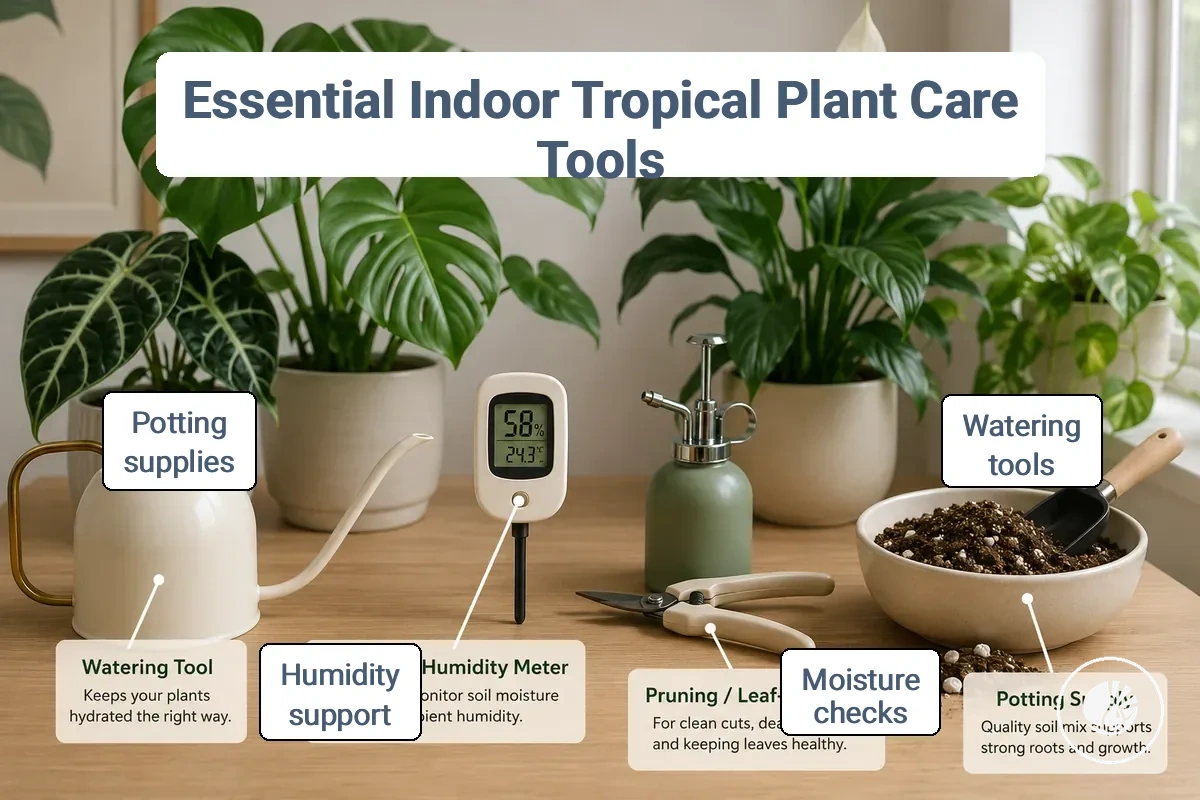
Essential Indoor Tropical Plant Care Tools are organized around the care functions needed to support healthy indoor tropical plants. Within broader indoor tropical plant care solutions, tool families help users observe conditions, manage routine maintenance and make informed care decisions. Watering tools, a moisture meter, humidity tools, pruning tools, potting supplies, feeding supplies and pest-prevention supplies each serve a distinct care function. The table below organizes these tool families by care function, useful condition and decision value.
| Tool family | Main care function | Useful condition | Decision value |
|---|---|---|---|
| Watering tools | Apply water | Routine plant care | Support watering timing and consistency |
| Moisture meter | Check soil condition | Uncertain moisture levels | Guide watering decisions |
| Humidity tools | Monitor humidity | Dry indoor air | Assess humidity-related care needs |
| Pruning tools | Leaf care and maintenance | Damaged or aging growth | Support clean maintenance decisions |
| Potting supplies | Repotting and handling | Soil changes or root development | Support drainage and plant management |
| Feeding supplies | Nutrient application | Periods of active growth | Support feeding decisions |
| Pest-prevention supplies | Inspection and prevention | Potential pest pressure | Support early response decisions |
When dry indoor air becomes a limiting condition, humidity tools may provide more useful information than increasing watering alone. A moisture meter can also help clarify soil condition when visual checks are uncertain. These examples show how a tool family becomes essential because of its care function rather than because of product ranking.
Watering, moisture and humidity tools
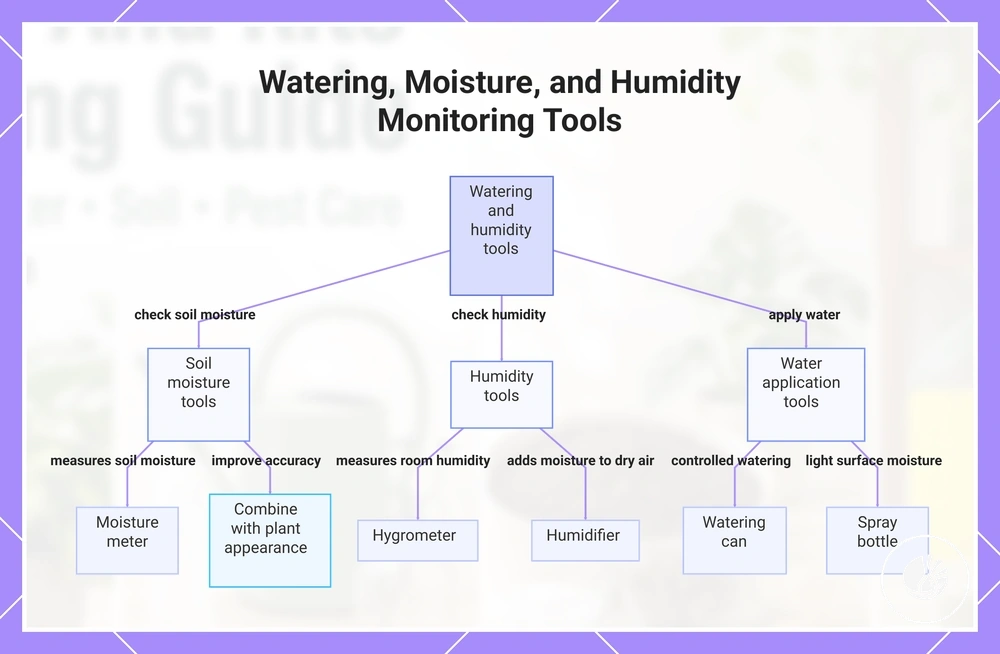
Watering, moisture and humidity tools help check soil moisture and humidity before care changes are made. These tools support a routine check by adding context to watering and indoor-condition decisions. Their readings may be more useful when combined with plant appearance, soil feel and room conditions.
Overwatering and dry indoor air can be difficult to assess through observation alone. A moisture meter or hygrometer may help reduce decision risk when soil moisture or humidity conditions are unclear. Watering, moisture and humidity tools support monitoring and care adjustment, but they do not replace broader observation. For broader humidity topics beyond monitoring devices, see humidity control tools. The following tool groups support different routine checks and care decisions.
- Watering can: A watering tool that supports controlled watering, often through a narrow spout, when accurate water placement may help guide watering decisions.
- Moisture meter: Measures soil moisture to support a watering decision when soil condition is difficult to judge visually.
- Hygrometer: Measures humidity and room condition to help determine whether dry air may influence plant care adjustments.
- Spray bottle: Supports light moisture application when a routine check suggests that temporary surface moisture management may be useful.
- Humidifier: Adds moisture to dry air and may support tropical plant care when indoor humidity conditions remain consistently low.
This chart shows the main tool categories for checking soil moisture and humidity, along with specific tools and a key practice for enhancing readings.
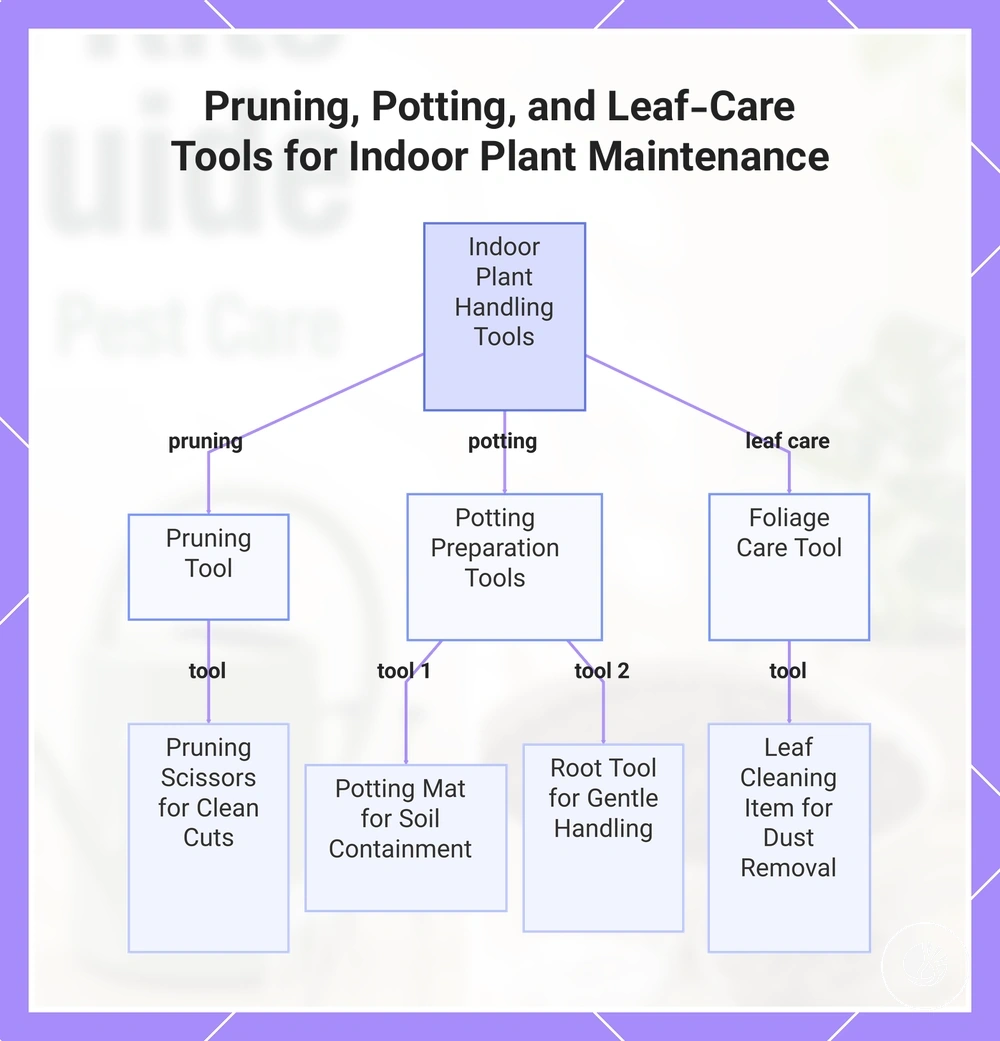
Pruning, potting and leaf-care tools
Pruning, potting and leaf-care tools support clean handling, repotting preparation and routine plant maintenance tasks. These tools help manage trimming, soil handling and foliage care with more control in indoor environments. They are handling tools rather than potting materials or other care products.
When working in a small indoor space or around delicate foliage, tool choice may influence cleanup and handling efficiency. A potting mat can help contain soil during repotting preparation, while leaf cleaning tools may support foliage care when dust accumulates on leaves. Pruning, potting and leaf-care tools focus on handling and maintenance rather than a full repotting method.
Pruning, potting and leaf-care tools separate reusable handling equipment from consumable care products. For examples of materials associated with container setup, see potting and drainage supplies. The checklist below highlights handling attributes and the indoor conditions where each tool may be useful.
- Pruning scissors: Blade quality supports a clean cut when trimming damaged or aging growth during maintenance.
- Gloves: Support clean handling when soil contact or minor irritation risk is a concern.
- Potting mat: Helps contain soil cleanup when repotting preparation takes place in a limited indoor space.
- Scoop: Supports controlled movement of potting material when working with smaller containers or confined areas.
- Root tool: Assists gentle handling during repotting preparation when root systems require closer examination.
- Leaf cleaning item: Supports leaf cleaning and foliage care when dust accumulation affects leaf surfaces.
This chart shows the main categories of handling tools and key examples for pruning, repotting preparation, and foliage care tasks.
Feeding, pest-prevention and support supplies
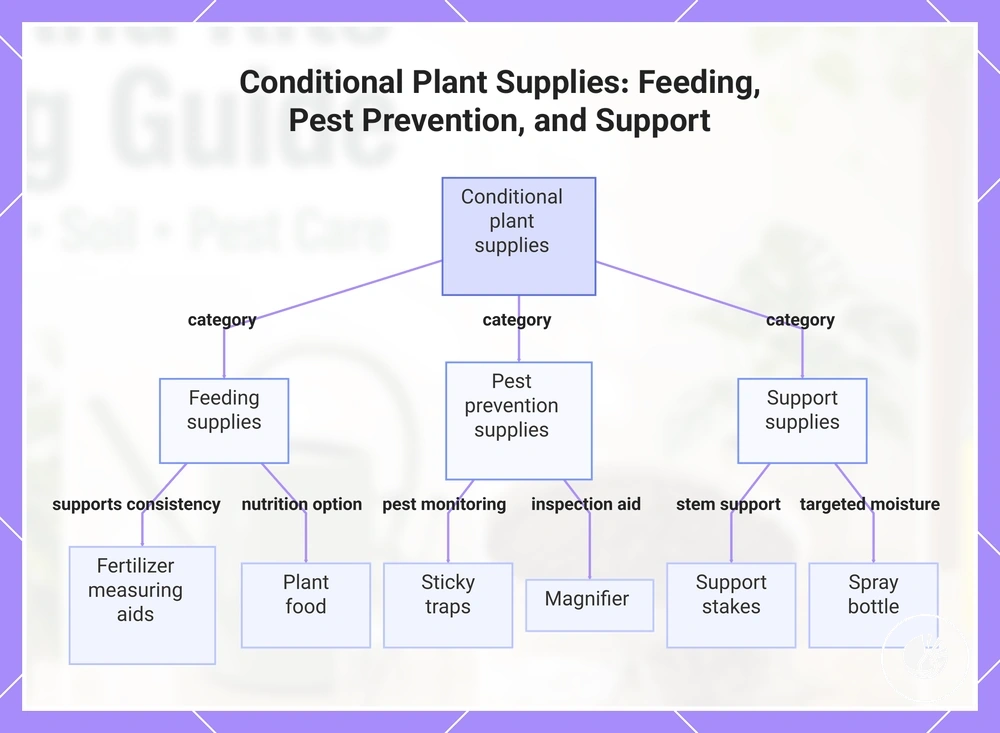
Feeding, pest-prevention and support supplies are conditional supplies that may be useful when a specific plant condition, maintenance goal or observation creates a need. These items are task-specific additions rather than default essentials for every plant. They are commonly associated with feeding, pest prevention and plant support.
Routine observation tools help identify conditions, while problem-triggered supplies may support a response when closer monitoring or additional care becomes necessary. Feeding supplies can be considered when nutrient management becomes relevant, and inspection tools may help when unusual plant conditions need further evaluation. For broader information about feeding supplies, see fertilizer options. The grouped examples below show how different supplies relate to purpose, condition and decision risk.
These supplies may add value when a specific issue or maintenance objective is identified, but they are not needed in every indoor setup. For deeper guidance focused on pest-specific products and decisions, see pest-control supplies.
- Feeding supplies: Fertilizer measuring aids support feeding routine consistency when nutrient application needs closer control. Plant food may be considered when plant condition suggests additional nutritional support, but selection depends on plant needs and growing conditions.
- Pest prevention: Sticky traps support pest monitoring by providing an early signal when flying pests may be present. A magnifier can assist pest inspection on leaf surfaces when visual observation alone is unclear.
- Support supplies: Support stakes provide plant support when weak stems or leaning growth become noticeable. A spray bottle may assist controlled application and indoor handling tasks when targeted moisture placement is preferred.
This chart shows the three categories of conditional plant supplies and their specific items, along with the conditions under which they are useful.
Essential vs Nice-to-Have Plant Care Supplies
Essential vs Nice-to-Have Plant Care Supplies depends on the plant environment, plant count, room conditions and the care problems most likely to occur. Essential supplies are usually the tools that support frequent use and risk reduction, while nice-to-have supplies are often conditional tools used for specific situations. The distinction is best evaluated through frequency of use, condition sensitivity, reliability, storage burden and replacement difficulty.
When plant count increases or room conditions become less predictable, supply priorities may change. A larger collection can increase the value of priority tools that are used repeatedly, while humidity-related concerns or recurring care problems may increase the need for monitoring tools. Storage burden also affects tool choice because infrequently used add-on supplies may provide limited value between uses. Essential vs Nice-to-Have Plant Care Supplies can be separated using the criteria below.
| Supply type | Essential when | Nice-to-have when | Decision signal |
|---|---|---|---|
| Monitoring and checking tools | Frequent observation supports routine care decisions | Conditions remain easy to assess | Higher frequency of use supports risk reduction |
| Basic handling tools | Maintenance tasks occur regularly | Plant handling needs are occasional | Reliability and replacement difficulty influence value |
| Condition-specific support supplies | Room conditions create recurring monitoring needs | Conditions remain stable most of the time | Condition sensitivity increases decision value |
| Problem-triggered supplies | Care problems appear often enough to justify keeping them available | Care problems are uncommon | Problem likelihood affects priority |
| Specialized add-on supplies | Used repeatedly across multiple plants | Used only for occasional situations | Storage burden may outweigh value when use is rare |
Essential supplies are usually the tools that deliver ongoing value through regular use, while nice-to-have supplies are often optional extras selected for a specific condition or need. Avoiding overbuying often means prioritizing reliability, frequent use and practical risk reduction before adding lower-priority tools. A supply may deserve higher priority when it addresses a recurring condition or would be difficult to replace when needed.
How to Match Kits to Indoor Tropical Plant Care Needs
Kit choice for indoor tropical plants should follow the strongest care need before the kit type is compared. A plant care kit is usually more useful when its included tools align with routine care, monitoring requirements or a specific maintenance task. Selecting a larger care bundle without a clear fit condition may add tools that provide limited value.
When routine care is the main concern, a starter kit with basic tools may cover common day-to-day needs. A monitoring kit may be more appropriate when moisture, light or humidity conditions are difficult to judge consistently. A task-specific kit may fit situations focused on repotting, watering adjustments or pest prevention rather than general care. How to Match Kits to Indoor Tropical Plant Care Needs becomes easier when the care need is identified before the tool set is compared.
How to Match Kits to Indoor Tropical Plant Care Needs can be viewed as a comparison between routine care, monitoring and task-specific support. The image below highlights how different kit types align with different indoor tropical plant care situations.
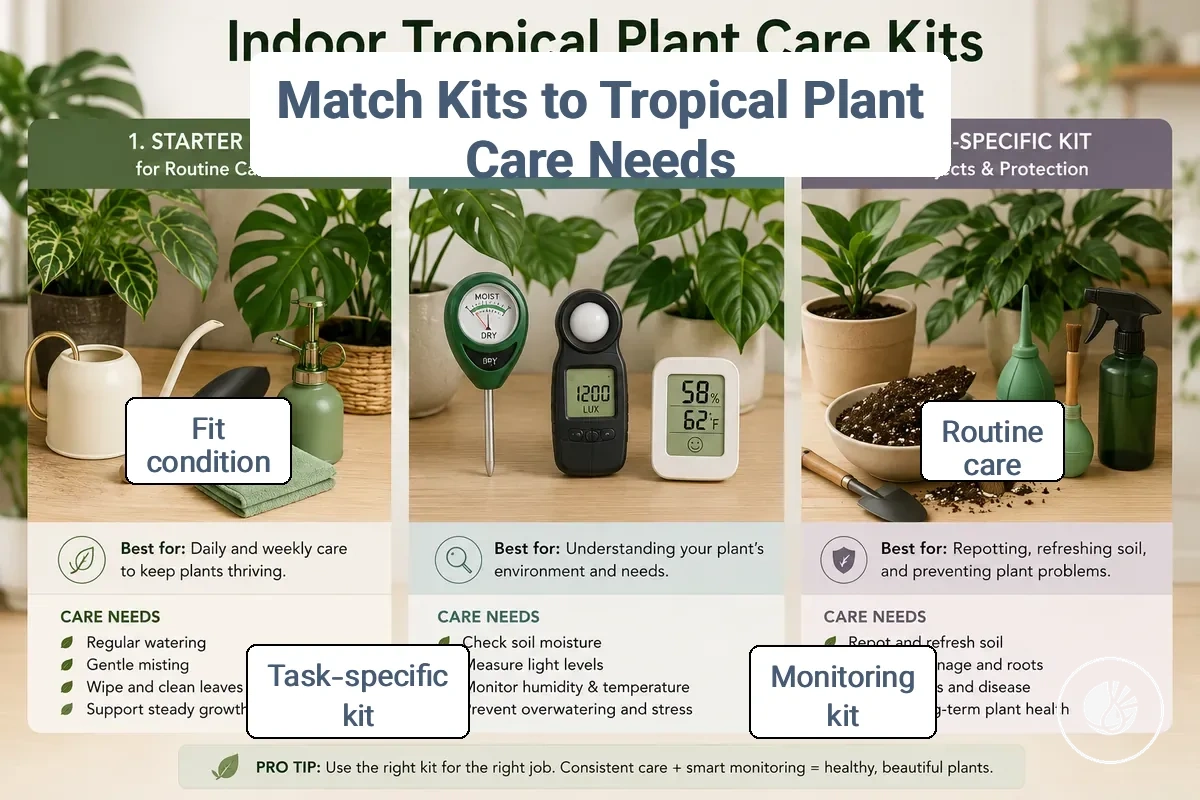
Included tools should support the fit condition that created the need for the kit in the first place. For example, the same moisture-related tool may support routine checks in one setup and become part of a monitoring kit in another setup where room conditions are less predictable. Use the checklist below to support a buying decision.
- Care need: Routine care → Kit type: Starter kit → Missing tool risk: Frequent tasks may require separate purchases later → Decision signal: Basic tools support recurring maintenance.
- Care need: Monitoring conditions → Kit type: Monitoring kit → Missing tool risk: Moisture, light or humidity conditions may be harder to evaluate → Decision signal: Observation drives the buying decision.
- Care need: Repotting support → Kit type: Task-specific kit → Missing tool risk: Handling and preparation tools may be unavailable when needed → Decision signal: The task occurs often enough to justify dedicated tools.
- Care need: Watering adjustments → Kit type: Task-specific kit → Missing tool risk: Watering decisions may rely on limited information → Decision signal: Included tools address a specific care challenge.
- Care need: Pest prevention monitoring → Kit type: Task-specific kit → Missing tool risk: Early inspection tools may be absent → Decision signal: Monitoring needs are linked to a recurring concern.
- Care need: Mixed indoor tropical plants → Kit type: Care bundle → Missing tool risk: The tool set may not cover the most common condition → Decision signal: Compare included tools against the dominant care need first.
Starter kits for routine plant care
A starter kit is often enough for routine plant care when indoor tropical plants mainly need watering, light awareness, leaf cleaning and simple handling. A basic tool set may suit a beginner user or a small collection when care needs remain predictable. Routine plant care usually stays within these recurring maintenance activities.
When plant count is limited and care frequency remains manageable, a starter kit can provide sufficient support without adding unnecessary tools. As care routines become more demanding or observation needs increase, an upgrade trigger may appear through additional monitoring requirements or recurring care challenges. Starter kits for routine plant care can be evaluated with the checklist below.
- Plant count: A small collection remains easy to manage with a basic tool set.
- Care frequency: Routine watering and simple maintenance occur on a predictable schedule.
- Light awareness: Plant placement and light conditions can be assessed without dedicated monitoring tools.
- Leaf cleaning: Foliage care remains a regular maintenance task rather than a specialized need.
- Upgrade trigger: Additional monitoring needs, an expanding collection or recurring care challenges may indicate that a broader kit type could be useful.
Monitoring kits for moisture, light and humidity checks
A monitoring kit can help verify moisture, light and humidity conditions before a care adjustment is made. These plant monitoring tools support measurement of soil moisture, light exposure and room condition so that routine changes are based on observed conditions rather than assumptions. Meter readings can guide decisions, but they should be considered alongside plant symptoms and room context.
Uncertainty about watering, light exposure or humidity can make routine care harder to adjust confidently. A moisture meter may support a watering decision when soil moisture is difficult to assess, while a light meter can help evaluate exposure when plant placement or grow-light use is unclear. For broader guidance on light-related decisions, see light care tools. A hygrometer may help assess room condition, and a timer can support consistency within a care routine. Monitoring kits for moisture, light and humidity checks are organized below by what each tool measures or controls and the decision it supports.
| Tool | Measures or controls | Decision supported | Main limitation |
|---|---|---|---|
| Moisture meter | Soil moisture | Watering decision | Measurement may not reflect all growing conditions |
| Light meter | Light exposure | Exposure-related care adjustment | Readings should be considered with plant response |
| Hygrometer | Humidity | Room condition assessment | Humidity can vary within the same space |
| Timer | Routine consistency | Schedule management | Does not verify plant condition directly |
Task-specific kits for repotting, watering and pest prevention
A task-specific kit is usually justified when a clear task or problem creates a specific supply need that routine tools may not cover efficiently. These focused kits are selected by trigger condition rather than general plant care. The most common categories are the repotting kit, watering kit and pest-control kit.
When a one-off task or recurring condition requires dedicated supplies, a task-specific kit may provide more value than relying only on reusable tools. Reusable tools often support ongoing maintenance, while a task kit may be useful when a specific care need appears repeatedly or requires coordinated supplies. The grouped points below compare included tools, trigger condition and risk reduced for each kit type.
- Repotting kit
- Included tools: May include a potting mat and handling tools used during repotting preparation and cleanup.
- Trigger condition: Container, root or soil-related needs create a repotting requirement.
- Risk reduced: Can help reduce handling difficulties and workspace mess during the task.
- Watering kit
- Included tools: May include a watering can and moisture check tools used to support watering decisions.
- Trigger condition: Watering uncertainty becomes a recurring care concern.
- Risk reduced: Can help reduce inconsistent watering decisions when condition checks are needed.
- Pest-control kit
- Included tools: May include sticky traps and inspection tools used for observation and monitoring.
- Trigger condition: Signs of pest activity or repeated inspection needs create a monitoring requirement.
- Risk reduced: Can support earlier detection and observation, but does not guarantee prevention.
Indoor Fit, Safety and Setup Constraints
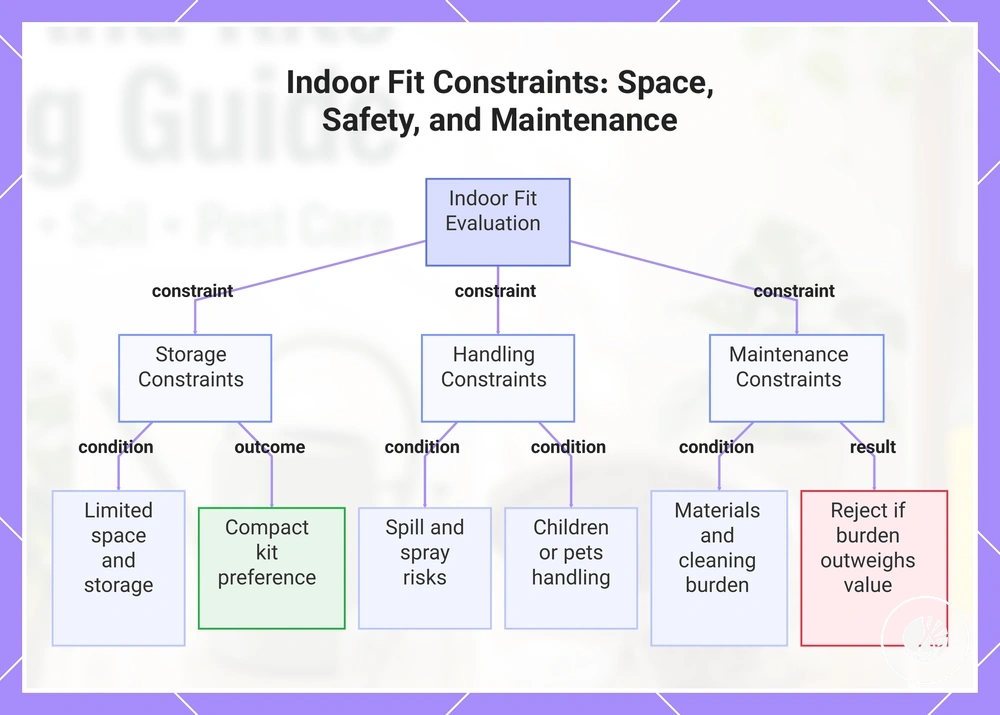
Indoor fit depends on storage, spill risk, tool size, materials and use frequency. A tool or kit may suit one indoor setup but be less practical in another when space, handling requirements or maintenance needs differ. Indoor fit should be evaluated against safety limits and setup constraints before a selection is made.
When space is limited, storage and handling constraints may influence kit selection more than the number of included tools. A shelf-based setup, a small apartment, the presence of children or pets, or frequent watering activity can change which tools are practical to keep and use. Spill risk, electrical use and cleaning burden may also affect long-term usability. Indoor Fit, Safety and Setup Constraints can be checked through the practical compatibility points below.
- Room size: Limited space → larger tool size creates placement constraints → a more compact kit may offer better compatibility.
- Storage: Restricted storage area → bulky supplies become harder to keep accessible → smaller reusable tools may fit more easily.
- Water handling: Frequent watering activity → higher spill risk and cleanup needs → controlled-use tools may be easier to manage indoors.
- Electrical use: Timers, meters or related devices require power access → placement constraints may affect practical fit.
- Spray safety: Indoor spray use requires attention to surrounding surfaces and ventilation → suitability depends on the indoor setup.
- Children or pets: Household access creates additional handling constraints → storage choices may influence tool selection.
- Materials and cleaning burden: Tool materials affect maintenance requirements → cleaning burden may influence long-term use decisions.
A poorly fitting kit can often be rejected when storage limits, spill risk, tool size or cleaning burden outweigh the value of the included supplies. Practical fit should be based on how the tools will be stored, handled and used indoors. Sprays, lights and meters may require separate care-specific judgment because safety limits depend on household context and tool use.
This chart shows the main constraint categories to check when evaluating indoor fit for a tool or kit, including space, safety, and maintenance factors.
Tool size, storage and apartment-friendly handling
Tool size, storage and apartment-friendly handling depend on how easily compact tools fit into small indoor plant work areas. Tool size can affect usability when storage space, work-surface access or handling room is limited. Storage fit often becomes an important selection factor in apartment-friendly plant care.
When plants are placed on shelves, windowsills or tight work surfaces, physical dimensions can influence access and handling comfort. Handle length and reach may affect how easily shelf plants can be maintained, while oversized tools may be harder to use in confined areas. Tool size, storage and apartment-friendly handling can be evaluated through the practical constraints below.
- Handle length: Greater reach for shelf plants → easier access in difficult positions → usability may improve when plants are farther from the work area.
- Spout size: More controlled watering application → better handling on tight surfaces → watering control may be easier in confined indoor spaces.
- Foldable mat: Flexible potting surface → simpler storage after use → storage fit may improve where space is limited.
- Cleanup surface: Limited work area → greater cleanup constraints → a dedicated cleanup surface may make potting tasks easier to manage.
- Storage container: Compact kit organization → reduced storage demands → indoor usability may improve when available space is restricted.
- Tool size: Larger dimensions require more storage and handling room → compatibility depends on available indoor space and use frequency.
Indoor-safe sprays, meters and watering systems
Indoor-safe use depends on tool type, user handling and room context rather than on plant-care effectiveness alone. Sprays, meters and watering systems should be evaluated for indoor use conditions before they are placed near tropical plants and living areas. A safe decision depends on the product, household context and intended use.
Spray contents, electrical rating and water leakage can create different handling considerations even when a tool supports routine plant care. Sprays may require attention to label information and indoor handling, while meters and watering systems may benefit from basic checks for sensor placement, moisture exposure and repeated use conditions. Indoor-safe sprays, meters and watering systems can be screened with the checklist below.
- Spray contents: Unclear contents → indoor handling uncertainty → review available product information → make a safe decision based on the intended environment.
- Electrical rating: Power-dependent devices → moisture-related exposure concerns → check suitability for the intended indoor use condition → make a safe decision before placement.
- Water leakage: Watering systems with connection points → potential moisture on nearby surfaces → inspect for leakage before regular use → make a safe decision based on the setup.
- Sensor placement: Poor sensor placement → less useful readings → position sensors according to their intended monitoring purpose → make a safe decision before relying on measurements.
- Refill hygiene: Repeated use without cleaning → possible residue buildup → maintain refill hygiene through routine cleaning → make a safe decision for continued use.
- User handling: Incorrect setup or operation → avoidable handling issues → follow product instructions and risk checks → make a safe decision based on household context.
Bundled Plant Care Kits vs Separate Tools
A bundled plant care kit may suit broad starter needs, while separate tools may suit targeted gaps or replacement needs. The more practical route depends on completeness, redundancy, missing essentials, upgrade flexibility and long-term fit. The comparison changes when plant care needs, existing tools or replacement goals differ.
A beginner may prefer a bundled plant care kit when included items cover common starter needs without requiring separate selection decisions. A plant collector may prefer separate tools when upgrade flexibility, replacement control or tool-specific preferences matter more than bundle convenience. A user replacing one weak tool may find a separate tool set easier to match to the existing setup. The comparison below organizes these differences through completeness, redundancy and long-term fit.
Bundled Plant Care Kits vs Separate Tools compares grouped purchases with individually selected tools. The image highlights how duplicate items, missing essentials and upgrade flexibility can influence the buying route before reviewing the comparison table.
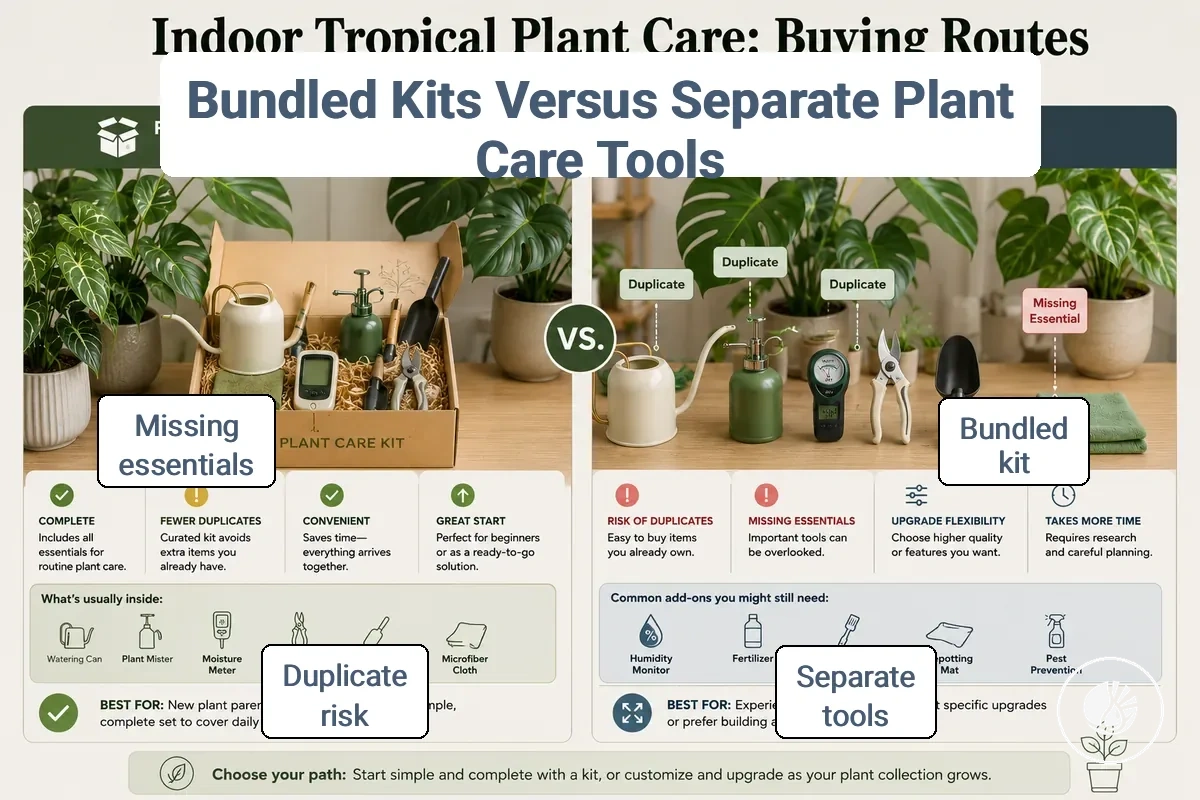
| Buying route | Strength | Risk | Best use case |
|---|---|---|---|
| Bundled plant care kit | Completeness across common starter tasks | Duplicate risk or missing essentials when included items do not match the care need | Beginner starter needs |
| Separate tools | Targeted selection and upgrade flexibility | May require more planning to avoid gaps in the tool set | Replacing a specific tool or addressing a targeted gap |
| Mixed approach | Basic completeness with selective upgrades | Redundancy may increase if added tools duplicate existing items | Plant collectors seeking long-term fit |
The table shows a clear trade-off between convenience, completeness and upgrade flexibility. A bundled plant care kit may reduce selection effort, while separate tools may provide more control when replacing or improving specific items. For a broader comparison across care situations, compare solutions by care need.
The practical selection cue is to choose the route that addresses the most important tool gap while limiting unnecessary redundancy. Long-term fit often depends on existing supplies, future upgrade plans and the likelihood of missing essentials.
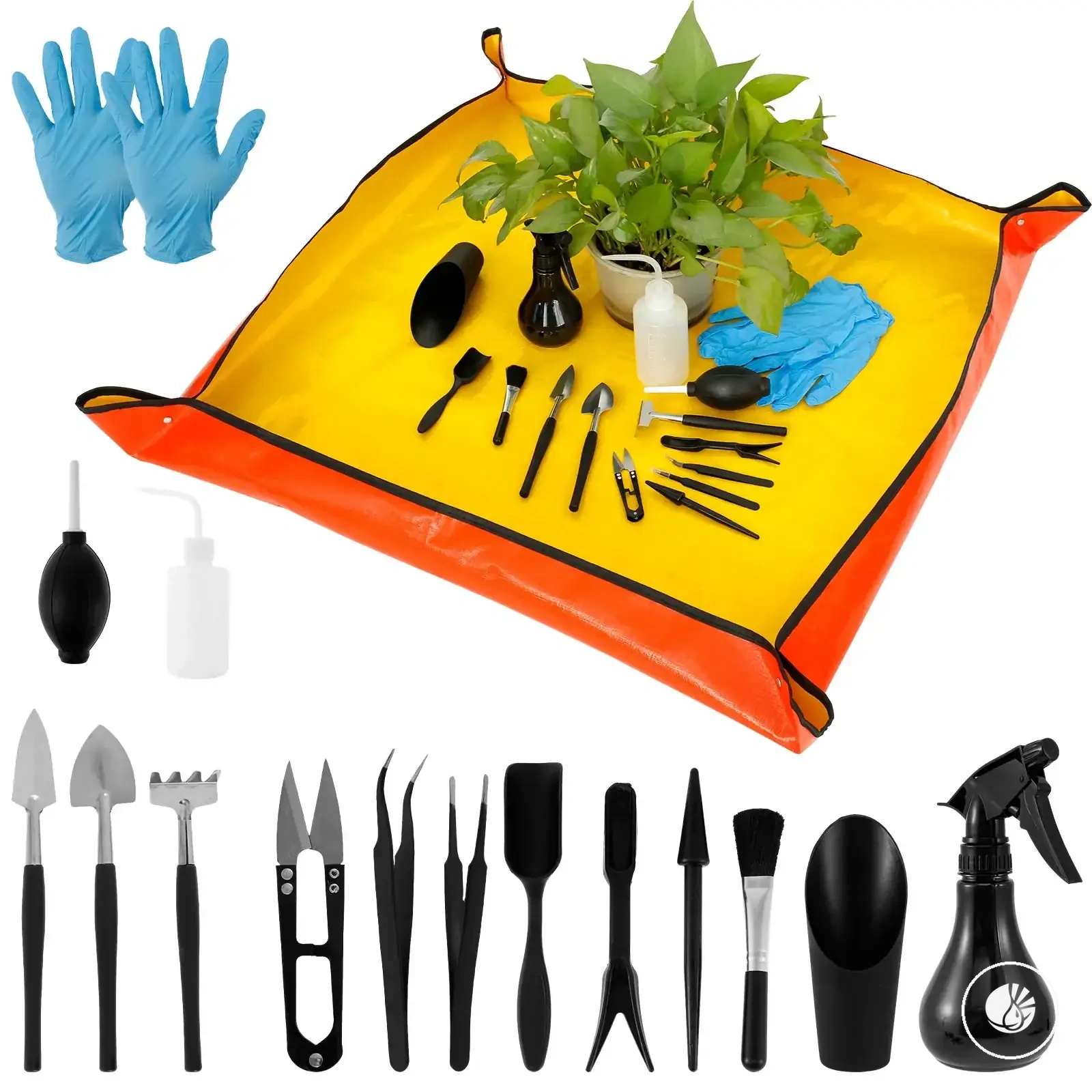
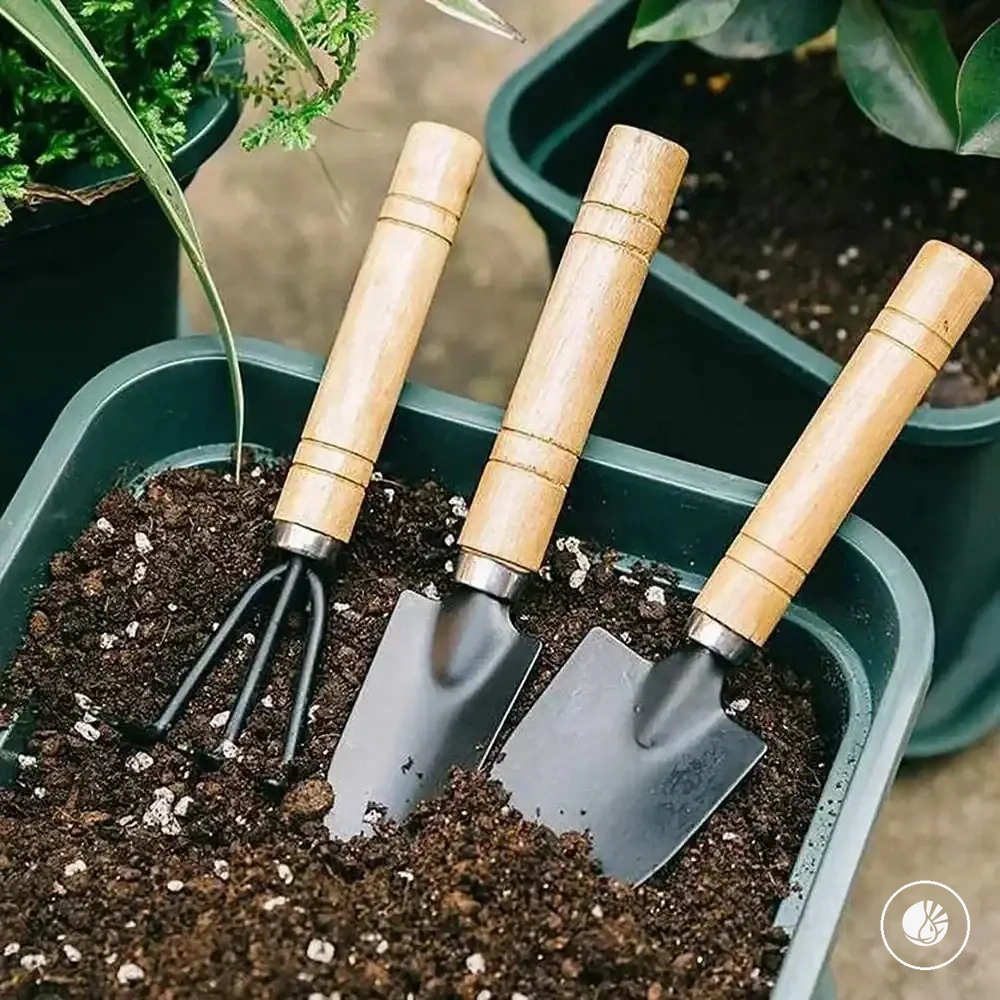
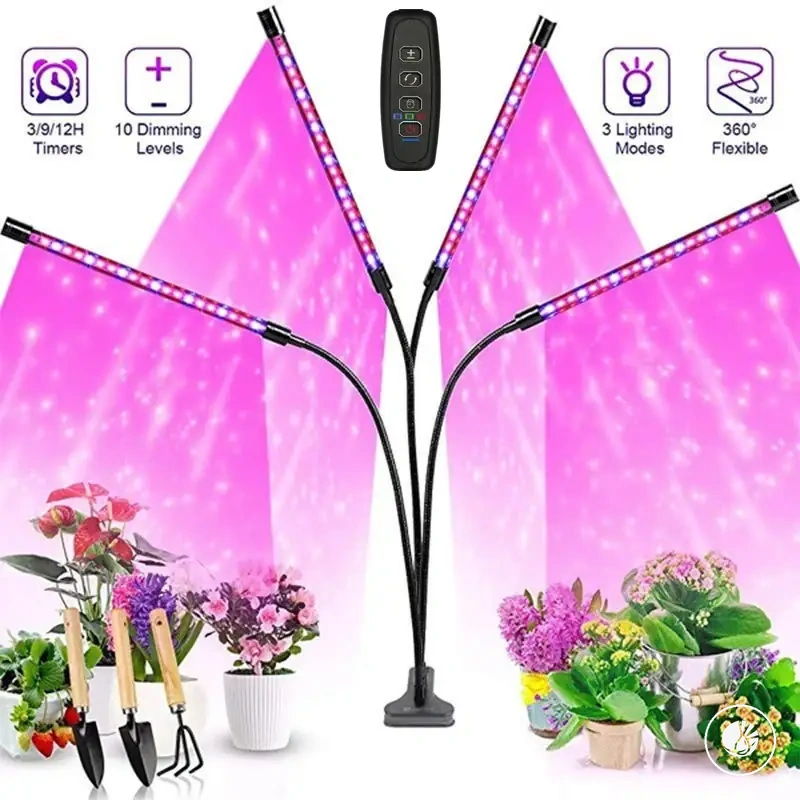
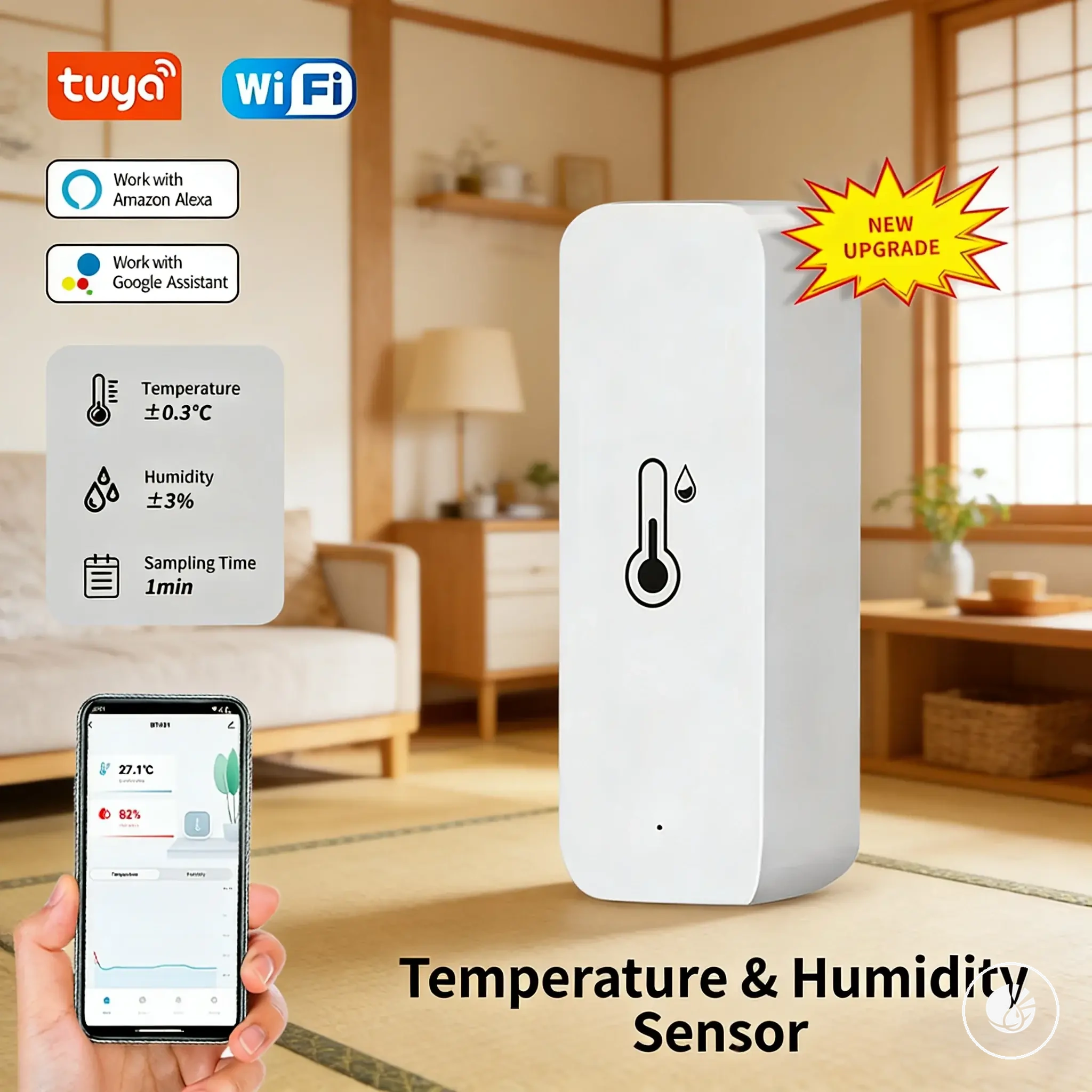
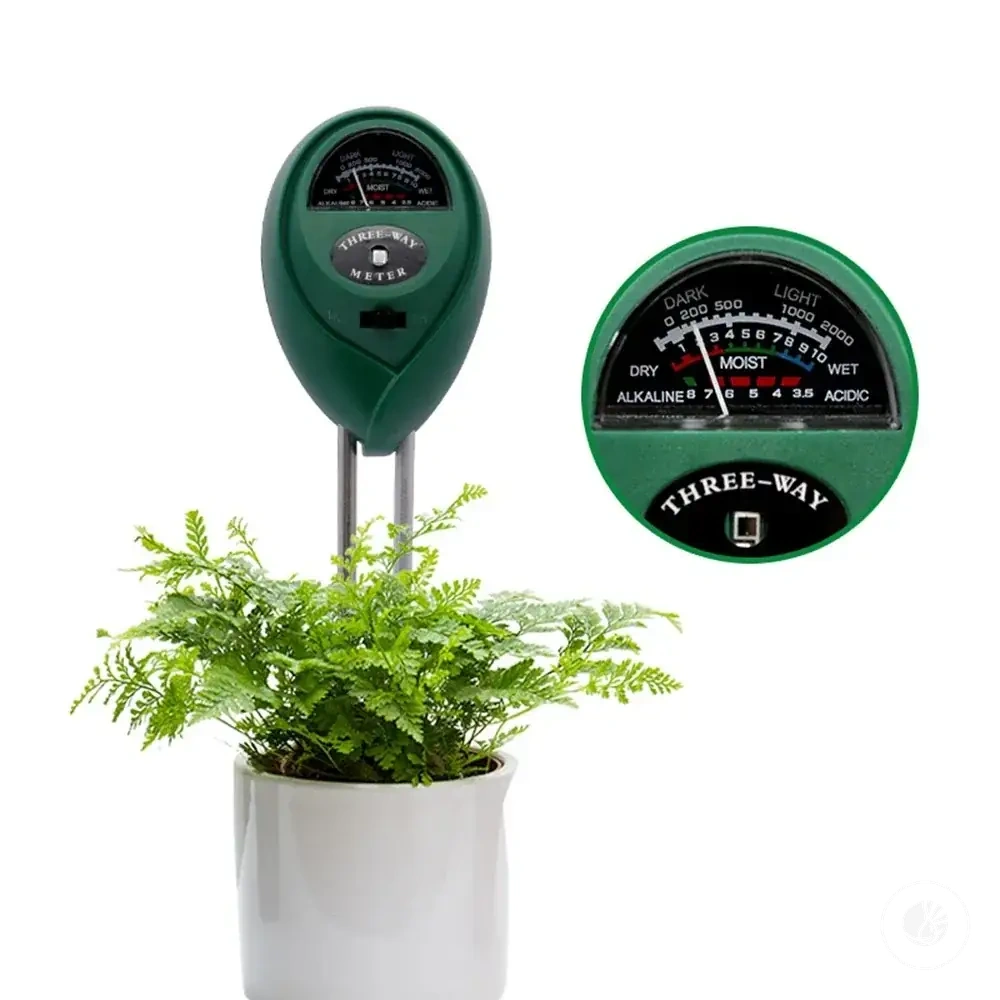
The products below are useful examples for comparing available options. Before buying, check that the compatibility criteria, key features, and product details match your needs.
Quality Checks Before Buying Plant Care Tools
Quality Checks Before Buying Plant Care Tools depend on accuracy, durability, clean handling, safe materials and replacement practicality. These quality criteria help evaluate whether a tool is likely to support routine indoor tropical plant care while reducing decision risk. The importance of each criterion may vary with plant count, use frequency and care conditions.
Common weak points can include inconsistent meter accuracy, reduced blade sharpness, low material quality or limited refill compatibility. A meter reading that appears inconsistent may make care decisions harder, while reduced blade sharpness may affect clean handling during pruning tasks. Material quality can influence durability during repeated use, and refill compatibility may affect future usability when replacement parts or consumables are needed. Quality Checks Before Buying Plant Care Tools can be organized through the table below.
| Quality check | Why it matters | What to avoid |
|---|---|---|
| Meter accuracy | Supports more reliable condition checks and reduces decision risk | Readings that appear inconsistent during routine use |
| Blade sharpness | Supports cleaner pruning and handling tasks | Dull cutting surfaces that may require excessive force |
| Plastic or metal quality | May influence durability during repeated indoor use | Materials that feel flimsy or unstable during handling |
| Water control | Supports more controlled watering application | Designs that make precise watering difficult |
| Refill compatibility | Improves replacement practicality and future usability | Tools that are difficult to maintain or replace |
| Cleaning ease | Supports clean handling and routine maintenance | Designs that are difficult to clean after use |
These buying checks are most useful when applied to the intended tool type rather than treated as a universal scorecard. Prioritizing the criteria most relevant to routine use can help avoid unnecessary upgrades while keeping attention on accuracy, durability, safe materials and replacement practicality. The most suitable balance depends on how often the tool will be used and the conditions in which it will be handled.
Accuracy, durability and material quality
Accuracy, durability and material quality depend on how reliably a tool performs its intended function during routine plant care. Reliability is tied to the tool function itself, whether the tool is used for measurement, pruning or watering. These attributes can be evaluated through checkable signs that relate directly to tool performance.
Poor accuracy or weak material quality can reduce confidence in care decisions and routine handling. Meter calibration affects reading confidence, while weak construction, poor blade alignment or low material quality may affect control during use. Accuracy, durability and material quality can be assessed through the signs below.
- Meter calibration: Supports accuracy and reading confidence when measurements guide care decisions.
- Blade alignment: Supports a cleaner cut during pruning and may improve handling control.
- Rust resistance: Reflects metal quality and may support reliability when tools face moisture exposure.
- Handle grip: Supports control and safe handling during repeated plant care tasks.
- Seal quality: May reduce leakage risk and support more consistent use of a watering tool.
- Material safety: Supports reliability by focusing attention on the suitability of tool materials for indoor use.
Refills, replacements and long-term usability
Refills, replacements and long-term usability depend on whether a tool set supports ongoing use through replaceable parts and routine maintenance. A tool set may provide more practical value when consumables, spare parts and cleaning needs can be managed over time. Purchase price and long-term usability are separate considerations when evaluating use value.
Missing refills or hard-to-clean components can reduce usefulness even when a tool set meets current care needs. Replacement blades, batteries, sticky traps, fertilizer refills and spray parts may become more important when use frequency increases, while cleaning needs can affect how practical ongoing use remains. Refills, replacements and long-term usability can be reviewed through the considerations below.
- Replacement blades: Pruning tool component → maintenance and replacement consideration → may support future use when cutting performance changes.
- Batteries: Meter component → replacement requirement → may affect ongoing checks and monitoring usability.
- Sticky traps: Pest monitoring consumable → refill consideration → may influence continued monitoring use over time.
- Fertilizer refills: Consumable component → refill requirement → may affect long-term usability when repeated applications are part of the routine.
- Spray parts: Spray system component → spare parts and cleaning needs → may support continued hygiene and routine operation.
- Cleaning needs: Maintenance attribute → ongoing upkeep requirement → may influence long-term usability through ease of continued use.
The products below are useful examples for comparing available options. Before buying, check that the compatibility criteria, key features, and product details match your needs.
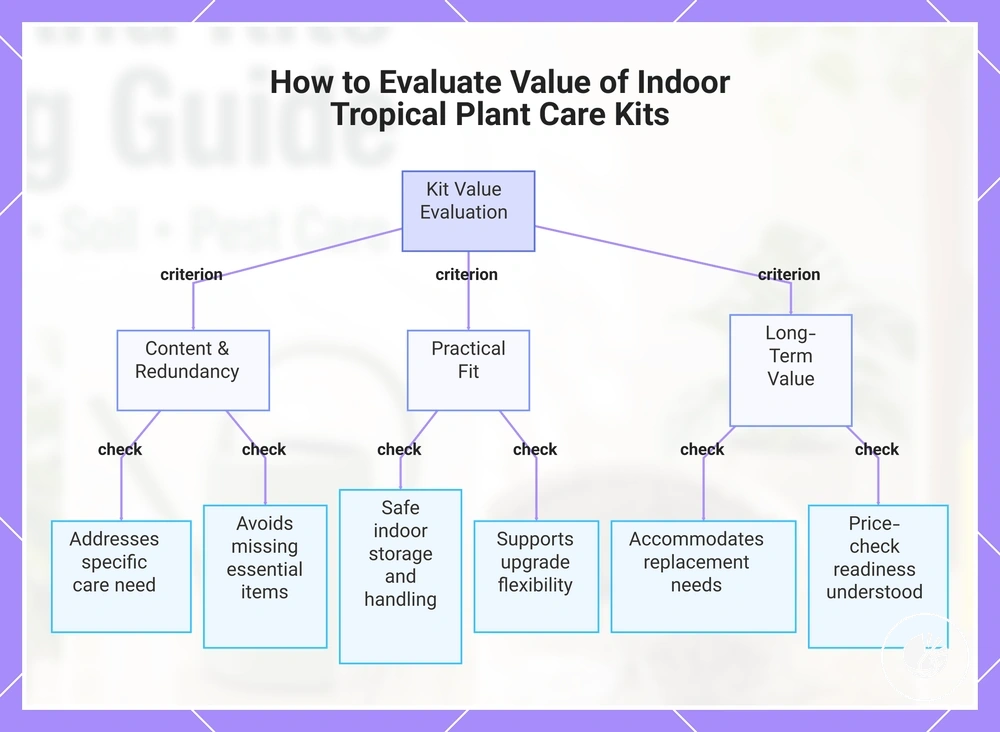
Value Checks for Indoor Tropical Plant Care Kits
Value Checks for Indoor Tropical Plant Care Kits depend on whether the kit provides usable essentials, limits duplicate tools, supports safe indoor fit and offers upgrade flexibility. An indoor tropical plant care kit may provide stronger practical value when its contents match the intended care need rather than simply increasing the number of included items. Kit value should be judged by usefulness rather than item-count logic.
A starter user may prefer a kit that covers routine care needs with minimal gaps, while a user filling an existing tool gap may focus on a specific function or usability factor. The same indoor tropical plant care kit can have different decision value depending on current tools, care frequency and replacement needs. Missing items may increase decision risk when a care problem remains unresolved. The checklist below helps connect kit contents to likely use conditions.
Value Checks for Indoor Tropical Plant Care Kits weigh care need, tool quality, redundancy and long-term use together. A kit may appear complete but still create usability gaps if important functions are absent or if duplicate tools add little practical value. The final decision should include both redundancy and missing-item checks.
Price-check readiness depends on understanding the value of the kit beyond the initial purchase decision. Replacement needs, ongoing use and future usability may influence practical value more than the starting cost alone. After these factors are reviewed, partner redirection may support purchase continuation without determining the decision itself.
An indoor tropical plant care kit may offer stronger buying value when it matches the care problem, supports long-term use and limits unnecessary redundancy. Final decision value depends on usable essentials, safe indoor fit, upgrade flexibility and price-check readiness.
The products below are useful examples for comparing available options. Before buying, check that the compatibility criteria, key features, and product details match your needs.
- Kit contents: Relevant tools included → care need addressed → lower decision risk → stronger practical value.
- Care problem: Specific maintenance need identified → suitable support present → clearer decision → improved kit value.
- Missing items: Important function absent → unresolved care need → higher decision risk → reassess suitability.
- Duplicate tools: Repeated functions included → limited added usefulness → redundancy risk → review necessity.
- Replacement needs: Consumables or spare parts required → ongoing use consideration → long-term usability may depend on maintenance.
- Safe indoor fit: Storage and handling requirements matched → indoor use remains practical → fewer usability concerns.
- Upgrade flexibility: Future additions supported → changing care needs accommodated → decision value may improve over time.
- Price-check readiness: Use value understood → purchase continuation can be evaluated → decision remains criteria-based.
This chart shows the key criteria for evaluating the practical value of an indoor tropical plant care kit, focusing on content match, completeness, safe fit, and long-term usability.