
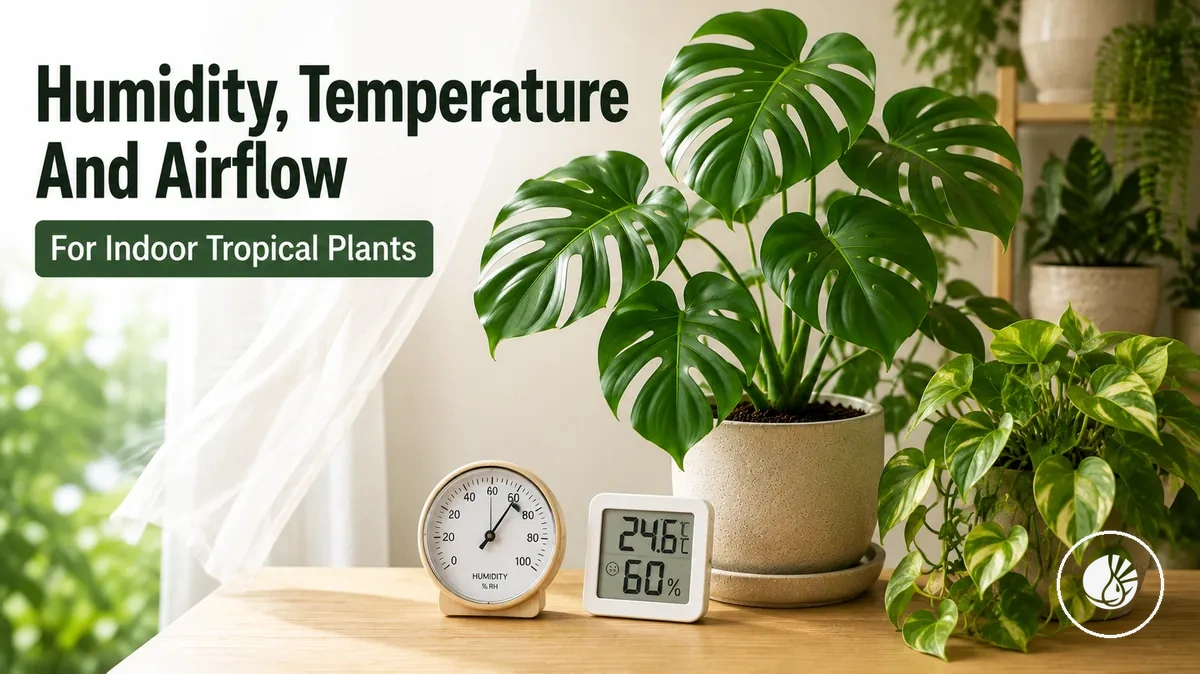
Indoor tropical plant environment compatibility: humidity, temperature, and airflow
Indoor tropical plants depend on the compatibility of their room conditions, particularly humidity, temperature, and airflow. These environmental factors work together to influence how tropical houseplants adapt to indoor spaces and respond to changing conditions. An environmental fit that supports moisture retention, stable warmth, and air movement can help reduce plant stress. Humidity, temperature, and airflow function as linked indoor conditions rather than separate influences.
In a typical home setting, indoor tropical plants may experience different conditions depending on placement, room layout, and daily changes in the room environment. Areas near vents, heat sources, or enclosed corners can create different combinations of dry air, stable warmth, or air movement. Gentle circulation may support a healthier growing environment, while stagnant air or drying airflow can affect plant comfort. Plant response depends on room context rather than one fixed rule.
Indoor tropical plant environment compatibility is the overall relationship between humidity, temperature, airflow, and surrounding room conditions. This article focuses on environmental compatibility rather than every aspect of indoor plant care, creating a clear foundation before moving into the environmental basics that shape long-term growing conditions.
Indoor tropical plant environment basics
Indoor tropical plant environment basics depend on humidity, warmth, air movement, and room stability working together within the same space. These conditions influence plant response and can contribute to stress reduction or growth support when they align with the surrounding room environment. The indoor tropical plant environment is a set of linked room conditions rather than a single factor.
Indoor tropical plant environment is the combination of humidity, temperature, airflow, light exposure, and placement that shapes a tropical houseplant setting. These attributes interact continuously, and changes in one condition can influence how the others are experienced by indoor tropical plants. Environmental fit helps organize the main care conditions that affect compatibility. This focus remains separate from broader plant care topics.
Indoor tropical plant environment basics become easier to understand when the room is viewed as a connected system of light exposure, placement, air movement, and moisture conditions. The broader context of indoor tropical plant care solutions includes other care topics, but this section focuses only on environmental fit. The image below labels the room conditions being introduced before the table organizes the main conditions.

These indoor tropical plant environment basics organize the primary room conditions that influence compatibility. The table provides a concise overview rather than a complete list of all possible environmental variables.
| Condition | What it affects | Compatibility cue |
|---|---|---|
| Humidity | Moisture retention and plant comfort | Supports a less dry room environment |
| Temperature | Warmth and overall plant activity | Favors room stability with limited swings |
| Airflow | Air exchange around foliage | Encourages gentle air movement |
| Light exposure | Plant energy use and leaf development | Works as a supporting environmental attribute |
| Placement | Interaction with nearby room conditions | Influences exposure to surrounding factors |
Humidity ranges for tropical houseplants
Humidity ranges for tropical houseplants depend on plant sensitivity and room comfort, rather than a single universal humidity percentage. These ranges influence leaf stress, comfort, and growth response, and need careful qualification to avoid misinterpretation.
Humidity ranges represent the moisture level in the room surrounding tropical houseplants. Low humidity can lead to leaf stress such as brown tips or dry edges in sensitive plants, while moderate humidity generally aligns with room comfort and stable leaf response. High humidity may benefit some plants, but condensation and mold risk increase depending on room conditions and ventilation.
For instance, a tropical plant with low sensitivity can tolerate moderate humidity without notable stress, whereas a high-sensitivity plant may show leaf response if humidity drops for extended periods. Understanding humidity ranges for tropical houseplants requires considering both plant sensitivity and room comfort. The image below clarifies humidity as a measured condition before the table organizes ranges by sensitivity.

| Entity/plant sensitivity | Humidity condition | Likely effect | Decision cue |
|---|---|---|---|
| Low-sensitivity tropical houseplants | Low humidity | Minimal leaf stress possible | Observe leaf response |
| Moderate-sensitivity tropical houseplants | Moderate humidity | Supports comfort and stable growth | Match room comfort |
| High-sensitivity tropical houseplants | High humidity | Reduces dry-air stress, watch mold | Check condensation risk |
Useful humidity ranges by plant sensitivity
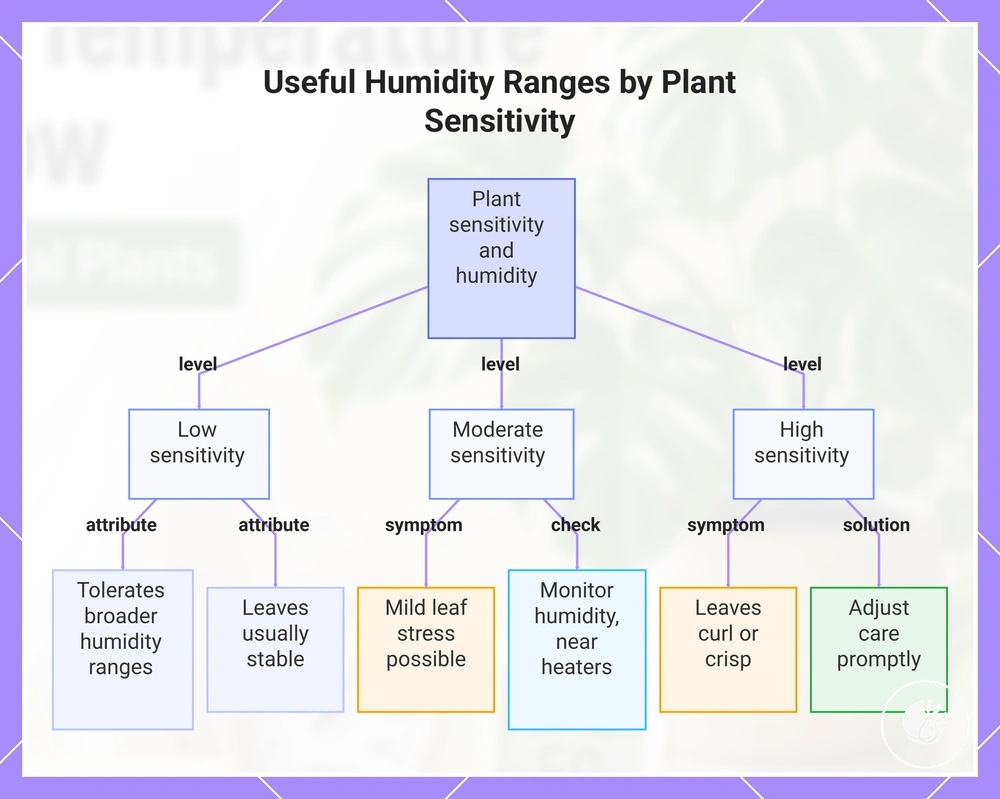
Plant sensitivity modifies useful humidity ranges for indoor tropical plants. Low, moderate, and high sensitivity affect leaf response and guide care adjustment according to room conditions.
In practice, sensitive foliage reacts faster to dry air, which may necessitate more attentive monitoring and adjustments. Less sensitive plants tolerate broader ranges, and moderate-sensitivity plants fall between these extremes. Recognizing sensitivity helps determine practical humidity targets without relying on exact percentages.
- Low sensitivity: leaves usually stable; minimal care adjustment needed
- Moderate sensitivity: mild leaf stress possible; monitor indoor humidity
- High sensitivity: leaves may curl or develop crispy edges; adjust care promptly
- Conditional example: moderate-sensitivity plant near a heater may require added humidity
This chart shows how low, moderate, and high plant sensitivity define humidity care requirements and typical leaf responses for indoor tropical plants.
Low humidity, high humidity, and room comfort limits
Room air humidity must balance plant needs with comfortable indoor living conditions. Low humidity can increase plant stress when air is too dry, whereas high humidity may create condensation or fungal risk. Higher humidity is not automatically better for either plants or room comfort.
Maintaining a workable range involves adjusting indoor humidity to support tropical houseplants while avoiding extremes that affect comfort or surfaces. Both low and high humidity levels can create trade-offs, so understanding these limits helps preserve plant health and indoor comfort. The contrast below separates dry-air stress from room-level excess moisture.
| Too low | Too high |
|---|---|
| Dry air can lead to leaf stress in sensitive plants and may make the room feel uncomfortably dry. | Excess moisture increases condensation and may raise fungal risk if humidity accumulates on surfaces or around plants. |
| Workable balance: monitor leaf response and room comfort together to maintain adequate moisture without causing dry stress. | Workable balance: keep indoor air comfortable and prevent condensation while still providing sufficient humidity for plant needs. |
Workable range: Adjust humidity conditionally to reduce plant stress while preserving comfortable room air and limiting excess moisture risks.
Temperature stability for indoor tropical plants
Temperature stability for indoor tropical plants depends on maintaining warm conditions with minimal fluctuation. Indoor tropical plants may respond more consistently when the temperature range remains steady, while repeated changes can contribute to plant stress or slower adaptation to room conditions. Temperature stability matters as much as warmth.
When room temperature changes quickly near vents, windows, or heat sources, indoor tropical plants may experience temperature swings that affect their growing environment. These changes can interact with humidity and airflow because warm air, cool drafts, and dry air often occur together in indoor spaces. While occasional variation is common, repeated fluctuations may increase thermal stress in some situations. Temperature swings are often linked to drafts and heat sources.
Temperature stability is the attribute that describes how consistently indoor warmth is maintained around indoor tropical plants. Seasonal changes can alter room temperature patterns, and seasonal indoor care adjustments may become relevant when indoor conditions begin to shift. Temperature stability for indoor tropical plants is easier to assess when common compatibility conditions are compared directly in the table below.
Temperature stability for indoor tropical plants depends on warmth, consistency, and avoidance of sudden swings. The table summarizes common conditions that may influence compatibility.
| Condition | Temperature cue | Compatibility risk | What to check |
|---|---|---|---|
| Stable warmth | Consistent room temperature | Lower likelihood of temperature-related stress | Consistency of indoor warmth |
| Cool drafts | Air movement from windows or vents | Plant stress may increase with repeated exposure | Proximity to draft sources |
| Heat exposure | Nearby heat sources | Dry air and leaf stress may become more likely | Distance from direct heat |
| Sudden swings | Rapid room temperature changes | Adjustment stress may occur | Frequency of temperature variation |
Safe indoor temperature ranges
Room temperature for indoor tropical plants depends on both daytime warmth and nighttime stability. Safe indoor temperature ranges help indicate whether the general indoor environment is broadly suitable, with some variation possible by plant type. These ranges are broadly suitable rather than exact.
In homes with air conditioning, heaters, or unusually cold nights, temperature fluctuations may occur more frequently. Observing daytime warmth and nighttime stability allows an assessment of whether conditions are suitable, borderline, or risky for plant compatibility. The table below provides a concise guide to these ranges.
| Range type | What it suggests | What to watch |
|---|---|---|
| Suitable | Steady room temperature with minimal fluctuation | General indoor comfort; reduced plant stress |
| Borderline | Occasional warmer or cooler variation | Potential for mild plant stress; monitor daily changes |
| Risky | Frequent or extreme temperature swings | Higher likelihood of plant stress and reduced compatibility |
Cold drafts, heat sources, and temperature swings
Cold drafts, heat sources, and temperature swings can locally affect indoor tropical plants even when the room's average temperature appears suitable. Plant-level exposure to vents, windows, heaters, or appliances may lead to leaf stress or slowed growth. It is important to distinguish whole-room readings from conditions experienced directly by the foliage.
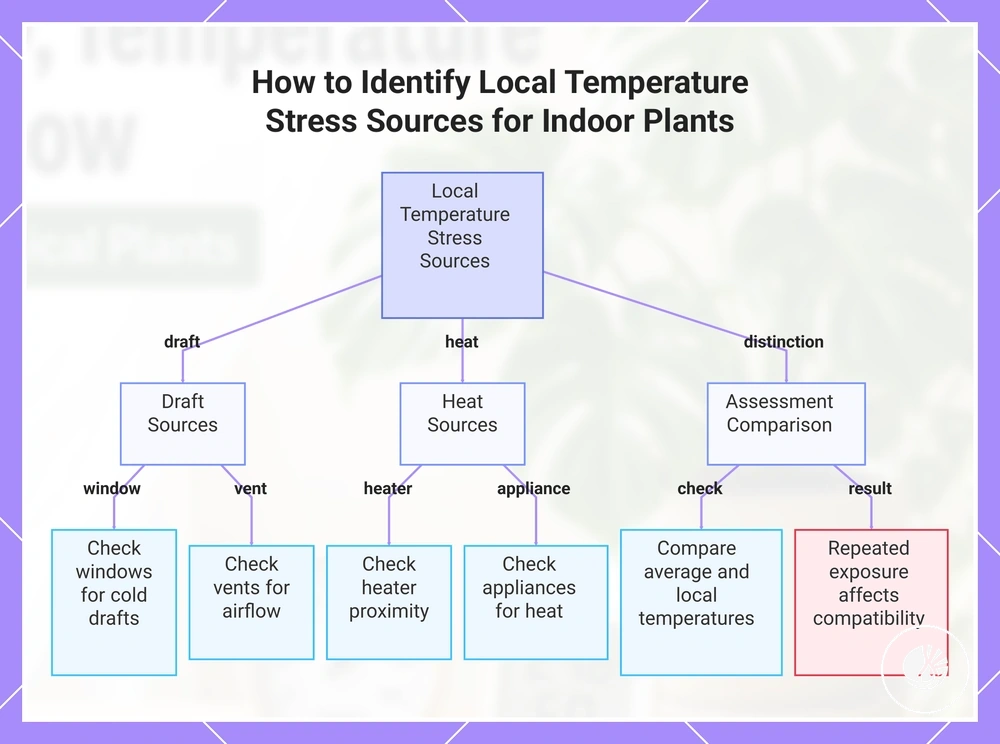
When plants are positioned near drafty windows, under vents, or close to heaters, localized temperature fluctuations may influence plant health. Although these conditions do not necessarily indicate overall room unsuitability, repeated exposure can affect compatibility. The checklist below helps identify and assess local temperature stress sources.
- Windows: feel for cold drafts near the plant; adjust placement if exposure is consistent
- Vents: observe airflow hitting foliage; reposition plant if constant exposure is detected
- Heaters: note proximity to warm surfaces; move plant to reduce thermal stress
- Appliances: check for intermittent heat or cool air near plant; minimize repeated exposure
- Room average vs. plant-level: compare ambient readings with conditions directly at leaves
This chart shows the main sources of local temperature stress for indoor tropical plants and the checks to identify and assess them.
Airflow that supports humidity without drying leaves
Airflow supports indoor tropical plants when gentle circulation helps humidity stay usable without drying leaves or soil too quickly. Air movement should be judged by intensity, direction, and distance from harsh air streams. Good airflow is gentle, not forceful.
More airflow is not automatically better for leaf moisture. Stagnant air can leave some areas still and humid, while a direct air stream from vents or fans may increase drying stress when it hits foliage repeatedly. Airflow compatibility depends on keeping circulation soft enough to support humidity retention without creating a drying blast.

In a room with changing light exposure, vents, fans, or windows, airflow should be assessed at plant level rather than only across the room. light and environment balance helps clarify how air movement connects with placement and exposure. The comparison below separates gentle circulation, stagnant air, and direct air streams.
| Airflow condition | What it does | Plant-level cue | Adjustment |
|---|---|---|---|
| Gentle circulation | Supports humidity balance without forceful drying | Leaves move slightly without feeling blasted | Keep air movement indirect and mild |
| Stagnant air | May allow still pockets around foliage | Air feels unmoving near grouped plants | Add light circulation without aiming directly at leaves |
| Direct air stream | Can increase drying leaves and soil moisture loss | Leaves sit in a steady stream from vents or fans | Move the plant away from the direct air stream |
Gentle air circulation around indoor plants
Gentle air circulation supports indoor plants by providing soft, indirect movement that reduces stagnation without drying leaves. This localized airflow balances air movement strength and direction to maintain leaf moisture and comfort for indoor plant environments.
In a typical room scenario, interior plants may experience less air movement than those near vents or windows. Observing airflow direction and intensity helps identify areas where circulation is sufficient without being harsh. Simple placement cues include positioning plants to avoid direct air streams while allowing gentle movement around foliage.
- Keep plants away from direct vent blasts
- Maintain distance from open windows with strong airflow
- Ensure interior air reaches plants without forcefully hitting leaves
- Adjust shelves to allow gentle circulation across foliage
- Monitor leaves for signs of drying or stagnation
Fans, vents, and windows as airflow sources
When an indoor tropical plant sits near fans, vents, or windows, airflow patterns can change throughout the day based on distance, intensity, and timing. These airflow sources may support air circulation or contribute to humidity loss and draft stress depending on how directly the air reaches the plant. Source, distance, and intensity are the key variables to observe.
Fans, vents, and windows as airflow sources should be evaluated by plant response rather than by increasing airflow. Direct exposure may increase drying or draft stress, while indirect or intermittent exposure can support air circulation with less humidity loss. The table below compares common airflow sources and movement decisions.
| Airflow source | Helpful condition | Risk condition | What to do |
|---|---|---|---|
| Fans | Indirect airflow with moderate timing and distance | Direct exposure with high intensity for long periods | Move the plant farther from the air stream |
| Vents | Air reaching the plant indirectly from a distance | Strong direct exposure with noticeable temperature changes | Reposition the plant away from the vent path |
| Windows | Intermittent air movement with limited draft exposure | Persistent drafts that may increase humidity loss | Move the plant inward when drafts become noticeable |
Measuring humidity and temperature before changing the setup
Measuring humidity and measuring temperature should be based on reading stability before changing humidity, temperature, or airflow conditions. A hygrometer or temperature humidity monitor can help identify patterns, but adjustment confidence depends more on repeated readings than on a single snapshot. Repeated readings are safer than one snapshot when deciding whether environmental changes are necessary.
When a room feels dry at one time of day and comfortable at another, humidity and temperature conditions may vary by room location and timing. A hygrometer, humidity meter, or temperature humidity monitor can show different readings depending on plant position and where the measurement is taken. A room reading may not fully reflect the conditions experienced by the plant, which is why plant-level observation matters. Plant position helps connect the reading to the environment surrounding the foliage.
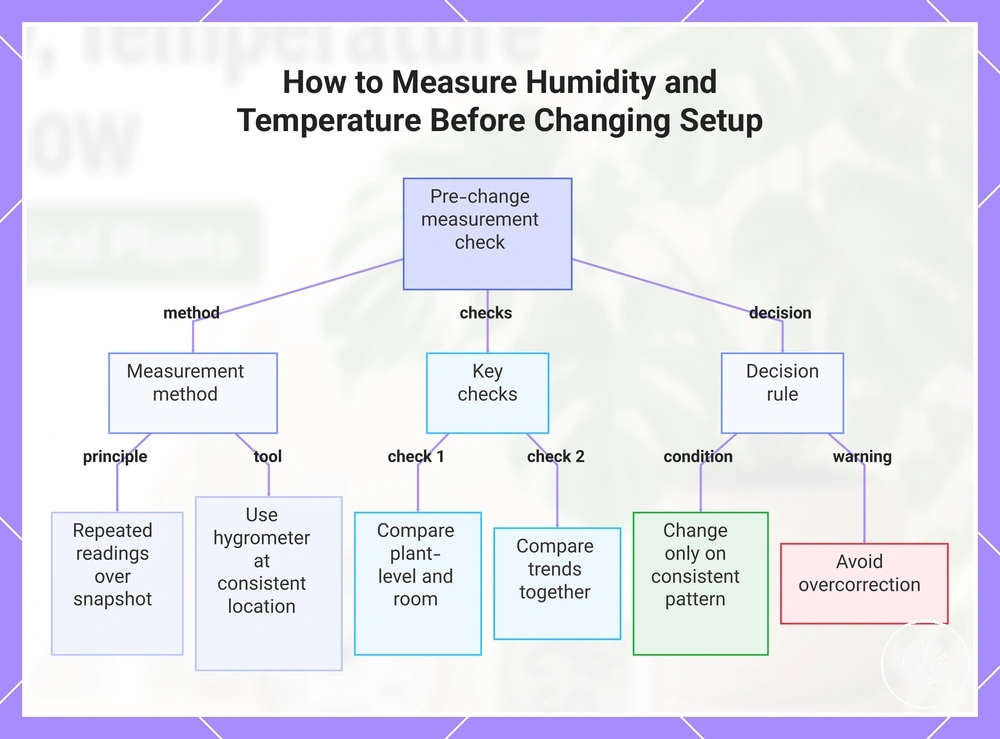
When environmental adjustments are made too quickly, overcorrection can become more likely. Measuring humidity and temperature before changing the setup improves adjustment confidence by comparing repeated readings across different times and locations. Use the checklist below to determine whether repeated readings provide a reason for an environmental change.
- Place the hygrometer or temperature humidity monitor in a consistent location during each measurement check.
- Compare readings at different times of day instead of relying on a single observation.
- Check conditions near the plant position as well as the broader room location.
- Use repeated readings to identify stable patterns rather than reacting to short-term changes.
- Compare humidity and temperature trends together before making adjustments.
- Consider an environmental change only when repeated readings show a consistent condition over time.
This chart shows the key principles, checks, and decision rules for measuring humidity and temperature before making environmental adjustments.
Hygrometers and indoor temperature humidity monitors
Using a hygrometer or indoor temperature humidity monitor starts with collecting humidity readings and temperature readings near the plant rather than relying on a single room reading. Consistent readings gathered over time can provide more useful context for care decisions than isolated measurements. The monitor is most useful as a measurement aid that supports observation and interpretation.
When different plant locations appear to experience different conditions, a hygrometer or indoor temperature humidity monitor may reveal patterns that are not obvious from appearance alone. Readings are usually more useful when compared over time and across plant locations, especially when placement remains consistent. The placement checks below focus on monitor use and interpretation.
- Place the hygrometer near the plant and compare repeated readings from the same location.
- Check humidity readings and temperature readings at similar times of day to identify patterns more easily.
- Compare plant-level readings with a nearby room reading when conditions appear different.
- Keep monitor placement consistent when evaluating whether readings remain stable over time.
- Move the indoor temperature humidity monitor between plant locations only when comparing conditions, then look for repeated patterns rather than isolated values.
Room-level readings versus plant-level conditions
A room reading may not fully represent plant-level conditions because vents, windows, shelves, grouping, and light exposure can create different local conditions around a plant. Room-level readings and plant-level conditions may differ even within the same room, especially around the leaf zone or a plant shelf. These local differences form the plant-level microclimate.
For example, a plant on a windowsill may experience different airflow and light exposure than a plant in a room corner or within a plant cluster. Room-level readings versus plant-level conditions can influence setup decisions because the plant position, nearby surfaces, and grouping may create different readings. The comparison below highlights common microclimate differences.
| Room-level reading | Plant-level condition |
|---|---|
| General room humidity and temperature | Conditions around the leaf zone and plant position |
| Air measured away from windows and vents | Local conditions influenced by nearby airflow sources |
| Average conditions across open room space | Microclimate affected by grouping, shelves, and nearby surfaces |
| Single room reading | Conditions that may vary at a windowsill, corner, or plant cluster |
Increasing humidity for indoor tropical plants
Increasing humidity for indoor tropical plants starts with confirming that dry air is a likely issue through measured readings and plant observation. Humidity support is usually more effective when changes are gradual and matched to room conditions rather than applied all at once. Humidity should be increased gradually.
When dry air persists despite otherwise suitable conditions, increasing humidity may require a method that provides more consistent moisture support. A humidifier can help raise humidity across a larger area when room size makes localized methods less noticeable. Humidity gain and consistency may vary by placement and room conditions, so monitoring remains important after changes. A humidifier is often more suitable when broader humidity support is needed.
When only a few indoor tropical plants need extra moisture support, grouping, misting, or trays may be considered as supplemental methods. Grouping can create a more localized microenvironment, while misting may provide short-term moisture around foliage and trays may offer limited humidity support near the plant. These methods may not affect the entire room in the same way as a humidifier. Grouping, misting, and trays are usually limited supports rather than whole-room solutions.
Increasing humidity for indoor tropical plants should be based on measured need, gradual adjustment, and room comfort. The checklist below compares common methods by condition, monitor check, and risk cue. Monitoring is the safety check.
- If measured readings suggest dry air across a larger room, consider a humidifier, then monitor for gradual humidity gain and signs of over-humidification.
- If dry air affects a small plant area, try grouping plants together and check whether local conditions become more comfortable.
- If temporary moisture support is needed, use misting cautiously and observe whether leaf comfort improves without creating persistent moisture.
- If plants sit in a localized dry spot, use trays as a humidity method and monitor nearby conditions rather than assuming room-wide changes.
- If humidity support is added, compare follow-up readings and plant response to ensure conditions remain suitable.
When choosing a humidity method, room size, plant sensitivity, and measurement feedback can help guide the decision. Larger spaces may benefit from more consistent humidity support, while localized methods may be sufficient for smaller plant areas. Plant sensitivity and monitoring feedback can help balance leaf comfort, room comfort, and over-humidification risk.
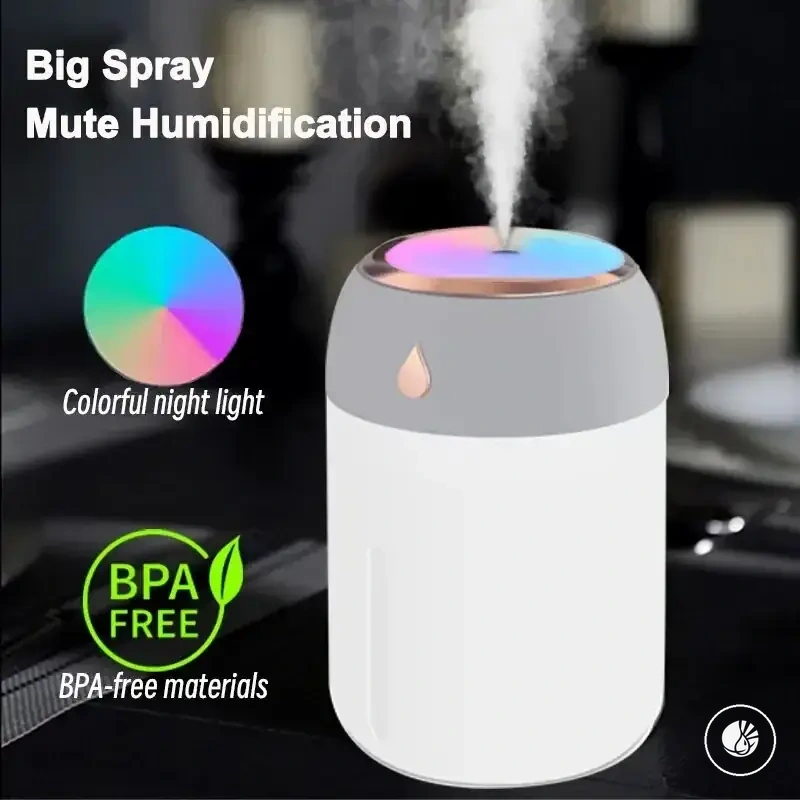
The products below are useful examples for comparing available options. Before buying, check that the compatibility criteria, key features, and product details match your needs.
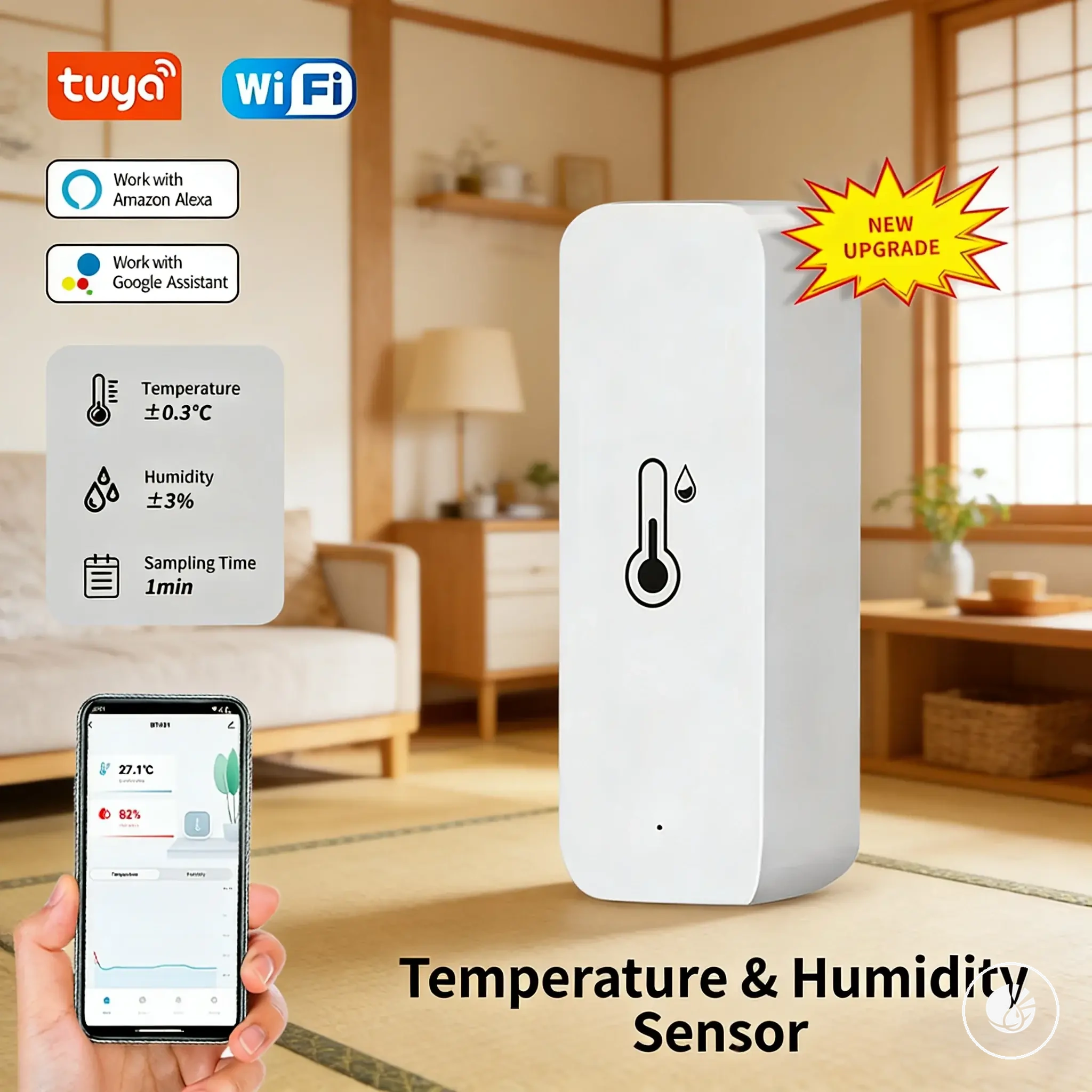
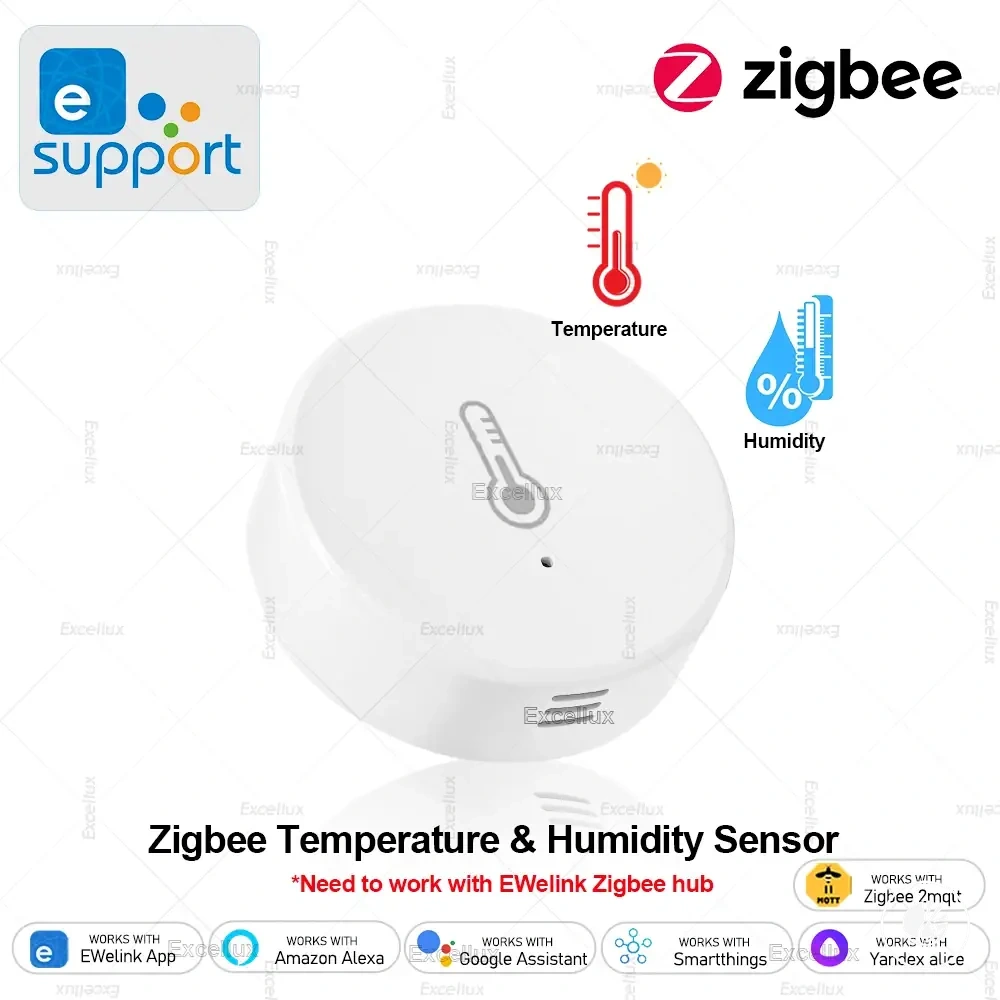
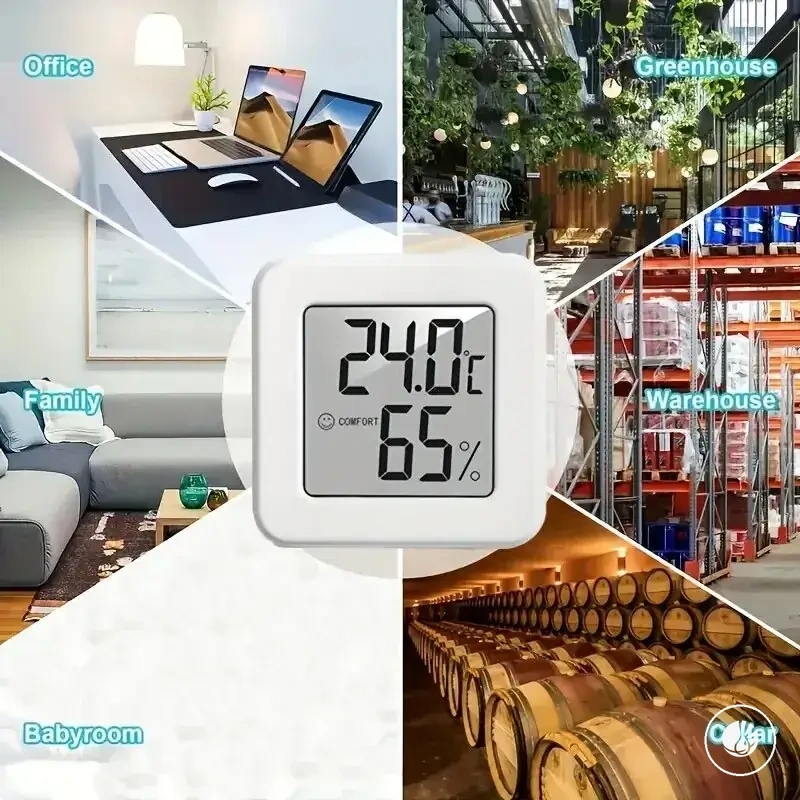
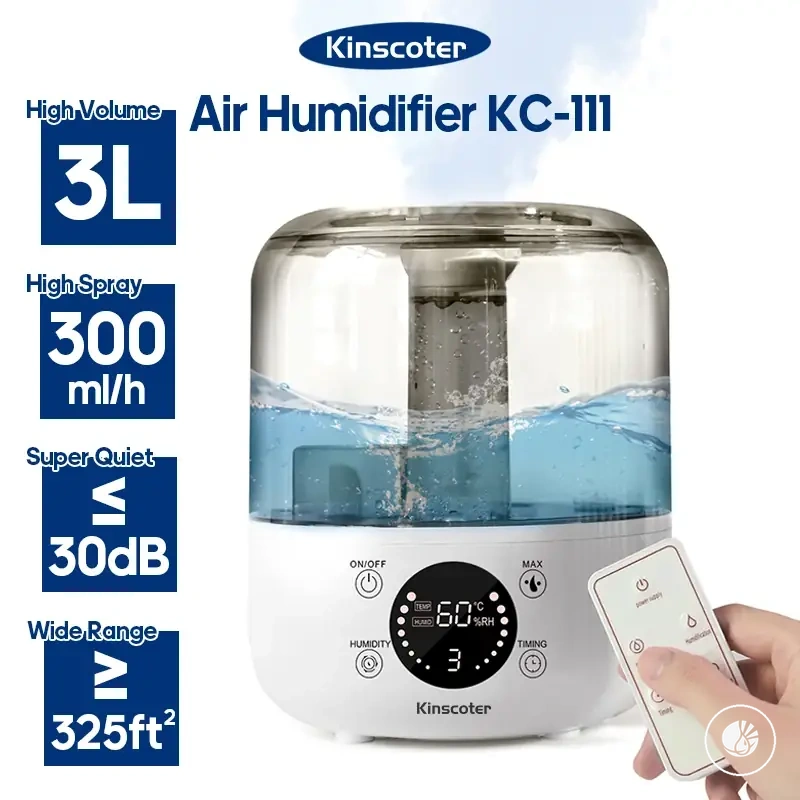
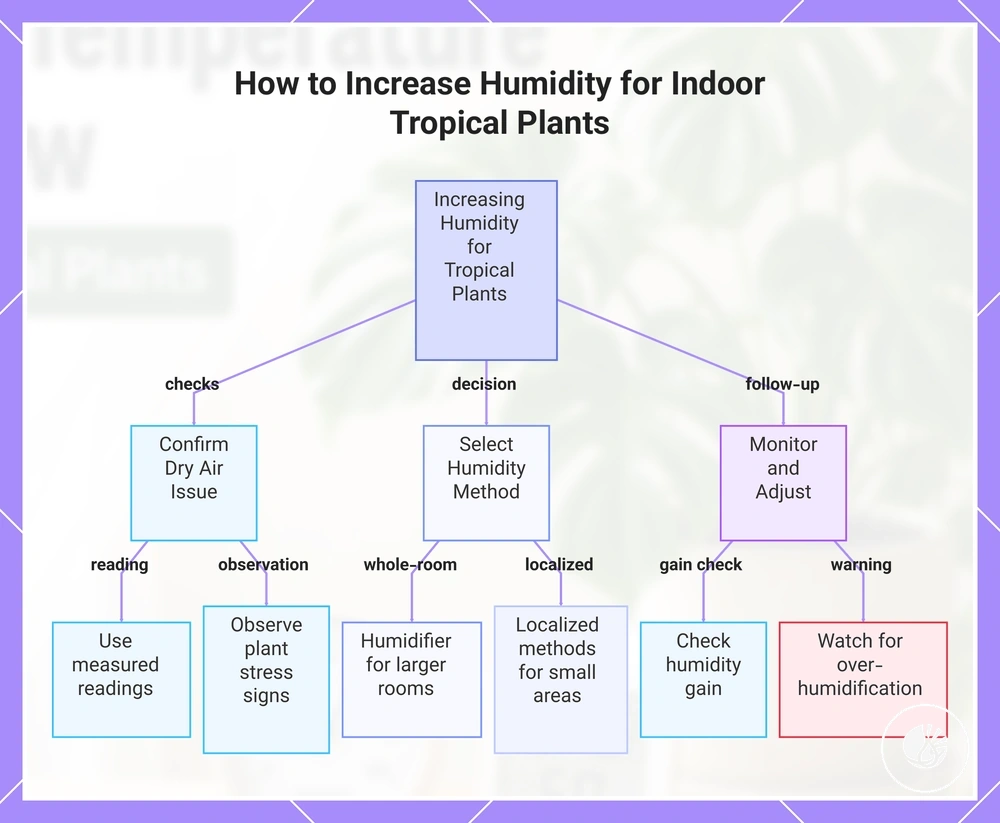
This chart shows the process of confirming dry air, selecting a humidity method based on room size, and monitoring results to avoid over-humidification.
Humidifier placement and use near plants
Humidifier placement near plants ensures gentle room moisture without soaking leaves, furniture, or nearby surfaces. Placement depends on distance, run time, and mist direction because excessive moisture in one area can cause wetness or condensation. Proper placement adds humidity without creating wet surfaces.
In small rooms, on plant shelves, or near clustered plants, moisture may concentrate differently. Observing leaf surfaces, nearby furniture, and surrounding conditions after operation helps verify effective humidifier use near plants. The following placement steps guide safe humidifier use and observation.
- Position the humidifier at a distance that allows moisture to disperse evenly rather than directly onto leaves.
- Adjust mist direction so the mist path supports gentle room moisture without striking plants, shelves, or furniture.
- Run the humidifier for periods that address measured dry air, adjusting gradually if wetness begins to appear.
- Check leaves, nearby surfaces, and plant shelves for condensation or persistent moisture after operation.
- For small rooms or clustered plants, observe whether moisture collects in one area and adjust placement if condensation becomes noticeable.
Grouping, misting, trays, and their limits
A common misconception is that grouping, misting, and trays can create sustained room humidity on their own. In practice, grouping, misting, and pebble trays usually affect humidity differently and often create localized humidity or temporary moisture rather than long-lasting room-wide changes. These methods can help, but their limits should be understood.
Grouping, misting, and trays are most useful when expectations match their likely effect and duration. Plant grouping may support localized humidity around a plant cluster, misting leaves may add temporary moisture to the leaf surface, and pebble trays rely on evaporation that may have a limited effect beyond the immediate area. The comparison below highlights grouping, misting, trays, and their limits.
| Method | What it can help with | Main limit | Best use |
|---|---|---|---|
| Grouping | Supports localized humidity around a plant cluster | Effect may remain limited to nearby plants | Plants placed close together |
| Misting | Adds temporary moisture to the leaf surface | Temporary moisture may not create sustained room humidity | Short-term leaf moisture support |
| Trays / Pebble trays | Provides modest evaporation near the plant | Humidity effect may stay close to the tray area | Local humidity support near individual plants |
Matching environmental conditions to room and plant type
Matching environmental conditions to room and plant type depends on measured conditions, plant response, and practical room constraints. Consider humidity, temperature, airflow, and placement together to assess whether the environment is compatible. Room condition and plant sensitivity are the primary match points for compatibility decisions.
In dry rooms, lower humidity readings and noticeable leaf stress suggest that additional moisture support may be needed, whereas in air-conditioned rooms, airflow patterns and temperature fluctuations may require adjustment to avoid stress. Warm rooms with stable humidity often need minimal adjustment, while crowded plant shelves can create localized differences that affect plant response. Comparing dry rooms, air-conditioned rooms, warm rooms, and crowded shelves clarifies practical compatibility scenarios.
When incompatible conditions appear, care adjustment can improve the match between plant sensitivity and room conditions. Ongoing observation and monitoring help determine whether the environment remains suitable over time. Regular daily care maintenance checks support ongoing evaluation and transition naturally into the decision checklist below.
- Dry room: If measured humidity is low and leaves show stress, increase local moisture or adjust placement to improve compatibility.
- Air-conditioned room: If airflow or temperature is uneven, reposition plants or adjust airflow to align with plant sensitivity.
- Warm room: If temperature and humidity are stable, maintain current conditions and monitor plant response for compatibility.
- Crowded shelves: If airflow is restricted, separate plants slightly to improve circulation and reduce stress.
- Measured conditions mismatch: If humidity, temperature, or airflow differs from plant needs, combine care adjustments to improve compatibility while observing plant response.
- High sensitivity plants: If the plant is more sensitive than the room conditions allow, gradually adjust placement, humidity, or airflow to minimize stress.
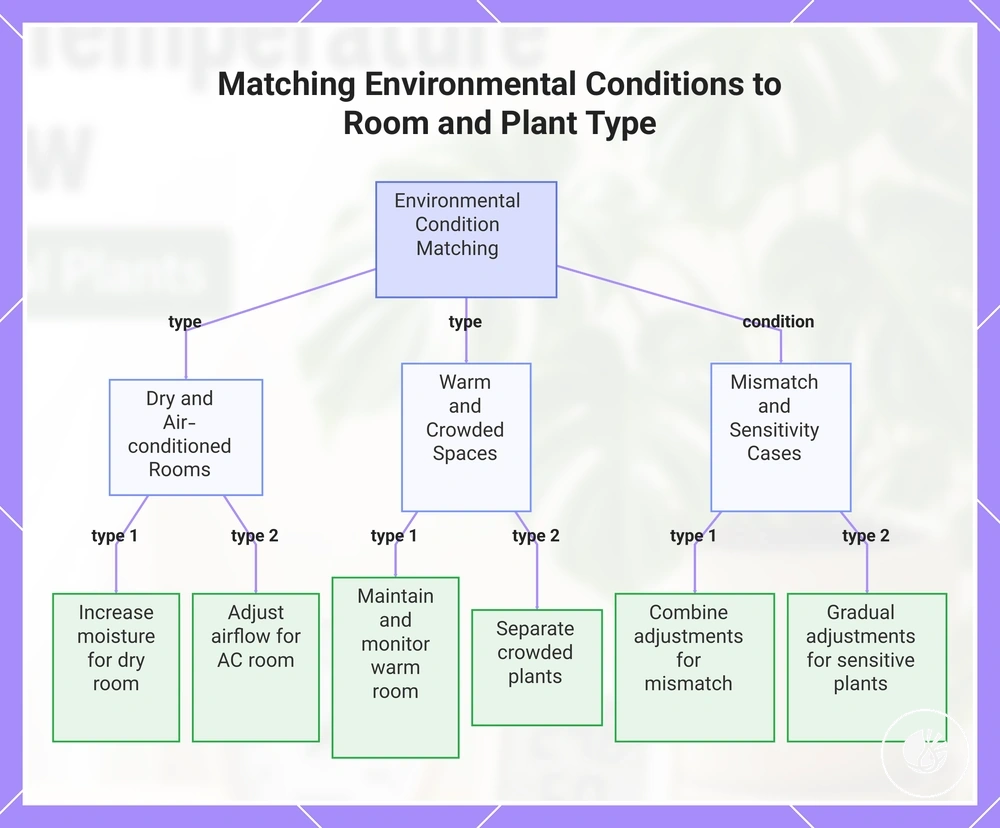
This chart shows how to evaluate different room scenarios and apply specific care adjustments to improve compatibility with plant sensitivity.
Dry-air symptoms and environmental stress signals
When brown leaf tips, crispy edges, or curling appear, dry-air symptoms may be one possible cause, but the same signs can also occur alongside other environmental conditions. Dry-air symptoms and environmental stress signals should be evaluated together with humidity readings, watering, light conditions, airflow exposure, and room conditions. Symptoms are clues, not proof.
When environmental stress signals appear, comparing the symptom pattern with measurable conditions can help avoid incorrect conclusions. Brown leaf tips and crispy edges may occur in dry indoor conditions, but they may also coincide with differences in watering, airflow exposure, or light conditions. In contrast, a combination of leaves showing curling, dry edges, soil drying, and related room readings may provide a stronger basis for interpretation. Dry-air signals become more useful when considered alongside readings and exposure.
In a room where leaves show curling, crispy edges, and faster soil drying, reviewing humidity readings and environmental conditions can help determine whether dry indoor conditions are a likely contributor. Readers looking for more detail on brown tips from dry indoor conditions can explore that topic separately while continuing to evaluate the broader symptom pattern. The diagnostic checklist below helps connect dry-air symptoms and environmental stress signals with practical checks.
Use dry-air symptoms and environmental stress signals together with environmental observations before making an environmental adjustment.
| Symptom | Likely attribute issue | Check | What it may mean |
|---|---|---|---|
| Brown leaf tips | Dry indoor conditions or environmental stress | Compare humidity readings and airflow exposure | May suggest moisture-related stress when supported by other clues |
| Crispy edges | Leaf moisture loss | Review room conditions and humidity readings | May indicate dry-air symptoms when part of a broader symptom pattern |
| Curling | Environmental response | Check humidity readings, watering, and light conditions | May reflect environmental stress rather than a single cause |
| Fast soil drying | Dry room conditions or increased exposure | Compare room readings and placement | May contribute to moisture-related stress signals |
| Multiple symptoms together | Broader symptom pattern | Review humidity, temperature, airflow, watering, and light conditions | May provide a stronger basis for environmental adjustment |