Watering Solutions for Indoor Tropical Plants
Watering solutions for indoor tropical plants refer to managing both the timing and root zone moisture rather than following a fixed schedule. A practical watering routine links soil moisture, pot drainage, plant condition, pot size, humidity, and light exposure to maintain the root zone adequately hydrated while reducing the risk of standing water.
Condition-based watering is usually more effective than calendar-based schedules because indoor plants dry at different rates. Factors such as plant size, potting mix, pot dimensions, room conditions, humidity, and light exposure influence soil drying. This section keeps watering as the main usage system within broader indoor tropical plant care solutions.
Watering issues can overlap with drainage limitations, yellow leaves, drooping, and other watering mistakes. These signs may indicate soil moisture inconsistencies, root zone stress, or improper drying speed, but they should not be interpreted as a single cause. The section establishes safe boundaries to help separate routine watering decisions from related symptom checks.
How watering works for indoor tropical plants in pots
Watering in pots for indoor tropical plants refers to how water moves through the potting mix, reaches the root zone, and exits via drainage. Proper moisture access and aeration in the root zone support healthy roots while minimizing stress risk from excess water. Balancing drainage and root-zone hydration ensures the plant receives adequate moisture without creating standing water.
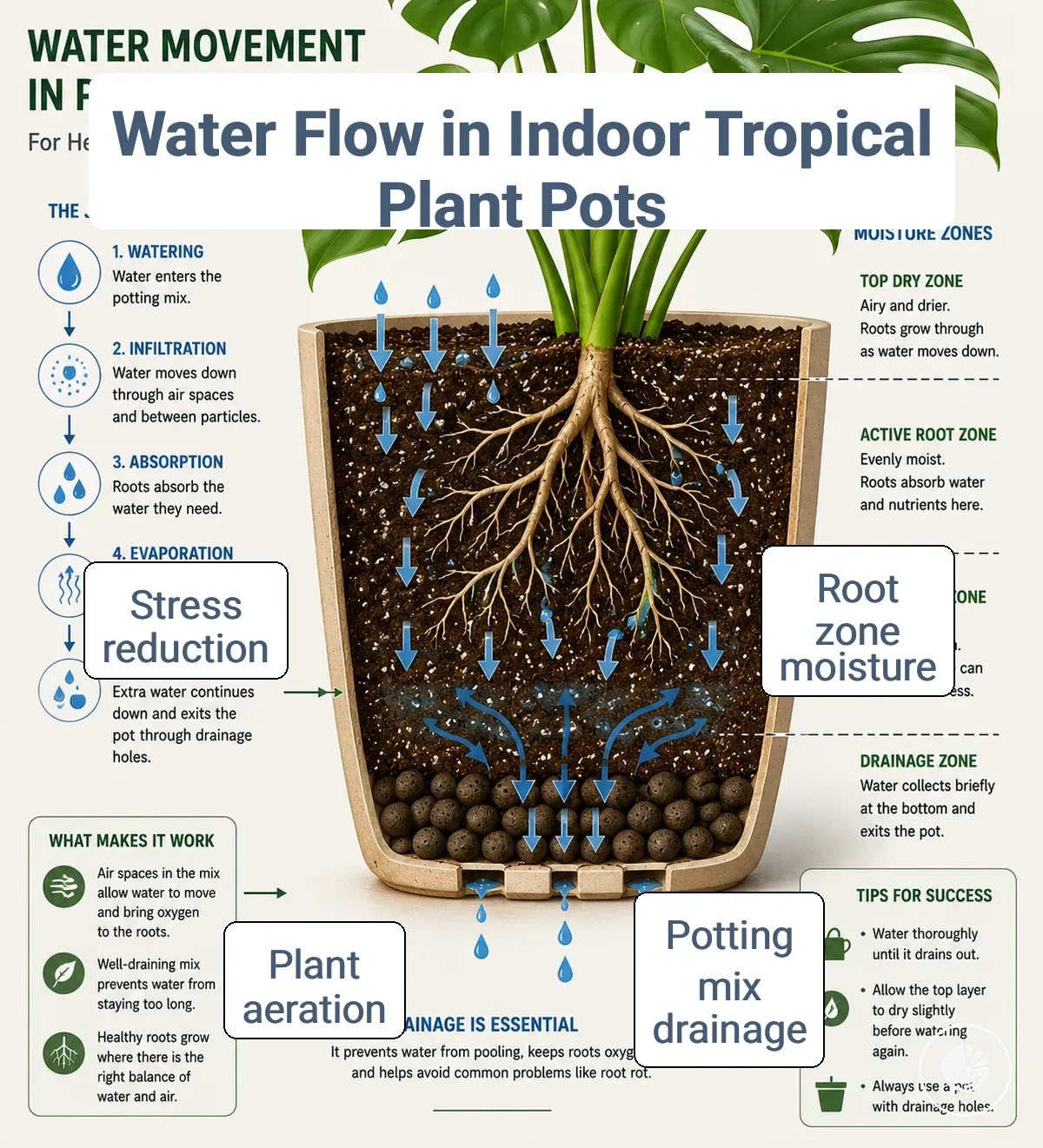
For example, a small pot exposed to bright light dries faster than a larger container with the same plant type. The larger pot retains moisture longer, so similar indoor tropical plants may require different watering approaches depending on pot size, light exposure, and potting mix characteristics.
Standing water differs from accessible moisture in the root zone. Moisture that roots can reach while drainage removes excess water maintains aeration and reduces stress risk. Understanding this balance helps define safe watering boundaries and avoids treating drainage or root-zone conditions as isolated factors.
When indoor tropical plants need water
Indoor tropical plants need water when the root zone has dried sufficiently for the specific plant and pot condition, rather than after a fixed number of days. Watering decisions should rely on moisture evidence and the plant's current growing environment.
| Moisture Evidence | Environmental Factors |
|---|---|
| Soil dryness in root zone | Light exposure |
| Pot weight | Humidity |
| Leaf posture | Airflow |
| Root-zone condition | Growth stage |
For instance, a small pot in bright light may dry faster than a larger pot in a humid environment. Factors like pot size, light exposure, humidity, and the characteristics of the potting mix can change the plant's water need.
Relying solely on a calendar-based schedule can overlook important cues from the plant's condition and moisture evidence. Observing soil dryness, pot weight, and leaf posture provides actionable criteria for more accurate watering decisions and avoids one-size-fits-all schedules.
Soil moisture signals before watering
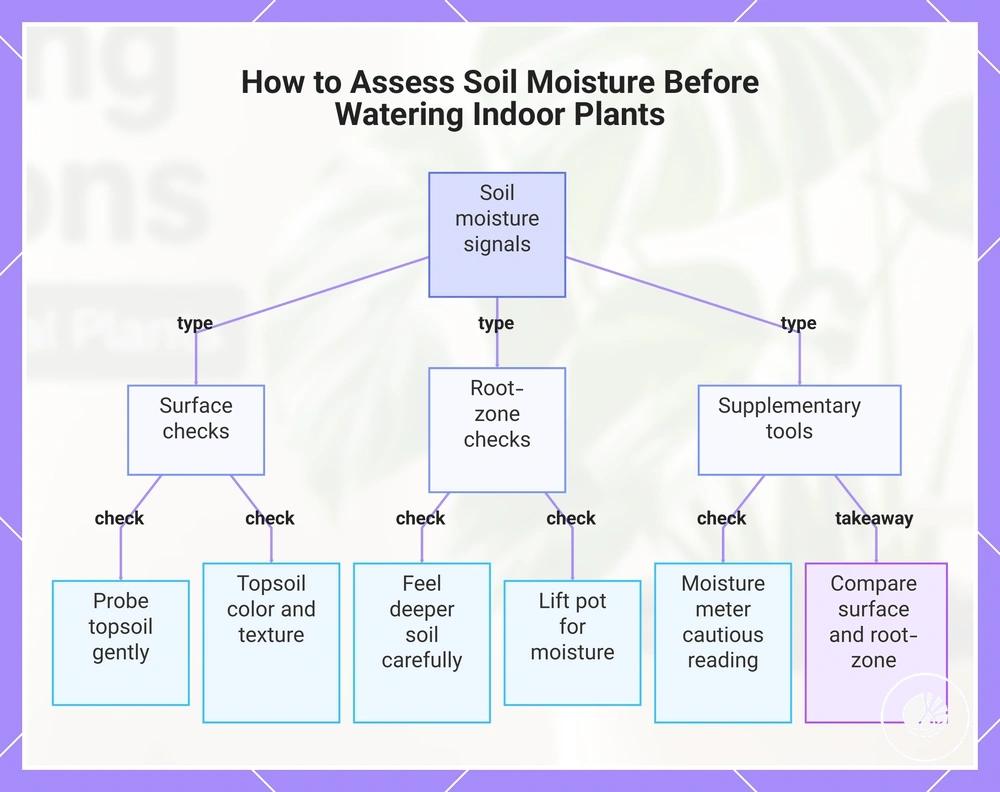
Soil moisture is a local signal indicating whether the root zone of an indoor tropical plant requires watering. Checking moisture helps make precise decisions based on current pot conditions and plant status.
Surface dryness may differ from deeper root-zone moisture, particularly in pots with varying depth or dense potting mix. Considering multiple signals ensures more accurate assessment and prevents under- or over-watering.
- Finger test: probe topsoil gently
- Topsoil dryness: observe color and texture
- Root-zone moisture: feel deeper soil carefully
- Pot weight: lift to sense moisture
- Moisture meter: read cautiously for guidance
- Interpretation: compare surface and root-zone readings
This chart shows the main types of moisture signals to check before watering, covering surface, root-zone, and supplementary methods to avoid under- or over-watering.
Plant size, pot size and room conditions that change watering frequency
Watering frequency is influenced by drying speed, which varies based on plant size, pot size, and room conditions. Leaf mass, pot diameter, material, and drainage all affect how quickly soil loses moisture.
For example, a small plant in a shallow pot under bright light and low humidity may need water more often than a larger plant in a deeper pot in a cooler, more humid room. Light exposure, temperature, airflow, and seasonal factors also modify how fast the root zone dries.
| Attribute | Effect on Drying Speed |
|---|---|
| Plant size / leaf mass | Higher water use |
| Pot size / pot material | Moisture retention |
| Drainage quality | Faster or slower drying |
| Light exposure | Increases evaporation |
| Humidity / temperature / airflow | Modifies drying rate |
| Season / growth stage | Adjusts water need |
How to water indoor tropical plants correctly
Correct watering means evenly moistening the root zone while allowing excess water to drain out of the pot. Start by checking soil moisture and apply water steadily to ensure thorough hydration without creating standing water.
Watering only the surface can leave deeper roots dry, while pooled water can cause over-saturation. Controlled watering protects the root zone and signals when to pause or stop watering to prevent stress.
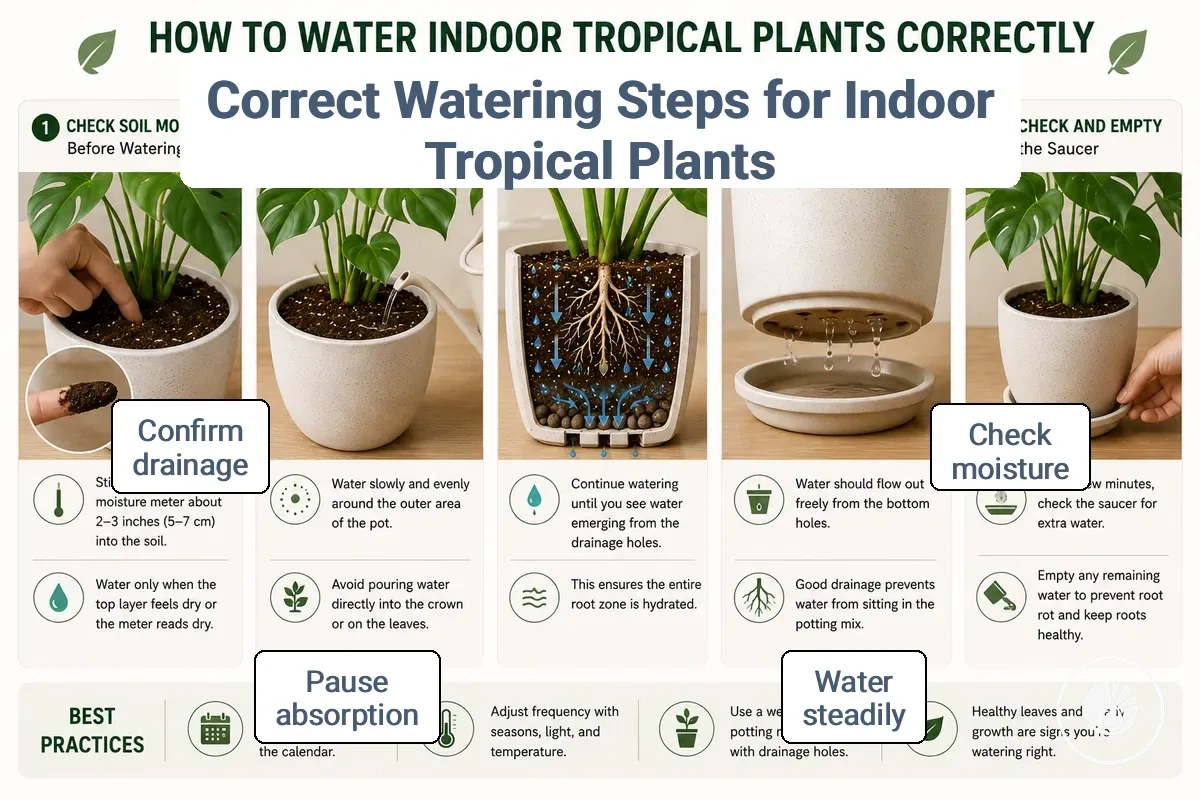
- Check moisture: test root zone before watering; wait if deeper soil remains damp.
- Apply water steadily around the soil surface; ensure water penetrates the potting mix evenly.
- Pause if water pools; allow absorption before adding more to avoid flooding the pot.
- Continue until the root zone is evenly moist; observe pot weight and surface cues.
- Stop watering when excess water drains; drainage indicates proper saturation.
- Check saucer: remove standing water to prevent prolonged root wetness.
Deep watering until the root zone is evenly moist
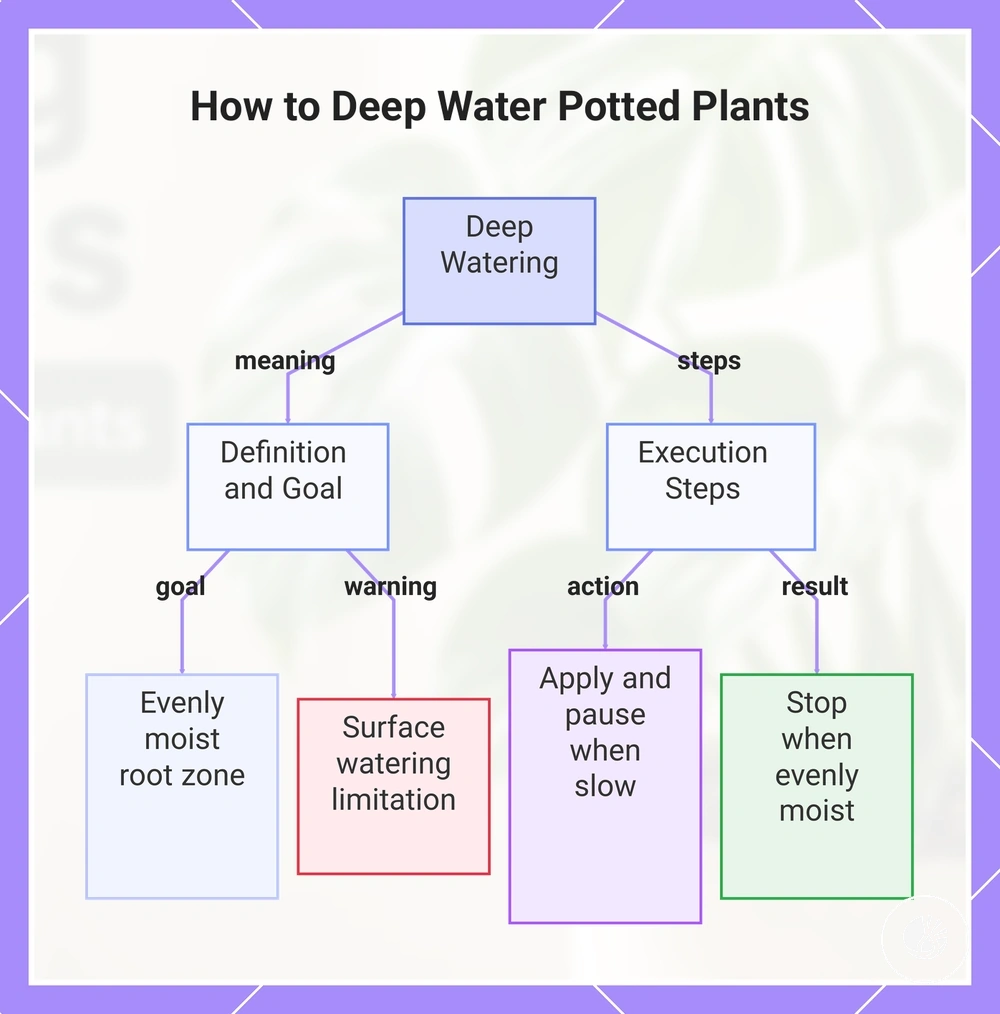
Deep watering means applying water so the root zone becomes evenly moist throughout the pot depth rather than wetting only the surface. The goal is to support soil absorption through the root area while using runoff timing as a conditional stop signal rather than a fixed target.
Surface watering can leave deeper roots drier even when the top layer appears wet. Controlled deep watering focuses on wetting the root area through the pot depth, then pausing when needed so soil absorption can continue before deciding whether more water is necessary.
- Apply a controlled flow around the soil surface; stop adding water briefly if soil absorption slows.
- Pause and recheck the potting mix; continue only when water is moving into the root zone.
- Watch runoff timing as an observation cue; runoff may indicate that moisture has moved through more of the pot depth.
- Stop watering when the root zone appears evenly moist and additional water is no longer being absorbed at the same rate.
- Use deep watering instead of repeated surface watering; the stop signal depends on moisture movement through the root area, not on a fixed volume.
This chart explains what deep watering means, its goal of an evenly moist root zone, the key application and pause steps, and the stop condition based on moisture movement.
Top watering, bottom watering and leaf-sensitive plants
Top watering and bottom watering are methods for applying water to indoor tropical plants under the correct-watering process. Top watering involves pouring water over the soil surface, while bottom watering delivers water from the base to the root zone.
Method choice depends on plant type, pot conditions, and sensitivity of foliage or crowns. Leaf-sensitive plants may benefit from bottom watering to keep foliage dry, whereas other plants may be watered from above when root-zone moisture and drainage are appropriate.
| Method | Suitable Condition | Benefit | Risk / Note |
|---|---|---|---|
| Top watering | Plants with normal foliage, good drainage | Controlled soil saturation | May wet leaves/crown |
| Bottom watering | Leaf-sensitive plants, shallow pot | Evenly moist root zone | Requires monitoring root-zone moisture |
Drainage after watering
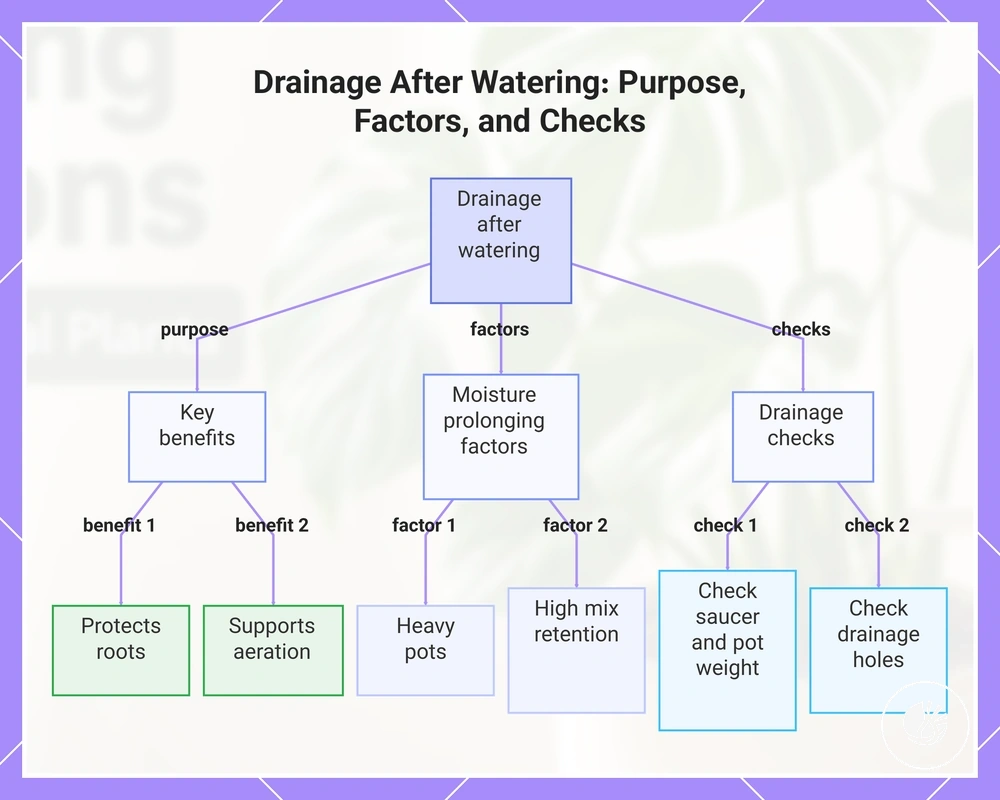
Drainage ensures that water applied to the pot moves away from the root zone, protecting roots and supporting aeration. Drainage holes and proper runoff help manage excess water and prevent standing water from accumulating in the pot.
Heavy pots or high potting mix retention can prolong moisture around roots. Check saucer water and the weight of the pot after some time; if excess water remains, remove it or allow further drain-through before the next watering. For additional context on how soil and drainage influence watering control, see soil and drainage for watering control:contentReference[oaicite:0]{index=0}.
- Check drainage holes; pause watering if excess water is slow to exit.
- Check saucer water; empty water left in the saucer after runoff completes.
- Check for standing water; allow additional drain-through time if water remains around the pot base.
- Check potting mix retention; extend the interval before rechecking if mix stays wet longer.
- Check a heavy pot; recheck root-zone moisture before adding more water if weight remains high.
This chart shows the purpose of drainage after watering, the factors that prolong moisture, and the key checks to ensure proper drainage.
Watering schedules that adjust to plant conditions
A watering schedule refers to a checking rhythm that adapts to plant conditions, moisture readings, and pot behavior rather than following a fixed calendar. It helps decide when to check, when recent watering suffices, and how to adjust for ongoing maintenance.
During active growth, the checking rhythm may require more frequent observation because drying can speed up with increased plant size, light exposure, and higher water use. In cooler months, seasonal drying may slow down, and humidity or light levels can affect how quickly moisture diminishes. Recently repotted plants may need closer monitoring as the potting mix and root zone settle and redistribute moisture.
Fixed routines can misalign with actual conditions, risking over- or under-watering. A practical table for organizing checks ensures the schedule responds to plant and pot variables, then compare with the maintenance checklist for watering routines:contentReference[oaicite:0]{index=0} to maintain alignment with broader care tracking.
| Schedule Rhythm | Watering Command |
|---|---|
| Check moisture readings before watering | Do not water solely by calendar date |
| Adjust for seasonal drying and humidity | Do not keep the same interval for all conditions |
| Review recent watering and pot weight | Do not add water if the root zone still holds moisture |
| Increase checks during active growth stage | Do not assume growth-stage needs remain constant |
| Use light exposure to adjust check frequency | Do not treat low-light and bright-light pots identically |
Watering tools for indoor tropical plant routines
Watering tools are support devices that help improve plant observation and controlled watering, but they do not replace checking plant conditions directly. A watering can, moisture meter, soil sensor, self-watering aid, or temporary watering aid can support a watering routine when used with moisture checks and visual observation.
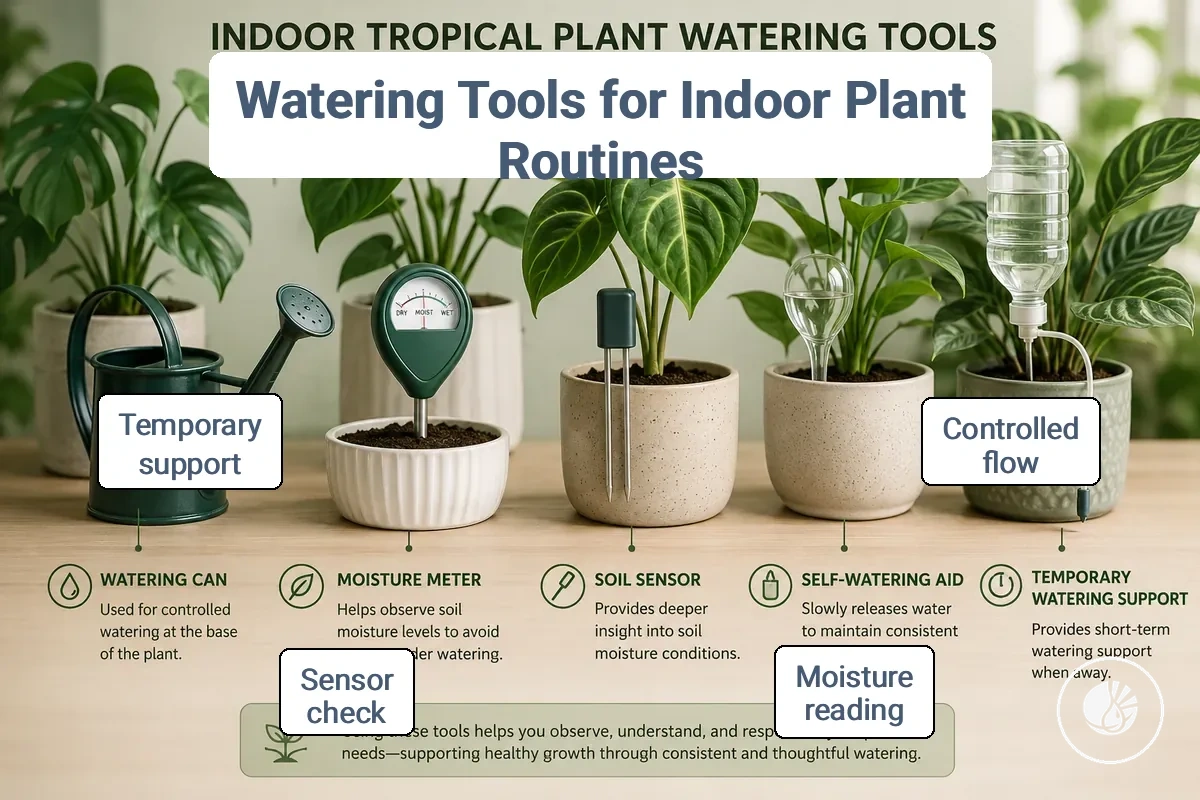
When controlled flow is difficult because of pot size or indoor placement, a watering can may help direct water more accurately. When checking dryness is uncertain, a moisture meter or soil sensor can provide an additional reading to compare with plant observation. When temporary support is needed during short absences, a self-watering aid or other watering support may help maintain moisture, but release behavior and root-zone conditions still need monitoring.
Watering tools can become less useful when readings are interpreted without considering plant conditions, recent watering, or potting mix behavior. A tool limitation is that measurements or water release patterns may not fully represent moisture throughout the root zone. Use tools as support for decisions rather than as a replacement for observation and controlled watering:contentReference[oaicite:0]{index=0}.
| Tool | Use Condition | Benefit | Tool Limitation |
|---|---|---|---|
| Watering can | Controlled watering indoors | Controlled flow | Depends on user technique |
| Moisture meter | Checking dryness | Additional moisture reading | May not reflect all root-zone conditions |
| Soil sensor | Ongoing moisture checks | Supports monitoring | Readings require interpretation |
| Self-watering aid | Temporary watering support | Helps maintain moisture | Release behavior can vary |
| Temporary watering aid | Short absence periods | Reduces drying risk | Does not replace plant observation |
Moisture meters and soil sensors for checking dryness
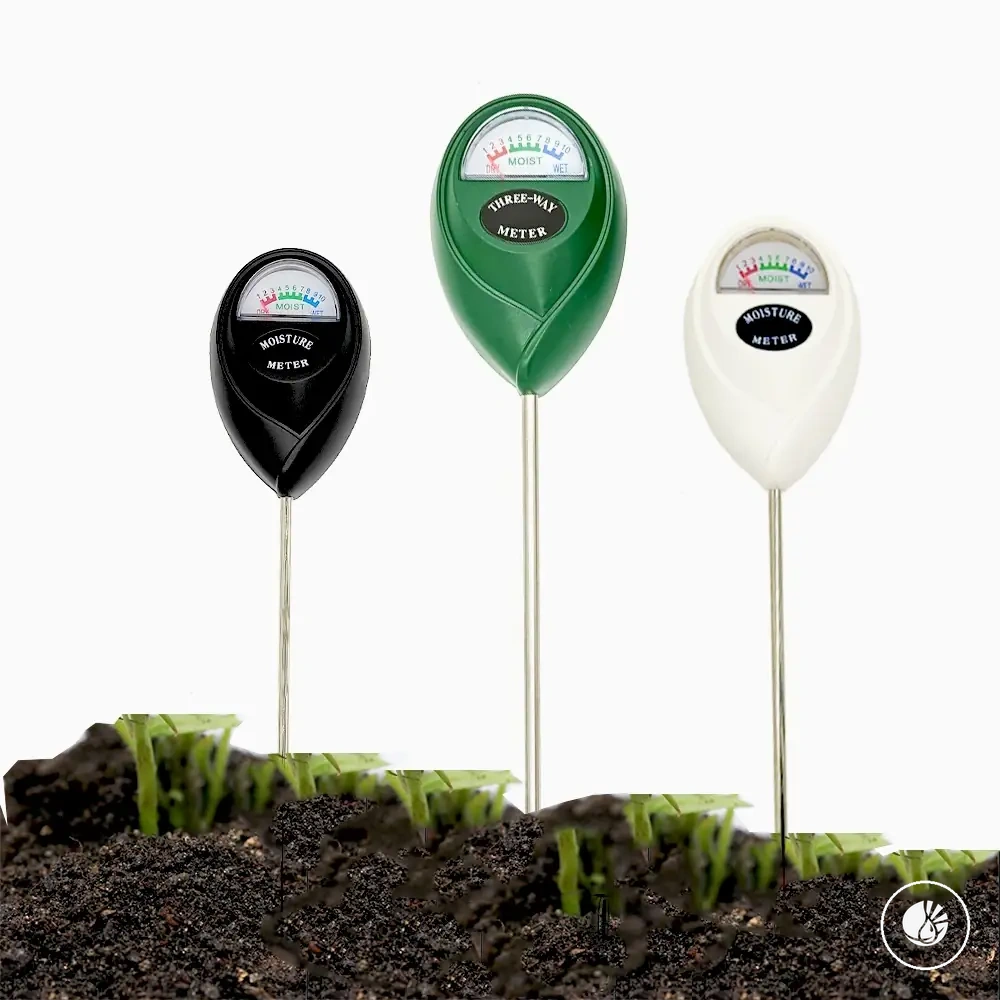
Moisture meters and soil sensors are local checking tools that provide a reading to help evaluate dryness in the root zone. A moisture meter or soil sensor can support a watering decision, but the reading requires interpretation alongside plant observation, soil condition, and pot behavior.
Reading limits can affect how a dryness check is interpreted. If a moisture reading suggests adequate moisture but pot weight feels unusually light or visible plant stress is present, a cross-check can help clarify whether the reading reflects overall root-zone conditions. Device readings require interpretation and should not replace direct observation of plant and soil conditions:contentReference[oaicite:0]{index=0}.
- Probe depth: A reading can change with probe depth, so the result may not represent moisture throughout the entire root zone.
- Reading consistency: A moisture meter or soil sensor may show different readings between checks, making consistency an important factor before acting on a single result.
- Wet-dry range: The wet-dry range can support a dryness check, but it does not determine watering needs without additional context.
- Potting mix effect: Potting mix differences can influence a sensor reading, so interpretation may vary between containers.
- Calibration and cross-check: Calibration affects reading quality, and a cross-check with pot weight, soil condition, or visible stress can help when readings conflict.
Watering cans for controlled indoor watering
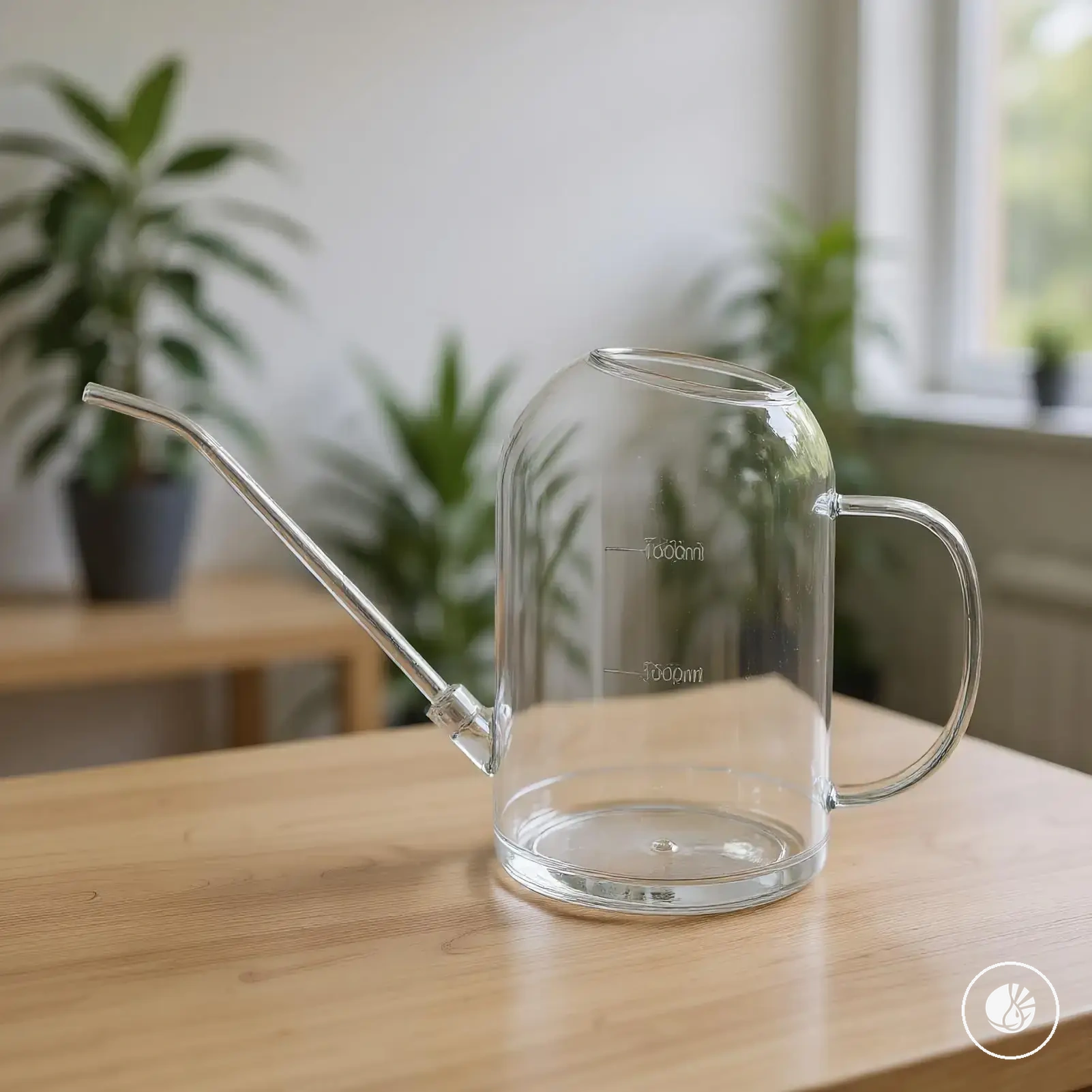
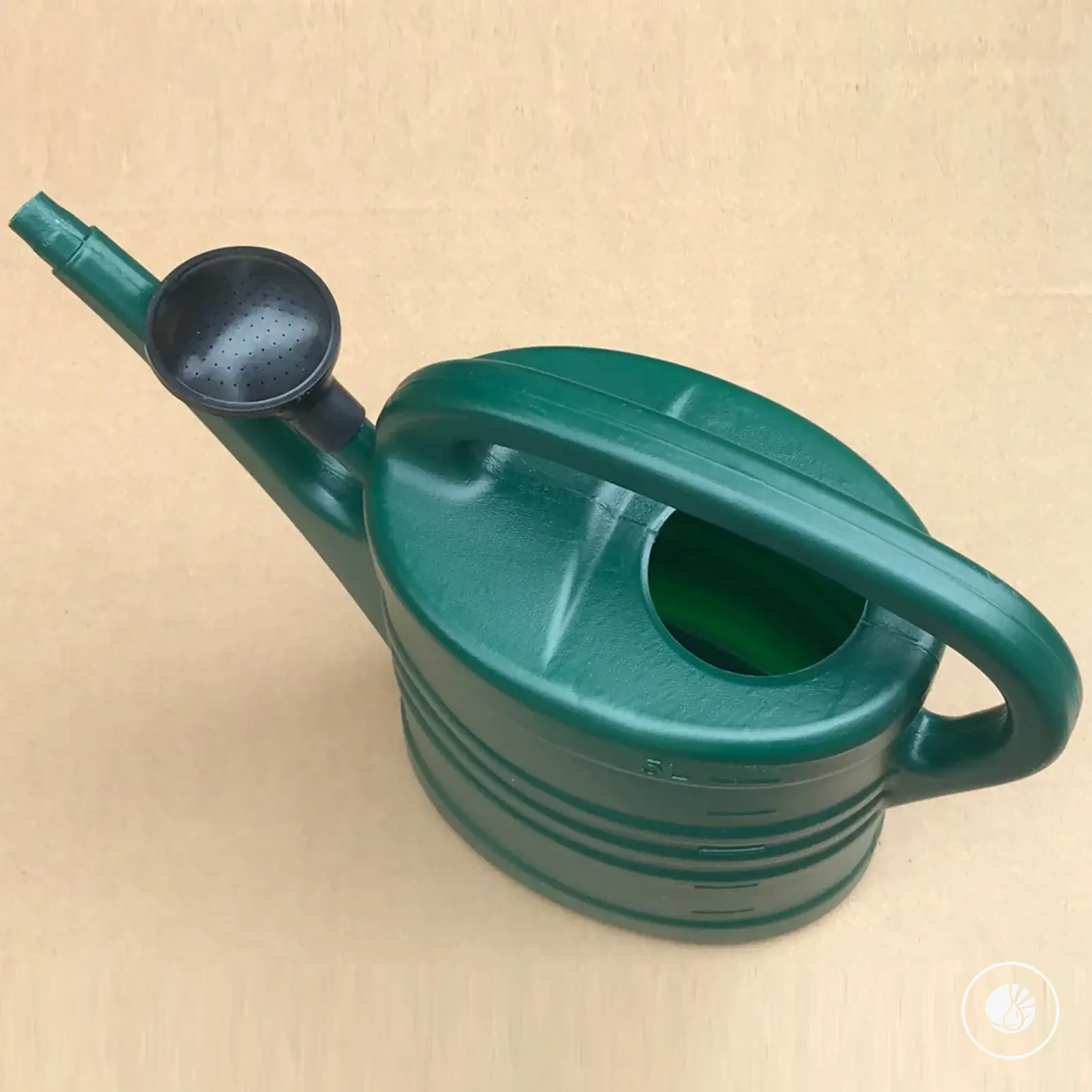
A watering can is a tool that allows controlled watering by managing water placement, flow, and spill risk for indoor tropical plants. Using a watering can directs water to the root zone effectively while reducing the likelihood of runoff or overwatering.
For dense foliage or small indoor pots, a narrow-spout can provides more precise placement, helping water reach the soil without wetting leaves. Adjusting spout shape, flow rate, and capacity allows a watering can to suit different pot sizes and indoor handling conditions, supporting accurate root-zone hydration.
- Spout shape: Narrow or curved spouts direct water around dense foliage to avoid wetting leaves.
- Flow rate: Controlled flow prevents soil displacement and reduces spill risk in small or shallow pots.
- Capacity: Can volume should match pot size; large cans may be heavy indoors, small cans may require multiple pours.
- Reach: Longer spouts allow water placement in tight spaces or larger pots without moving plants.
- Indoor handling: Lightweight and ergonomic design helps maintain control, reducing accidental spills or overwatering.
Self-watering spikes, globes and pots for temporary watering support
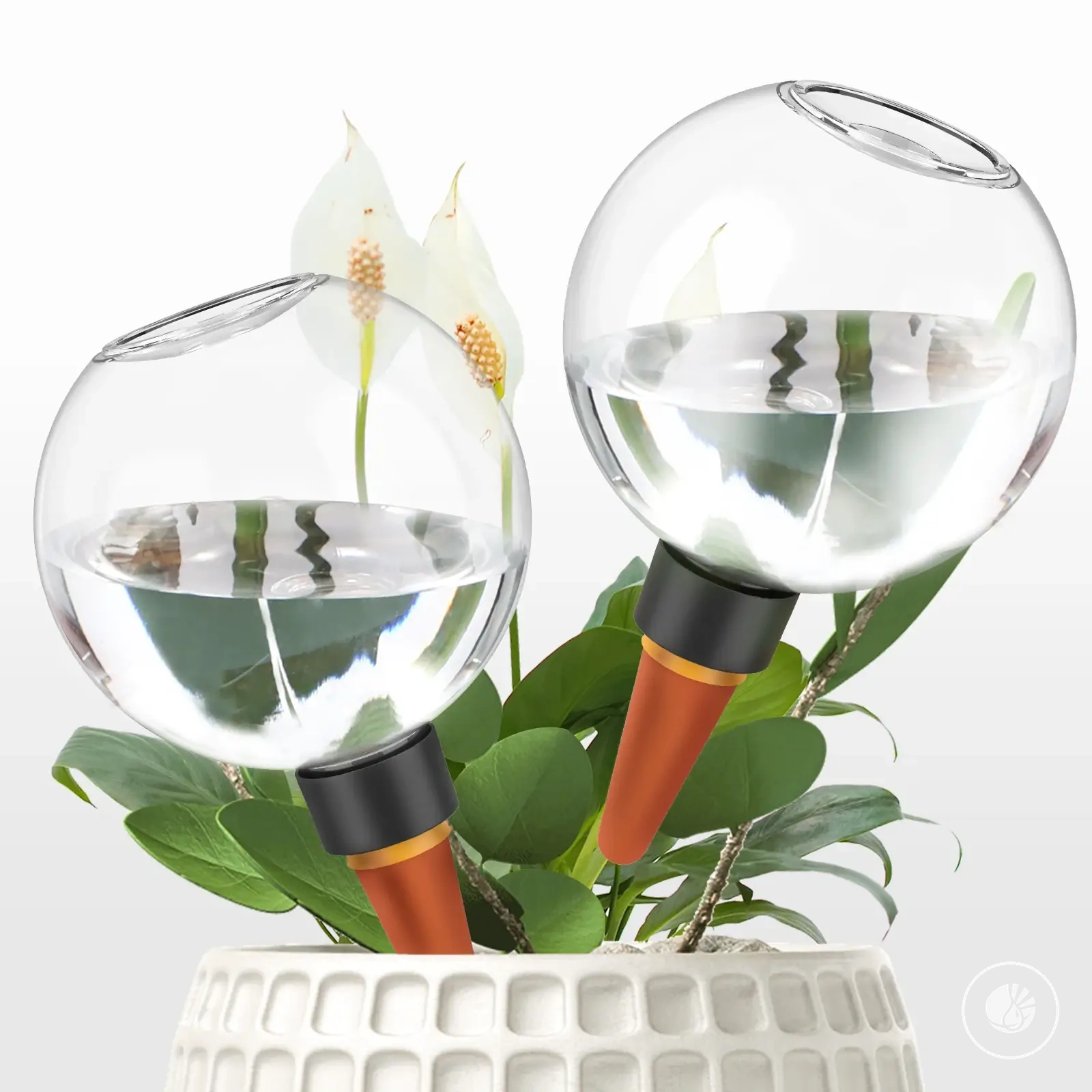
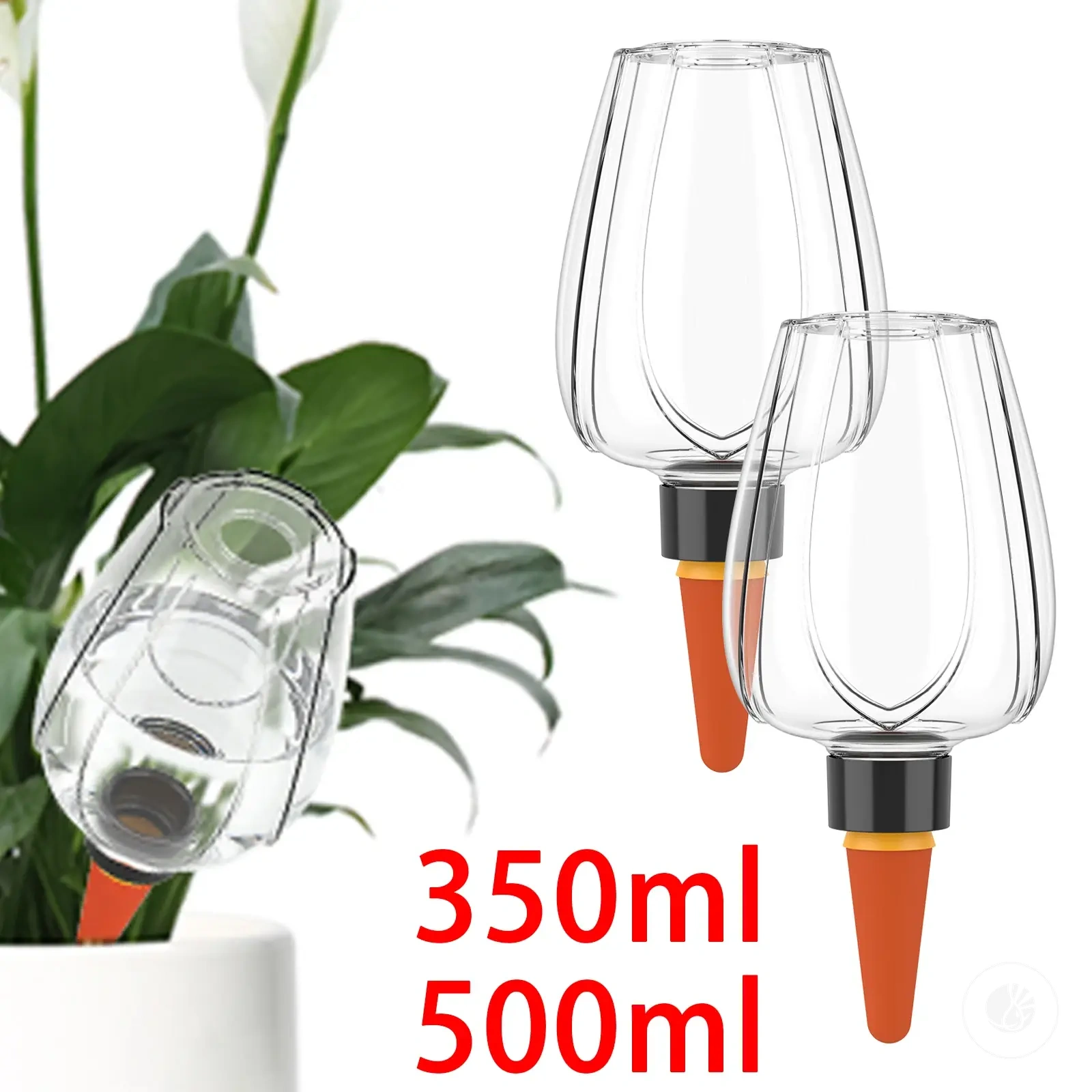
Self-watering spikes, watering globes, and self-watering pots are temporary support tools that help maintain soil moisture for indoor tropical plants. These aids release water gradually into the root zone, providing supplemental hydration without replacing direct soil moisture checks.
In situations like short absences, busy routines, or uneven indoor drying, temporary watering support can reduce plant stress. Spikes or globes release water slowly based on reservoir capacity, while self-watering pots retain moisture over time depending on soil absorption. These supports require monitoring to confirm proper release behavior and soil moisture levels.
Limitations include variable release rates, differences in potting mix, and potential overwatering if soil is already moist. Cross-checking with pot weight or visible plant condition is recommended to ensure effective support.
Here are product examples that may make comparison easier. Before buying, always review the compatibility criteria, essential features, and product details.
| Support Type | Release Behavior | Suitable Condition | Limitation / Risk |
|---|---|---|---|
| Self-watering spikes | Slow release into root zone | Temporary support in small pots | Release varies with soil type |
| Watering globes | Gravity-fed reservoir | Supports moderate drying intervals | Risk of overwatering if soil already moist |
| Self-watering pots | Reservoir feeds soil continuously | Maintains moisture for short absences | Check for residual water accumulation |
Common watering mistakes with indoor tropical plants
When plant stress appears, a watering mistake is often a likely cause, and identifying the specific mistake can help guide the correction. The checklist below helps distinguish watering problems that come from moisture checks, timing, drainage, or plant signals rather than relying on guesswork.
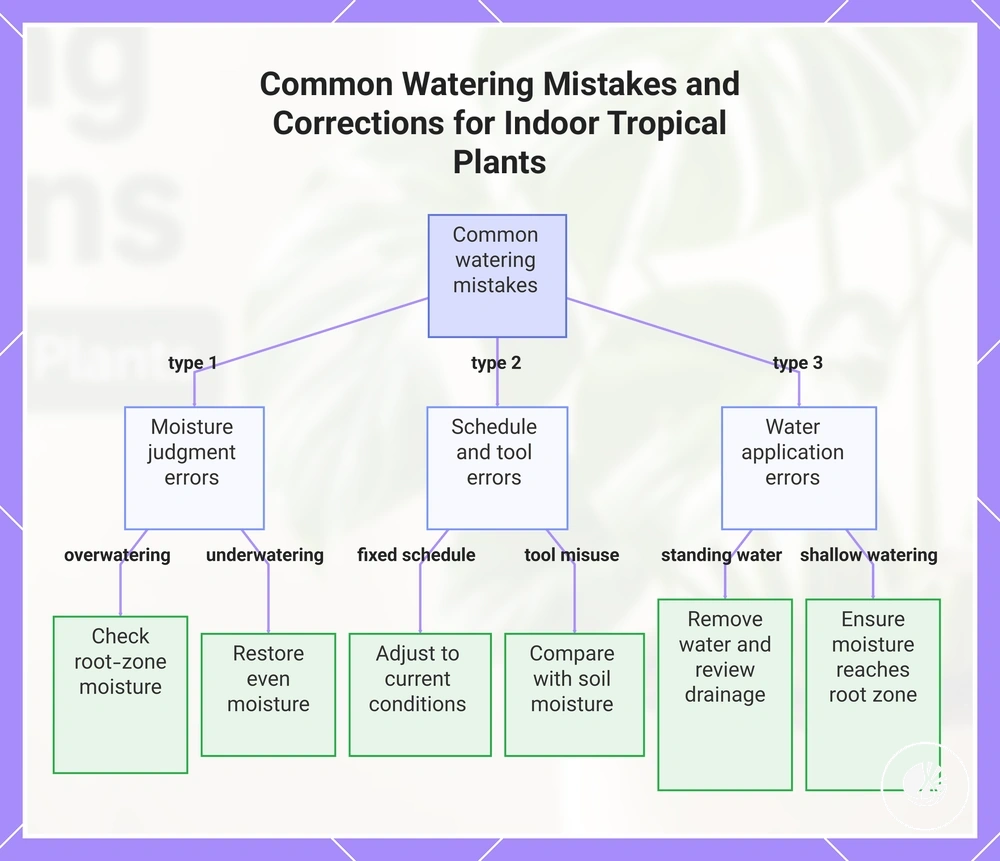
- Overwatering: Action: watering while soil remains wet. Likely cause: misreading moisture or watering too frequently. Correction: check root-zone moisture before watering again.
- Underwatering: Action: allowing the root zone to become excessively dry. Likely cause: missed moisture checks or delayed watering. Correction: restore even moisture and monitor drying patterns.
- Fixed schedule: Action: watering on set dates regardless of conditions. Likely cause: routine-based decisions without a moisture check. Correction: adjust watering frequency to current plant and soil conditions.
- Standing water: Action: leaving excess water in a saucer or around the pot base. Likely cause: incomplete drainage management. Correction: remove excess water and review drainage conditions.
- Shallow watering: Action: wetting only the soil surface. Likely cause: brief or incomplete watering. Correction: ensure moisture reaches the root zone more evenly.
- Tool misuse: Action: relying on a single reading without verification. Likely cause: interpreting tools without checking plant signals. Correction: compare tool readings with soil moisture and pot condition.
Visible stress may have more than one watering cause. Overwatering and underwatering can sometimes create similar plant signals, making a moisture mistake difficult to identify from appearance alone. Wet soil, dry root zones, watering history, and drainage conditions provide better clues than visual symptoms by themselves.
This section focuses on watering mistakes rather than full symptom diagnosis. If symptoms remain unclear after reviewing watering errors, broader symptom-specific guidance may help provide additional context. For related symptom context, see yellow leaves and watering mistakes. :contentReference[oaicite:0]{index=0}
This chart groups six common watering mistakes into three categories and shows the recommended correction for each.
Overwatering and underwatering signals
Overwatering and underwatering produce signals that act as diagnostic clues for indoor tropical plants. Key signals include leaf yellowing, wilting, wet soil, dry root zones, pot weight, odor, leaf texture, and recovery response, providing conditional guidance for identifying potential watering errors.
Symptoms often overlap because similar visible stress can result from either overwatering or underwatering. Wet soil may coincide with drooping or leaf yellowing, while a dry root zone may cause wilting with similar leaf color changes. It's essential to check soil moisture, drainage, and roots before concluding the cause of the symptoms to differentiate the underlying watering issue:contentReference[oaicite:0]{index=0}.
| Signal | Overwatering | Underwatering | Notes |
|---|---|---|---|
| Leaf yellowing | Often with wet soil | May appear with dry root zone | Cross-check soil and roots |
| Wilting | Soft, limp leaves | Dry, crispy leaves | Compare leaf texture |
| Soil wetness | High moisture, possible standing water | Low moisture, dry surface | Use pot weight as guide |
| Pot weight | Heavy due to water | Light due to dryness | Helps assess moisture content |
| Odor | Musty or sour smell | Earthy or neutral | Supports moisture assessment |
| Leaf texture | Soft, limp | Dry, brittle | Observe carefully |
| Recovery response | Slow unless adjusted | Improves quickly with water | Monitor post-watering |
Drooping or yellow leaves require checking soil, drainage, and roots before deciding the cause. For related guidance, see drooping plants and watering issues.
Watering mistakes caused by fixed schedules
Fixed schedule watering can cause errors when the routine ignores current plant and pot conditions. Using a calendar watering habit without adjusting for drying speed, plant growth, or seasonal shifts may result in under- or overwatering.
For instance, a fixed routine may water every seven days, but if the plant grows or indoor conditions accelerate drying, the soil may become too dry before the next scheduled watering. Conversely, during slower drying periods, the same schedule may leave the root zone too wet. Adopting a checking rhythm that incorporates moisture checks allows watering to align with actual plant and pot conditions.
- Before: Water every 7 days regardless of soil moisture or plant size.
- After: Check root-zone moisture and plant signals before watering; adjust intervals based on drying speed, plant growth, and seasonal changes.
Watering checks before using soil, drainage or symptom guides
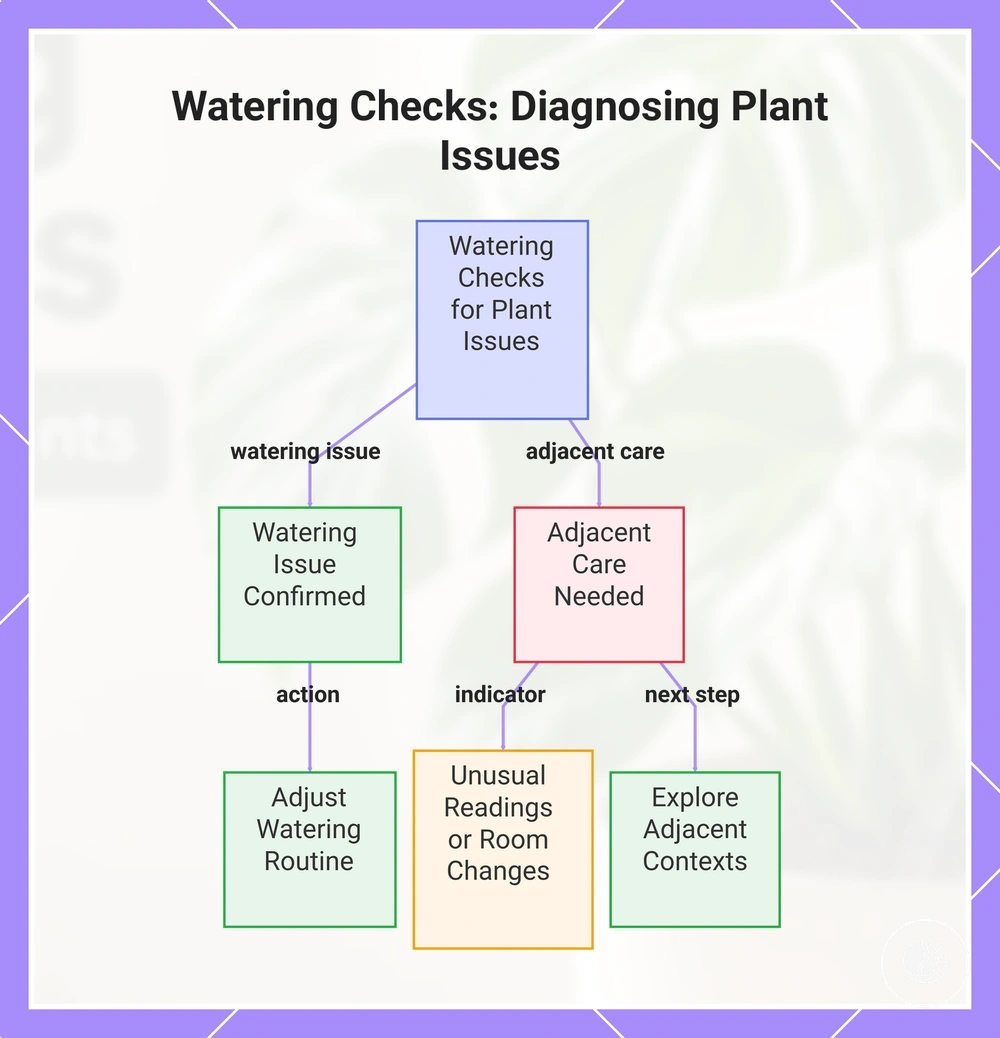
Watering checks are the final verification steps to decide whether a plant issue is primarily a watering routine question or requires adjacent care considerations. By reviewing current conditions, these checks separate watering signals from soil, drainage, yellow-leaf, and drooping contexts while maintaining focus on watering evidence.
Consistent watering evidence is usually sufficient when last watering time, soil moisture, pot weight, drainage behavior, tool readings, and visible leaf responses align. Conflicting or unusual readings, or recent changes in room conditions, indicate that watering alone may not fully explain the issue. In such cases, the checklist helps determine whether to adjust the watering routine or consider adjacent plant care factors.:contentReference[oaicite:0]{index=0}
This checklist preserves watering as the primary decision point. Only when the evidence consistently exceeds watering considerations should the user explore soil, drainage, yellow leaves, or drooping as additional contexts. Use this framework to guide decisions without expanding into a full troubleshooting hub.
- Last watering time: Checks if recent watering aligns with plant needs; keeps user within watering review.
- Soil moisture: Verifies current root-zone moisture; confirms whether watering adjustments are needed.
- Pot weight: Assesses water content indirectly; supports watering evidence without implying other issues.
- Drainage behavior: Confirms water exits properly; abnormal drainage may point to adjacent context.
- Tool reading: Supports moisture assessment; use as part of watering checks, not as standalone proof.
- Visible leaf response: Observes leaf reaction to recent watering; if conflicting, may signal need for broader context.
- Room-condition changes: Considers humidity, light, or drying-speed shifts; helps decide whether watering evidence suffices or adjacent context is relevant.
This chart shows how watering checks help decide whether a plant issue is a watering routine problem or requires adjacent care considerations.