
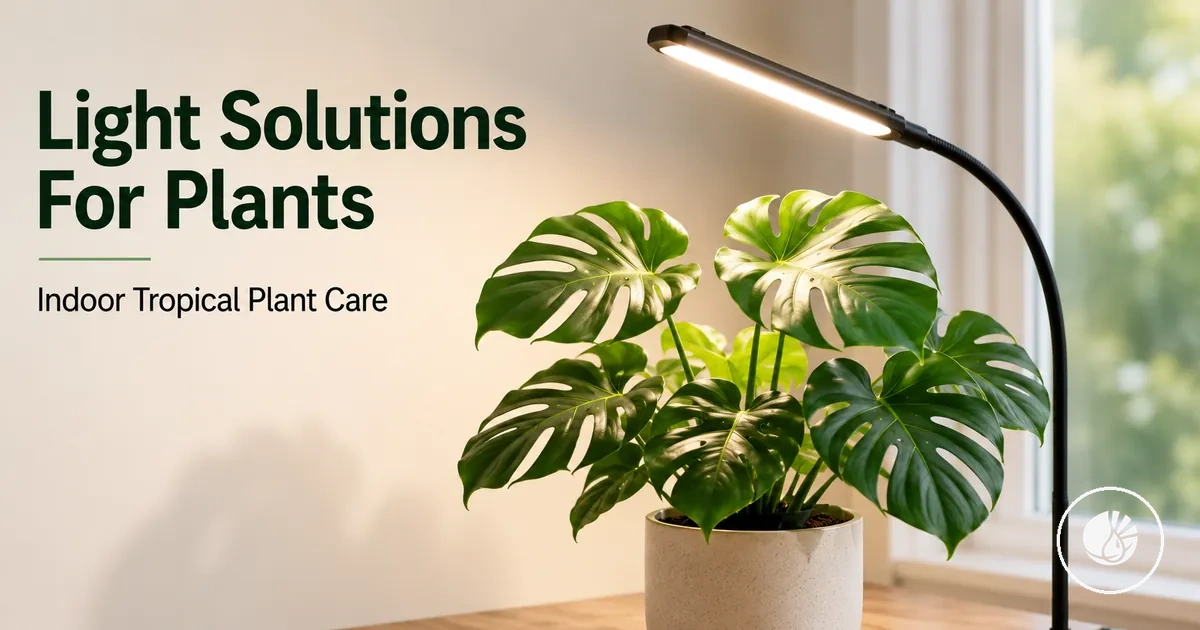
Light solutions for indoor tropical plants
Light solutions for indoor tropical plants depend on compatibility between plant needs, room exposure, available light, and plant response. Indoor tropical plants often perform differently under the same conditions because room orientation, season, distance from a light source, and light duration can change the usable light available. Light is therefore a compatibility variable rather than a fixed requirement.
These light solutions for indoor tropical plants show how room exposure, indirect light, natural light, and supplemental lighting work together in a realistic indoor setting. The photo below helps clarify plant placement, room brightness, and the role of grow lights when natural light alone may not provide a suitable light level.
Direct light compatibility depends on matching indoor tropical plants to the available light level rather than assuming a single setup fits every plant. Natural light, indirect light, grow lights, supplemental lighting, placement, and light duration all influence plant response and should be considered together. Light compatibility focuses on these variables rather than watering, soil, humidity, or pest diagnosis. For broader context, see indoor tropical plant care solutions.
When a room receives limited natural light, supplemental lighting may help provide more consistent conditions, while a brighter room may require only careful placement near indirect light. Changes in window direction, season, distance from the light source, and daily light duration can influence how a plant responds over time. Observing symptoms alongside light level and measurement helps determine whether adjustments may be needed. These factors create the foundation for evaluating light requirements and fit criteria throughout this page.
Light solutions are most effective when plant need, room exposure, supplemental light, and plant response are evaluated together. Suitable placement and light duration can vary by plant type and indoor environment, so outcomes depend on the specific conditions rather than a universal lighting formula.
How light affects indoor tropical plant growth
How light affects indoor tropical plant growth is determined by the intensity, duration, and consistency of usable light reaching the foliage. Indoor tropical plants rely on indirect light to support photosynthesis, maintain leaf color, strengthen stems, and regulate growth rhythm, with plant response varying according to room exposure and light distribution.
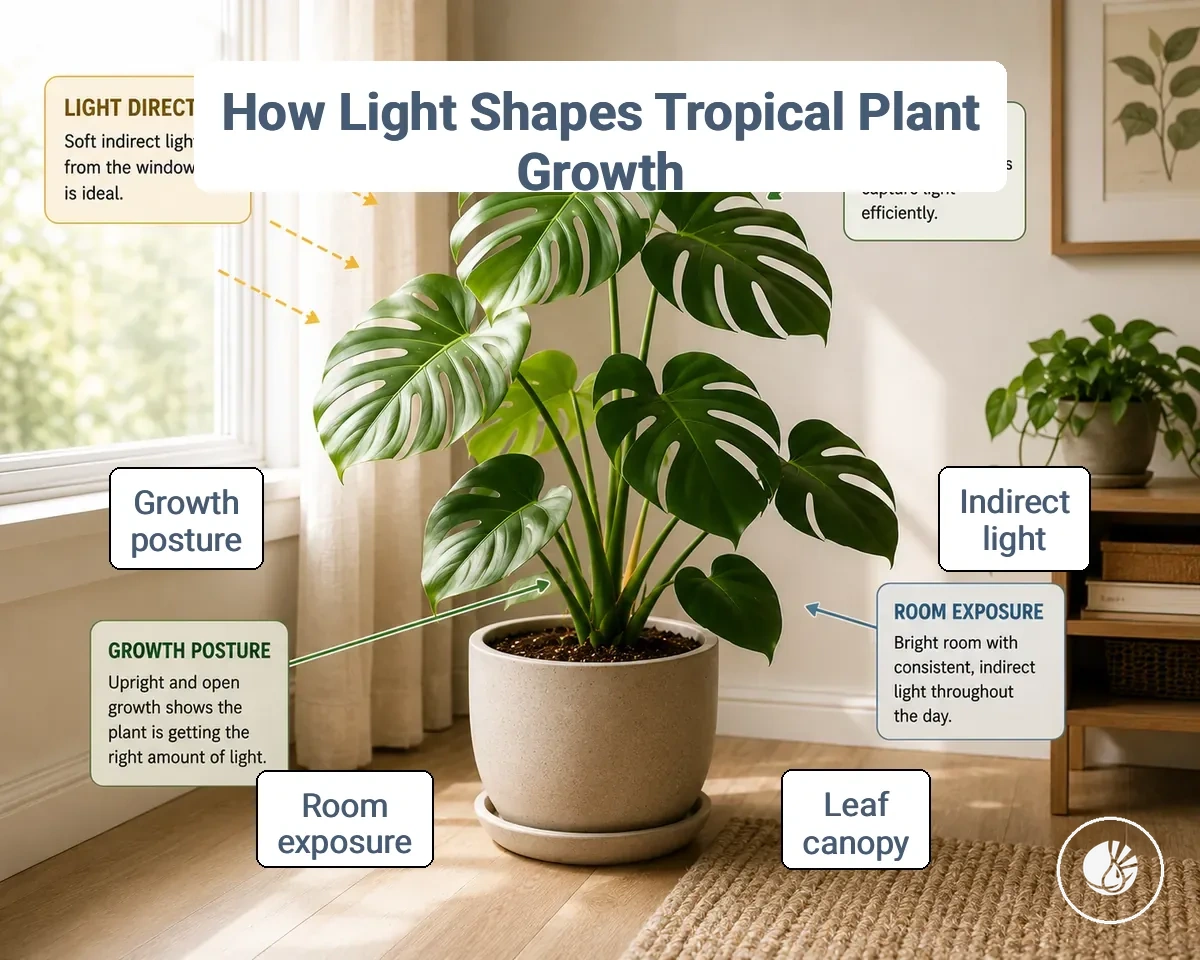
Light intensity and exposure duration influence growth outcomes. Plants placed near bright windows or receiving longer daily light periods typically display more robust foliage and straighter stems, whereas those in dimmer corners may exhibit slower growth or elongated stems. Observing these plant responses helps adjust placement and light exposure. For complementary guidance on plant structure and setup, see essential care parts.
Consistency in light exposure supports even growth patterns, while irregular or uneven light can lead to varied leaf development and posture. Even minor changes in placement or daily duration can affect plant response, highlighting the importance of careful observation. A simple comparison between healthy indirect light and weak indoor exposure demonstrates these differences in growth behavior.
Overall, light attributes—including intensity, duration, consistency, and indirect exposure—interact to shape growth in indoor tropical plants. Adjusting room placement and monitoring plant response allow observation-based management of leaf development, stem strength, and growth rhythm, providing a foundation for further care decisions.
Natural light, indirect light, and artificial light boundaries
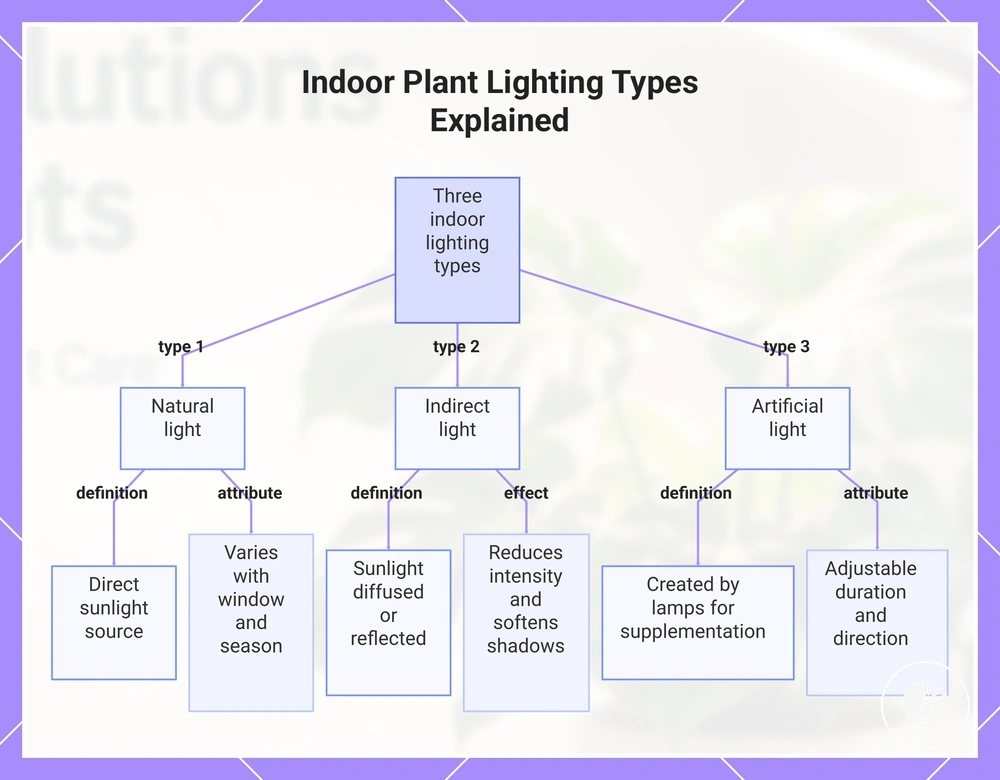
Natural light, indirect light, and artificial light boundaries are defined as specific lighting types used for indoor tropical plants. Natural light comes directly from sunlight, indirect light is sunlight diffused or reflected before reaching the plant, and artificial light is created by lamps to supplement the plant’s usable light. These distinctions clarify the effects of source, intensity, direction, diffusion, and controllability on plant response.
Natural light varies with window orientation and season, while indirect light reduces intensity and softens shadows. Artificial light offers adjustable duration and direction, providing supplemental illumination without replacing other environmental care factors. Light intensity, duration, and diffusion influence plant growth, leaf development, and overall posture, emphasizing careful observation and placement for optimal plant response.
This chart defines the three main lighting types for indoor tropical plants and their key attributes.
Indoor tropical plant light requirements
Indoor tropical plant light requirements depend on plant type, room exposure, window direction, distance from the light source, and seasonal change. Different plant groups may tolerate different light conditions, and plant response can vary when intensity or duration changes. Compatibility is determined by the relationship between indoor conditions and usable light.
Window direction influences light intensity throughout the day, while distance from the window affects how much usable light reaches the foliage. Seasonal change can alter day length and room brightness, which may require observation and adjustment over time. A plant that tolerates lower exposure may still respond differently from one that typically prefers brighter indirect light, making observation an important interpretation tool.
Indoor tropical plant light requirements vary by intensity, duration, and tolerance. The table below organizes common light-condition categories to compare plant group compatibility, exposure cues, and possible growth effects.
| Plant Group | Light Condition | Acceptable Range or Cue | Growth Effect or Risk |
|---|---|---|---|
| Low-light tolerant | Low indirect light | Dim room exposure near a light source | Growth may slow over time |
| Moderate-light tolerant | Medium indirect light | Consistent room brightness with moderate distance | Steady growth may continue |
| Higher-light tolerant | Bright indirect light | Bright exposure without harsh direct sun | Stronger growth response may occur |
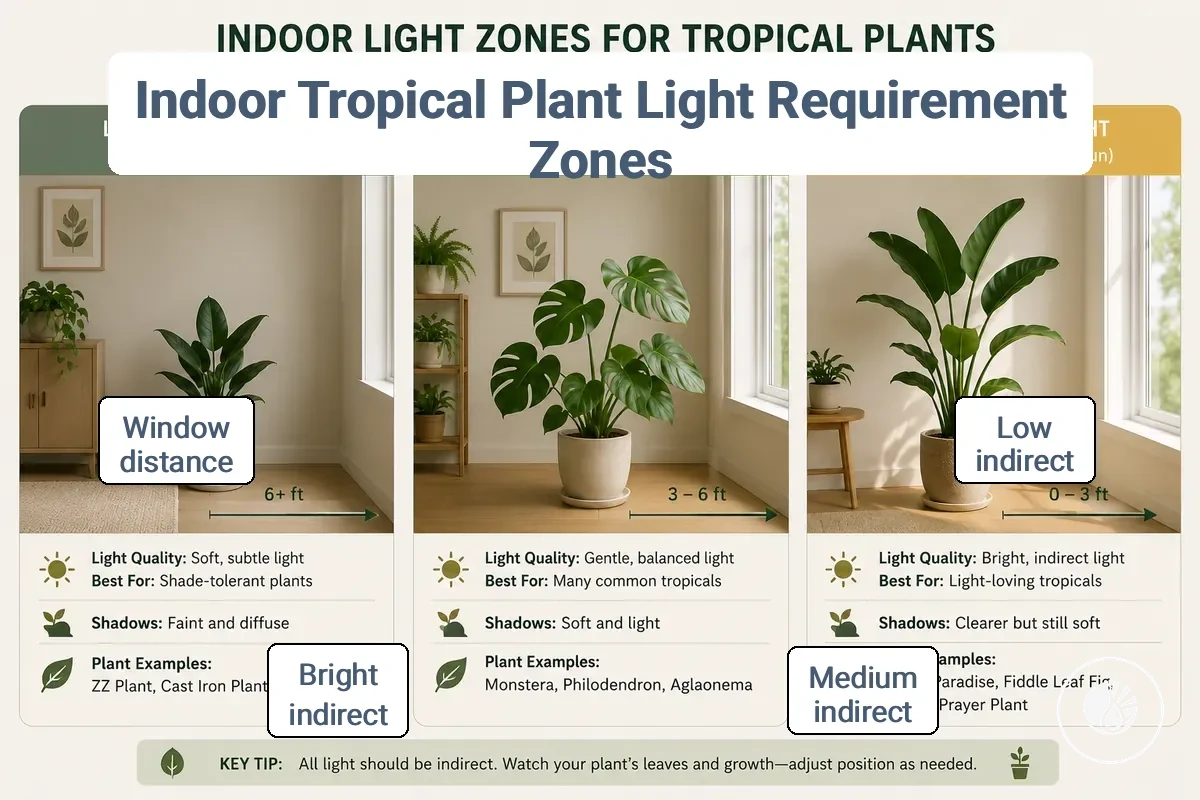
Low, medium, and bright indirect light conditions
Low, medium, and bright indirect light conditions represent distinct observable categories for indoor tropical plants. Low indirect light provides minimal diffused illumination suitable for tolerant species, medium indirect light offers moderate light across the room, and bright indirect light supplies stronger diffused light without direct sunlight. Recognizing these conditions helps assess plant compatibility and expected growth response.
Visual cues distinguish the categories: low indirect light shows soft shadows and dim foliage, medium indirect light presents clearer leaf visibility with moderate shadows, and bright indirect light highlights leaves with sharper shadow contrast. Window distance and seasonal changes can modify intensity and duration. Observing these factors helps determine appropriate placement and anticipate plant response under varying exposure conditions.
- Low indirect light: soft shadows, dim room, slower growth potential
- Medium indirect light: moderate shadows, balanced exposure, steady growth
- Bright indirect light: sharper shadows, bright diffuse, more vigorous growth possible
Window direction, distance, and seasonal light change
Window direction, distance, and seasonal light change determine how much usable light indoor tropical plants receive. Room exposure, combined with these factors, affects light intensity, duration, and overall plant response. Placement suitability must consider changing conditions across seasons and varying distances from light sources.
Window direction impacts the angle and duration of indirect light entering a room, while the plant's distance from the window modifies the usable light reaching leaves. Seasonal changes adjust day length and light intensity, which may require relocating the plant to maintain compatible exposure. Curtains, nearby structures, or balconies can further influence light availability. For example, a plant near a south-facing window may require a slightly different distance in winter compared with summer to achieve similar indirect light conditions.
Checklist for verifying window direction, distance, and seasonal light change:
- Observe room exposure throughout the day and across seasons.
- Check if distance from the window reduces usable light.
- Consider seasonal shifts in day length and intensity.
- Adjust placement if plant response indicates insufficient or excessive light.
Low-light tolerance versus healthy tropical plant growth
Low-light tolerance versus healthy tropical plant growth depends on the distinction between mere survival and robust development. A tropical plant may persist in low light, but healthy tropical plant growth usually requires sufficient indirect light to support fuller foliage, leaf size, and variegation. The main distinction is between tolerance and actual growth performance.
Observation criteria help differentiate these conditions. In low-light situations, survival is possible, but tropical plant growth may slow, leaves may be smaller, and variegation may diminish. When bright indirect light is available, plant response may include fuller growth and stronger foliage, depending on room exposure and other conditions. Monitoring symptoms such as stretched stems or pale leaves can indicate whether the plant is merely surviving or achieving healthy growth, guiding potential adjustments safely.
Key comparison points for low-light tolerance versus healthy tropical plant growth:
- Low-light tolerance: plant survives in weaker exposure, with slower growth and smaller or less variegated leaves.
- Healthy tropical plant growth: plant receives sufficient indirect light, supporting fuller leaf size, variegation, and overall stronger growth.
- Symptom monitoring: observation of leaf color, growth speed, and stem strength indicates if placement adjustments may be needed.
For guidance on optimizing plant placement under reduced light, see low-light room solutions:contentReference[oaicite:0]{index=0}.
When indoor tropical plants need supplemental grow lights
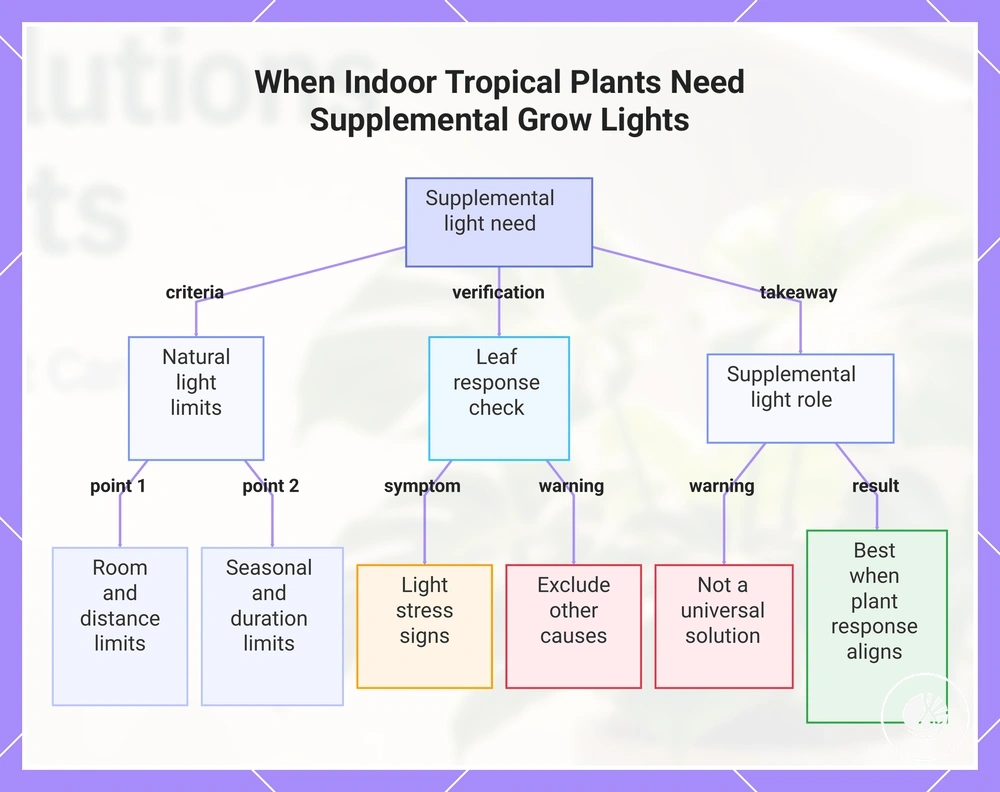
Supplemental grow lights are useful when natural indoor light cannot support stable growth for indoor tropical plants. A grow light can help when room brightness, window placement, seasonal conditions, or daily light duration limit the usable light available to the plant. The key decision is whether natural light is meeting growth needs or whether supplemental lighting may be needed.
Room brightness, distance from windows, season, and leaf response provide the main criteria for this decision. If indoor tropical plants receive weak natural light for extended periods, supplemental lighting may help maintain more consistent exposure. However, plant symptoms do not always indicate a light shortage because watering practices, humidity conditions, acclimation, or environmental changes may also affect leaf response. Supplemental lighting is most appropriate when plant response aligns with signs of insufficient natural light.
When indoor tropical plants need supplemental grow lights can be evaluated through observable conditions rather than assumptions. The checklist below helps verify whether supplemental lighting may be useful based on light-related factors.
- Room brightness remains low during much of the day.
- Distance from windows limits light reaching the plant canopy.
- Seasonal change reduces available natural light.
- Daily light duration appears insufficient for stable growth.
- Leaf response suggests light-related stress after other factors are considered.
- Grow light placement, coverage, and heat exposure can be managed safely.
A grow light is a supplemental option rather than a solution for every plant problem. Placement, duration, coverage, timer use, and heat exposure may influence results, while the need for supplemental lighting depends on natural light conditions and overall plant response. :contentReference[oaicite:0]{index=0}
This chart shows the key criteria and verification steps to determine if indoor tropical plants need supplemental grow lights, based on natural light conditions and plant response.
Light shortage signs that justify extra lighting
When stretched growth and other repeated symptoms occur alongside weak exposure, extra lighting may be justified. A light shortage is more likely when multiple signs appear together rather than from a single symptom alone. Visible changes should be interpreted with room conditions, plant placement, and available natural light. The main condition is repeated growth symptoms that align with weak exposure.
Light shortage signs that justify extra lighting should be assessed through symptom patterns rather than isolated observations. A symptom may have more than one possible cause, so pale leaves, reduced variegation, or slower growth should be evaluated alongside room brightness and recent environmental changes. Extra lighting is usually easier to justify when multiple indicators point toward insufficient light instead of a single stressed appearance. Use observation and adjustment together before deciding that light is the primary cause. :contentReference[oaicite:0]{index=0}
- Leggy growth or stretched growth: may indicate weak exposure; check plant placement and available light before making an adjustment.
- Small new leaves: may suggest limited light availability; compare recent growth with earlier leaf size.
- Leaning growth: may signal movement toward a stronger light source; review placement and exposure patterns.
- Pale leaves: may be associated with a light shortage; combine observation with a watering check before making a light decision.
- Reduced variegation: may occur when light levels decline; observe whether exposure has changed over time.
- Slow-drying soil: can accompany reduced growth under weak exposure; consider light conditions together with soil moisture patterns.
- Leaf scorch: may result from direct light or heat exposure rather than a light shortage; relocation can be a safer adjustment than adding more light immediately.
Not every yellow leaf, droop, or stressed appearance indicates a light problem. Check watering, soil conditions, and humidity before changing lighting aggressively. For broader clarification on symptoms caused by light problems, interpret symptom clusters and room conditions together before deciding on extra lighting.
Rooms and seasons where natural light is not enough
Rooms and seasons where natural light is not enough depend on indoor conditions that reduce usable light for tropical plants. Low room exposure, shaded interiors, greater distance from windows, and seasonal changes can lower indirect light intensity and duration. Plant response may decline when light requirements are not met, indicating a potential need for supplemental lighting. The main distinction is whether room type and seasonal factors limit natural light below plant needs.
Window direction, room distance, and seasonal change influence light compatibility even if plant placement remains constant. Shorter day length, lower room brightness, or reduced indirect light may affect growth and overall plant response. Different tropical plant groups may react differently under the same light condition, so observation-based assessment is often more reliable than fixed rules. Supplemental lighting may be appropriate when combined room and seasonal conditions consistently reduce usable light. :contentReference[oaicite:0]{index=0}
Rooms and seasons where natural light is not enough can be evaluated using the following checklist, which connects room and seasonal factors to potential supplemental-light decisions:
- Deep interior rooms: limited indirect light may reduce usable light at plant canopy.
- Distance from windows: light intensity can drop before reaching the plant.
- Seasonal change: shorter days can reduce light duration and overall exposure.
- Shaded exposure: nearby structures, curtains, or room layout may lower available light.
- Observed plant response: changes in growth may indicate that light requirements are not being met.
- Boundary example: supplemental lighting can compensate for light shortage but does not correct poor watering or airflow.
Compatible grow light features for tropical houseplants
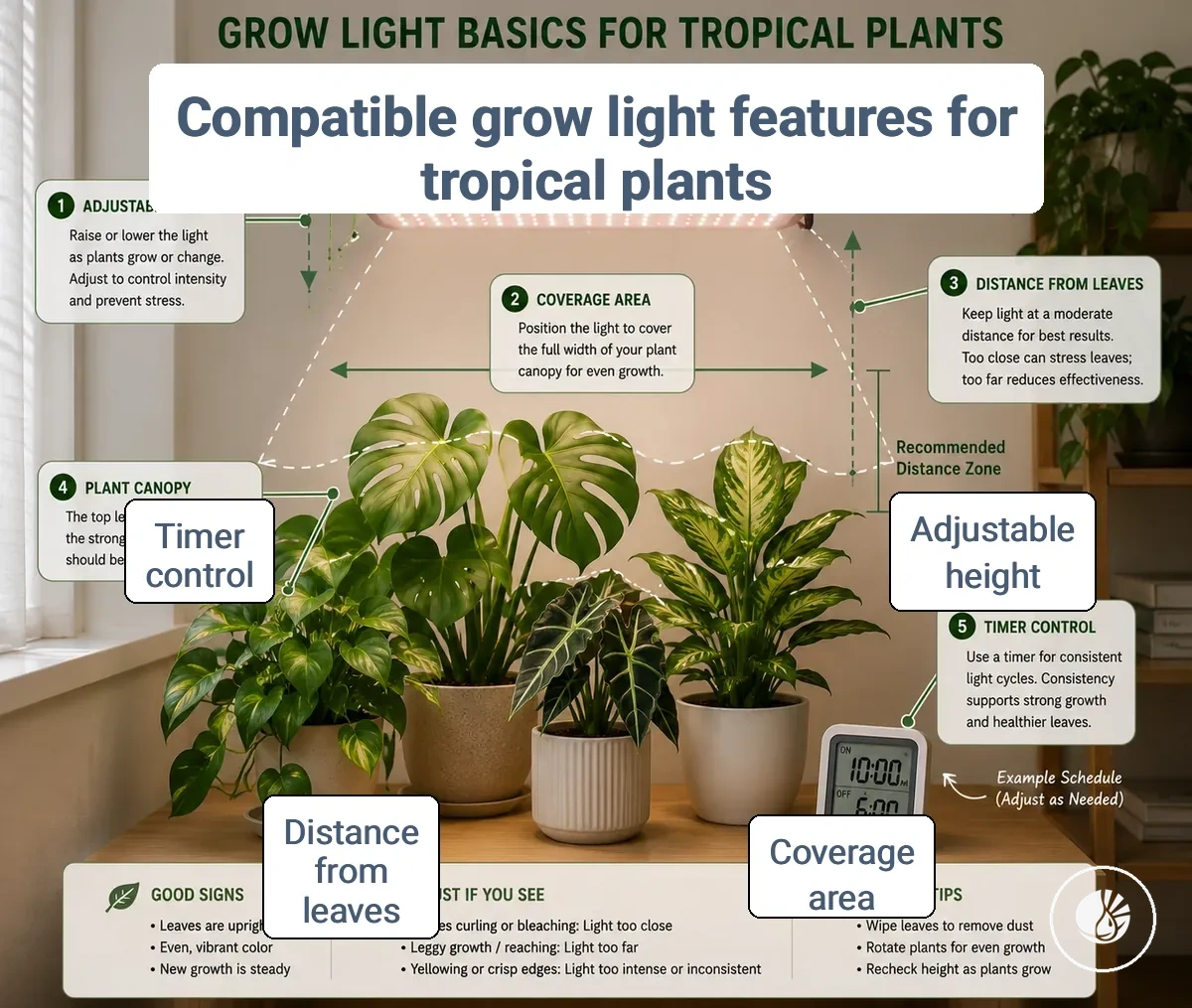
Compatible grow light features for tropical houseplants depend on intensity, coverage, adjustability, and placement to support indoor tropical plants effectively. Features should allow sufficient distance from leaves to prevent heat exposure and ensure even light across the plant canopy. Placement flexibility and timer controls influence how well supplemental lighting integrates with natural light. The main condition is feature compatibility with tropical plant light needs.
When evaluating grow light features, consider adjustable height, coverage area, and duration control. Distance from leaves affects light intensity and the risk of leaf scorch, while coverage area ensures consistent leaf response across the canopy. Timer or control options allow supplemental lighting to complement seasonal and room-based changes in natural light. Feature selection should prioritize safe leaf exposure, appropriate coverage, and flexible placement to support optimal plant response. :contentReference[oaicite:0]{index=0}
Compatible grow light features for tropical houseplants are clarified visually in the image below, which labels adjustable height, coverage area, distance from leaves, and timer control, demonstrating how each feature affects placement and leaf response.
Key features to evaluate:
- Adjustable height: allows safe distance from leaves and optimal coverage.
- Coverage area: ensures even light across plant canopy for consistent leaf response.
- Timer or control: manages duration and supplements natural light appropriately.
- Output intensity: matches plant light requirements without causing leaf scorch.
- Placement flexibility: accommodates room conditions and seasonal changes.
Full spectrum output, brightness, and coverage
Full spectrum output, brightness, and coverage are distinct grow light attributes that affect suitability for indoor tropical plants. Full spectrum output describes the light profile, brightness influences usable intensity at the foliage, and coverage determines how evenly light reaches the plant canopy. These attributes interact with placement, distance, duration, and supplemental lighting conditions. The main distinction is that spectrum, brightness, and coverage influence different aspects of grow light suitability.
Full spectrum output, brightness, and coverage help determine how well a grow light fits plant size and placement conditions. Brightness can affect leaf response when distance changes, while coverage influences how evenly light reaches the canopy. A small desk plant may function well under a narrower coverage area, whereas a wider shelf with multiple indoor tropical plants may require broader coverage to reduce uneven exposure. Heat exposure and the risk of leaf scorch may also vary with placement and safe distance from the light fixture. Suitability depends on balancing output, usable intensity, beam spread, coverage area, and plant arrangement. :contentReference[oaicite:0]{index=0}
Full spectrum output, brightness, and coverage can be compared through the following attribute relationships:
- Full spectrum output: describes the light profile and should be considered alongside brightness and coverage.
- Brightness: affects usable intensity reaching leaves and may require adjustment through placement or distance.
- Coverage: determines how much of the plant canopy receives light and influences exposure consistency.
- Distance: changes light intensity at the foliage and may influence leaf response and heat exposure.
- Coverage area: should align with canopy size and plant arrangement to help maintain even light distribution.
Adjustable height, clip-on placement, and small-space fit
Adjustable height, clip-on placement, and small-space fit affect how a grow light can be positioned for indoor tropical plants. Placement controls distance, coverage, and heat exposure, which can influence leaf response over time. Adjustable designs make it easier to adapt supplemental lighting as plants grow or as available space changes. The main distinction is how mounting flexibility affects practical compatibility.
Adjustable height, clip-on placement, and small-space fit help determine whether a grow light can maintain suitable placement without reducing usable growing space. A clip-on mount may suit limited shelf or desk space when a stable mounting point is available, but compatibility depends on the setup. As indoor tropical plants grow, distance and coverage may require adjustment to keep light reaching the plant canopy consistently. For example, a small desk plant may work with a compact placement area, while a wider shelf may need broader positioning to reduce uneven coverage. Compatibility depends on how well the mounting style adapts to plant growth and space limitations. :contentReference[oaicite:0]{index=0}
Adjustable height, clip-on placement, and small-space fit can be evaluated with the following practical checks:
- Clamp strength: should help keep the light fixture stable during normal adjustment and use.
- Lamp angle: should allow coverage to be directed toward the plant canopy.
- Height range: should allow distance changes as plant growth alters canopy position.
- Shelf or desk fit: should support placement without unnecessarily restricting plant space.
- Plant growth changes: may require periodic adjustment to maintain coverage and manage heat exposure.
Grow light duration and placement for indoor tropical plants
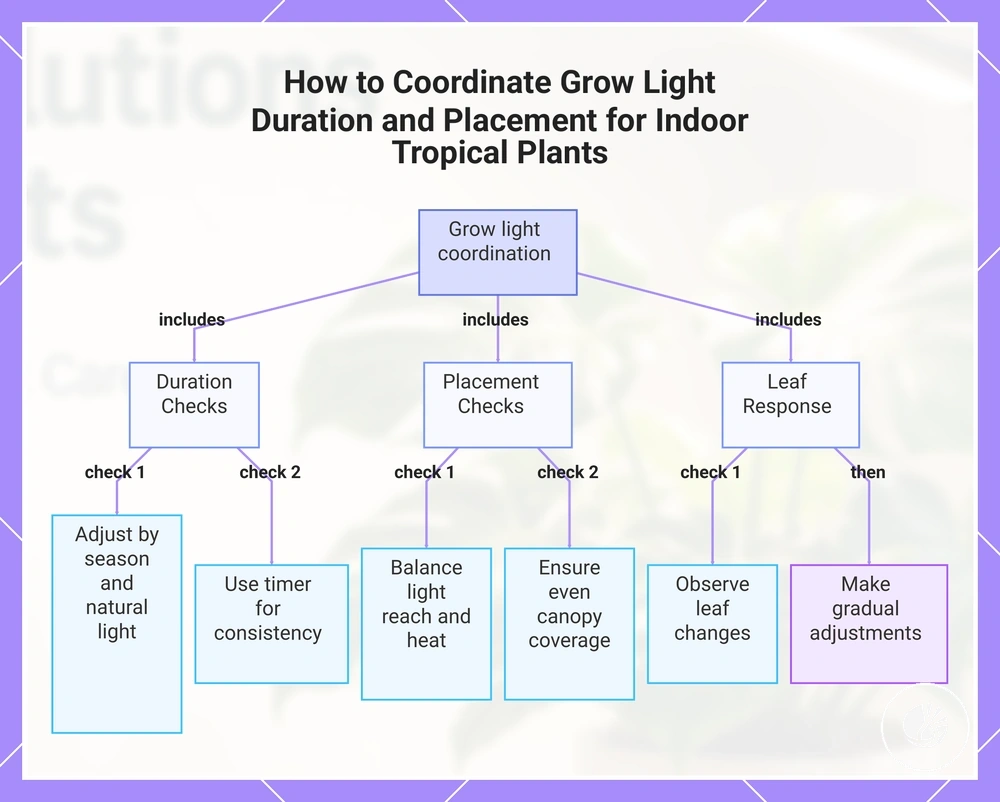
Grow light duration and placement for indoor tropical plants require timing and distance to be adjusted together. A grow light that runs for longer periods may require different placement than a shorter-duration setup because leaf response, coverage, and heat exposure are connected. Supplemental lighting supports indoor tropical plants most effectively when duration and placement are coordinated rather than adjusted independently. The main distinction is balancing light exposure with safe plant response.
Light duration depends on plant type, natural light availability, season, and grow light intensity. A timer can help maintain consistent supplemental lighting, but the appropriate duration may change when natural light conditions change. Distance also influences how much light reaches the plant canopy and how much heat exposure leaves receive. For example, a placement that works during a brighter season may require adjustment when natural light decreases. Gradual changes allow observation of leaf response before making larger adjustments, which can provide a clearer interpretation of plant needs. :contentReference[oaicite:0]{index=0}
Grow light duration and placement for indoor tropical plants can be reviewed with the following usage checks. These variables work together and help clarify when adjustment may be appropriate.
- Duration: adjust light exposure according to plant response, season, and available natural light.
- Timer consistency: use regular lighting cycles to reduce abrupt changes in exposure.
- Distance: adjust placement to balance light reach and heat exposure.
- Coverage: check that light reaches the plant canopy evenly.
- Leaf response: observe changes in growth, color, or posture before making larger adjustments.
- Heat exposure: maintain a safe distance when leaves show signs of excessive warmth or stress.
This chart shows the key usage checks for balancing grow light duration and placement to ensure healthy indoor tropical plants.
Daily light hours and timer use
Daily light hours and timer use ensure consistent supplemental lighting for indoor tropical plants. A timer helps maintain steady on-off cycles, supporting stable leaf response and coverage while reducing the risk of excessive heat exposure. The correct duration varies depending on natural light, season, plant type, and grow light intensity, rather than a single fixed schedule. The main condition is achieving consistent daily exposure through controlled timing.
Timers work by aligning daily light hours with observed plant response, placement, and natural light overlap. They prevent under-lighting when short days or cloudy conditions reduce natural light and help avoid excessive exposure when lights remain on longer than necessary. For example, a grow light supplementing morning window light can be timed to turn off as daylight increases, reducing unnecessary heat and maintaining consistent coverage. Gradual adjustments allow users to observe leaf response before changing daily duration significantly. Decisions on timer settings depend on seasonal variation, plant type, and observed foliage behavior. :contentReference[oaicite:0]{index=0}
Daily light hours and timer use can be managed with the following practical checks:
- Duration: adjust daily exposure according to natural light and plant response.
- Timer consistency: maintain regular on-off cycles to ensure stability.
- Natural light overlap: factor available daylight into supplemental timing.
- Seasonal adjustment: review and adjust timers as day length changes.
- Leaf response: observe growth, color, and posture before significant changes.
Distance from leaves and heat exposure risk
Distance from leaves and heat exposure risk determine how safely a grow light can be positioned near indoor tropical plants. Placement affects light intensity and leaf response, and proximity that is too close can increase the risk of heat stress. Monitoring leaf response alongside distance helps ensure supplemental lighting remains effective without causing damage. The main distinction is balancing light usefulness with leaf safety.
Lamp type, heat output, canopy height, and placement influence plant reaction under supplemental lighting. A high-heat grow light may require a greater distance from the foliage, while tender tropical leaves positioned too close to an intense or poorly placed lamp can show scorch signs. Observing leaf color, texture, and surface condition helps determine if distance adjustment is needed. Coverage and distance should be evaluated together to maintain safe leaf exposure while providing adequate light. Safe distance decisions depend on lamp characteristics, plant tolerance, and observed leaf response over time. :contentReference[oaicite:0]{index=0}
Distance from leaves and heat exposure risk can be assessed with this practical safety checklist:
- Leaf distance: confirm foliage is not too close to the grow light.
- Heat exposure: watch leaves for signs of excessive warmth or stress.
- Canopy height: adjust placement as the plant grows to maintain safe distance.
- Coverage: ensure even light distribution across the plant canopy.
- Scorch signs: monitor for leaf damage indicating excessive intensity or heat.
Using plant light meters to match light levels
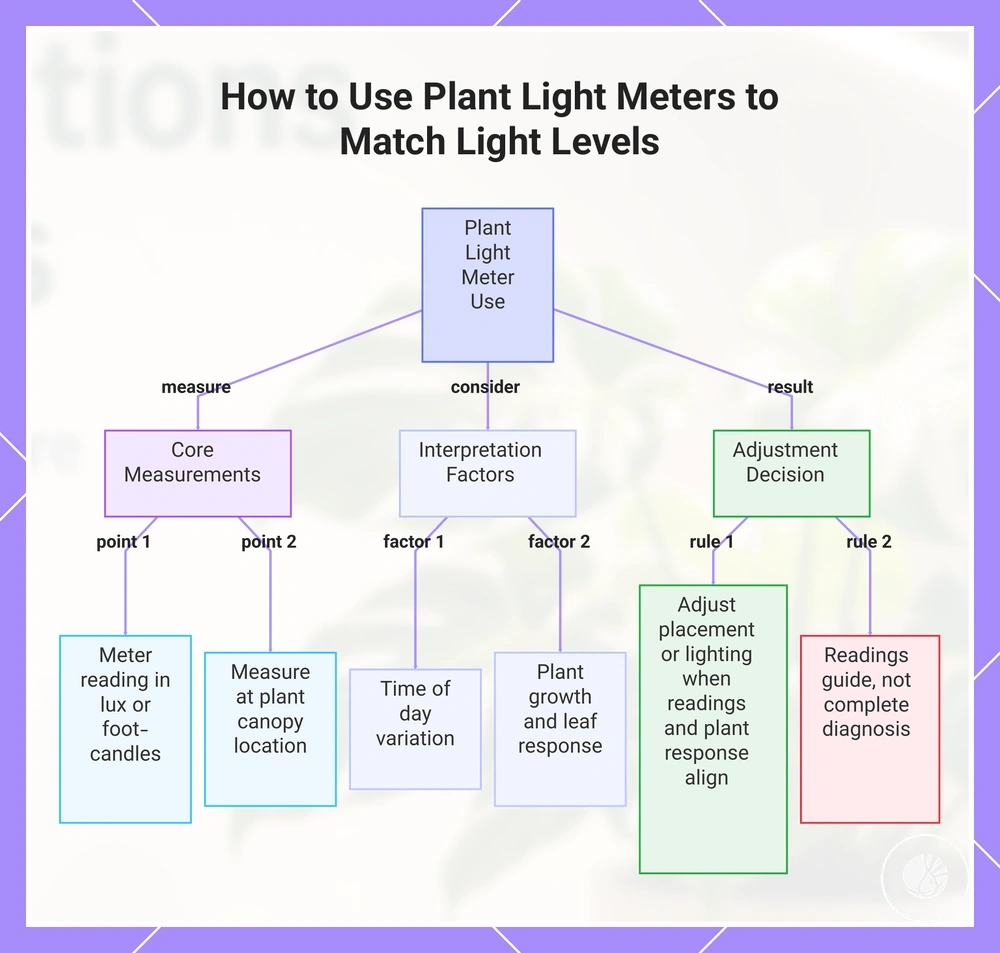
Using a plant light meter depends on measuring light intensity where indoor tropical plants grow. A plant light meter can provide a reading in lux or foot-candles that estimates usable light levels, helping users compare conditions across locations and times. These readings are most valuable when interpreted alongside plant observation, rather than replacing it. The main distinction is using measured light as a guide for decision-making, not as a complete diagnosis.
Reading interpretation requires considering location, time of day, and plant response together. Light levels can vary between morning and afternoon, or due to seasonal shifts. For example, a reading near a plant canopy may be sufficient in the morning but lower later in the day. Plant observation, growth response, and measured light should guide any adjustment. Decisions on placement or supplemental lighting depend on whether readings and plant response indicate the same need. :contentReference[oaicite:0]{index=0}
Using plant light meters to match light levels helps organize light conditions by location, time, and plant response. The checklist below clarifies practical usage without relying solely on numbers.
- Reading: note the meter value in lux or foot-candles.
- Location: measure where the plant canopy receives light.
- Time of day: consider how readings vary across the day.
- Plant need: assess leaf response and growth alongside readings.
- Adjustment: modify placement or supplemental lighting only when readings and observation suggest a change.
A plant light meter can help maintain consistent light assessment, but readings have practical limits and do not replace plant observation. Interpretation depends on location, time, and observation. For related equipment considerations, see lighting tools and care kits.
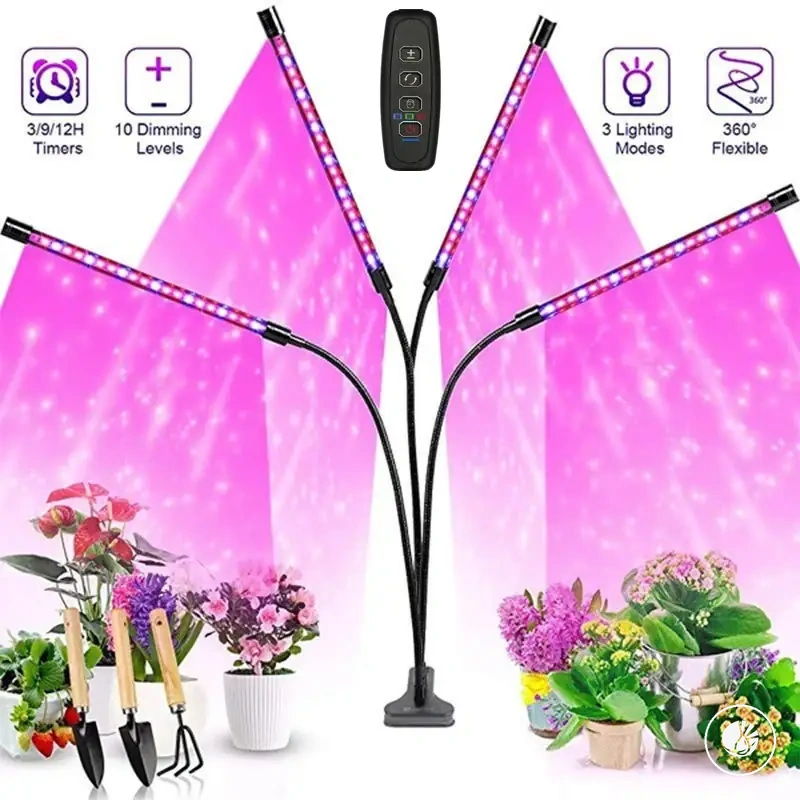
The products below are useful examples for comparing available options. Before buying, check that the compatibility criteria, key features, and product details match your needs.
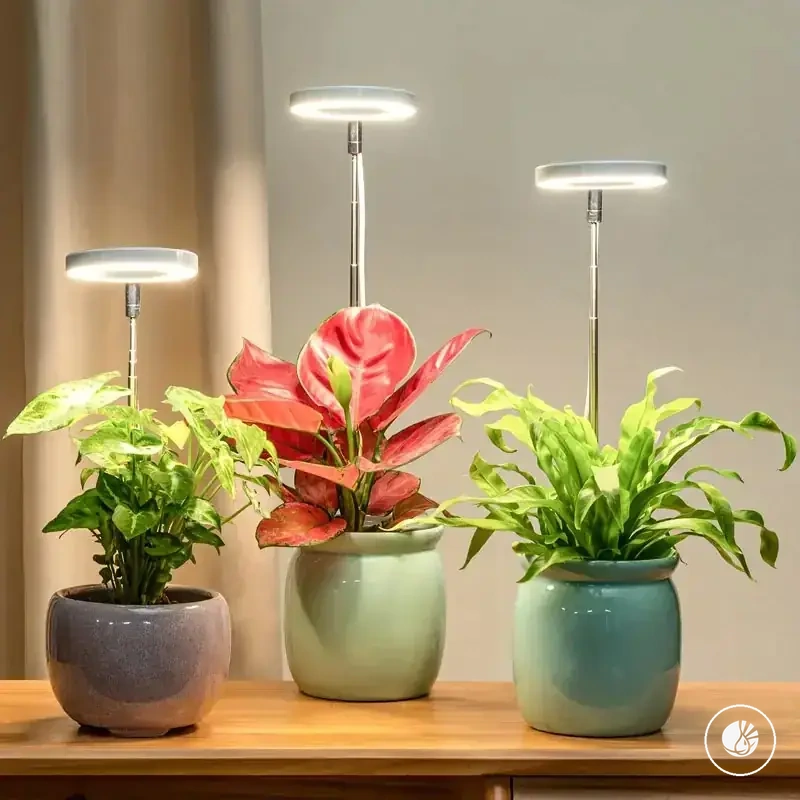
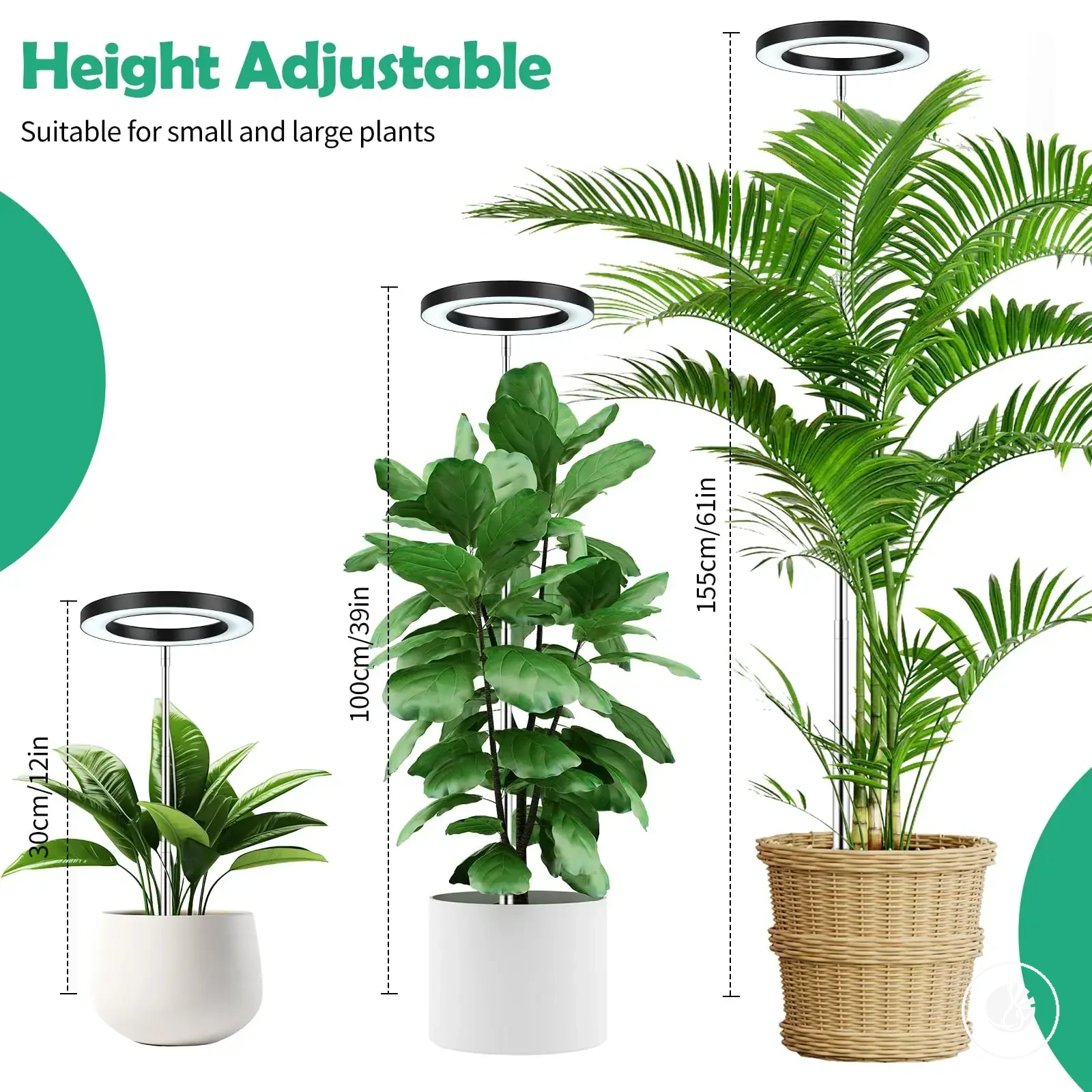
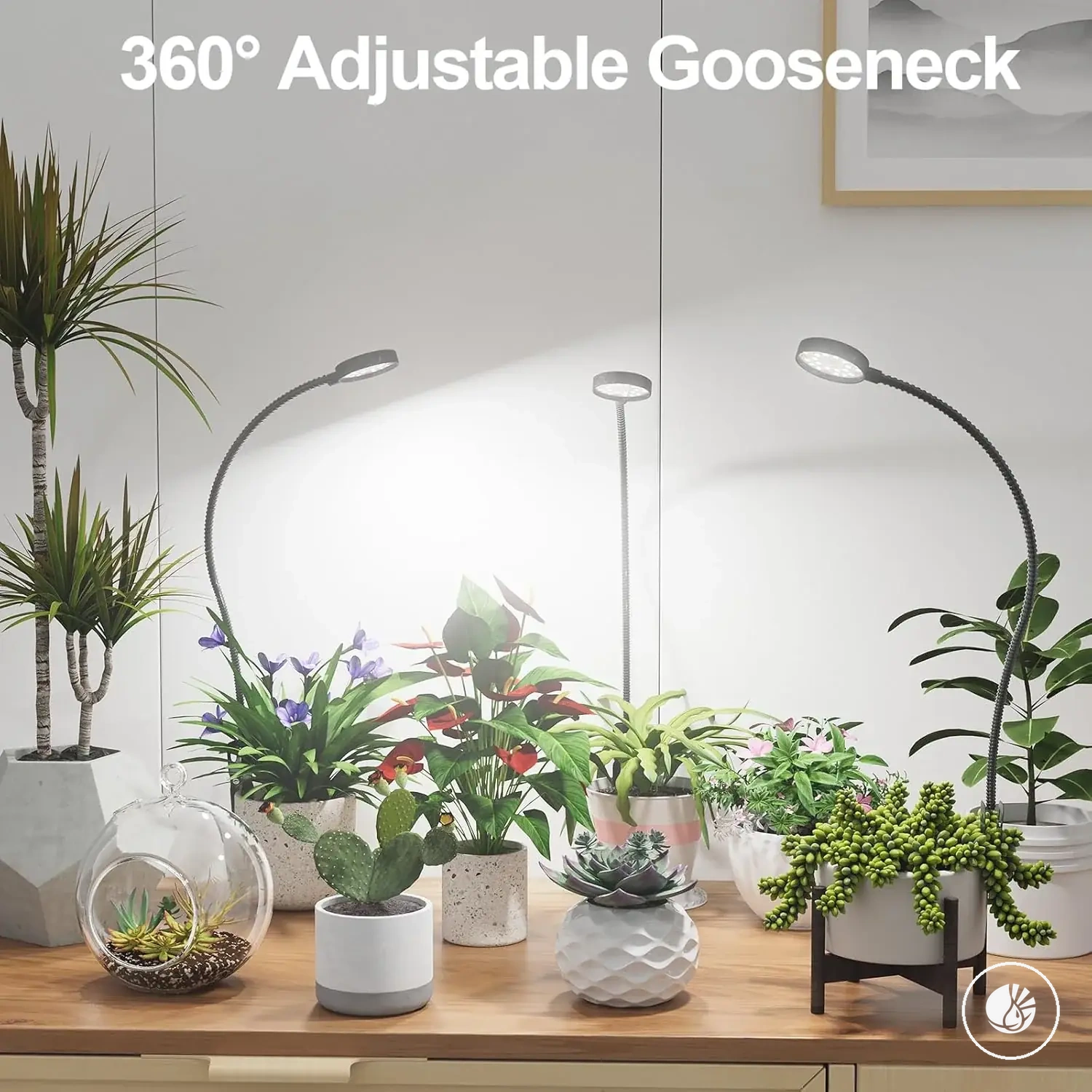
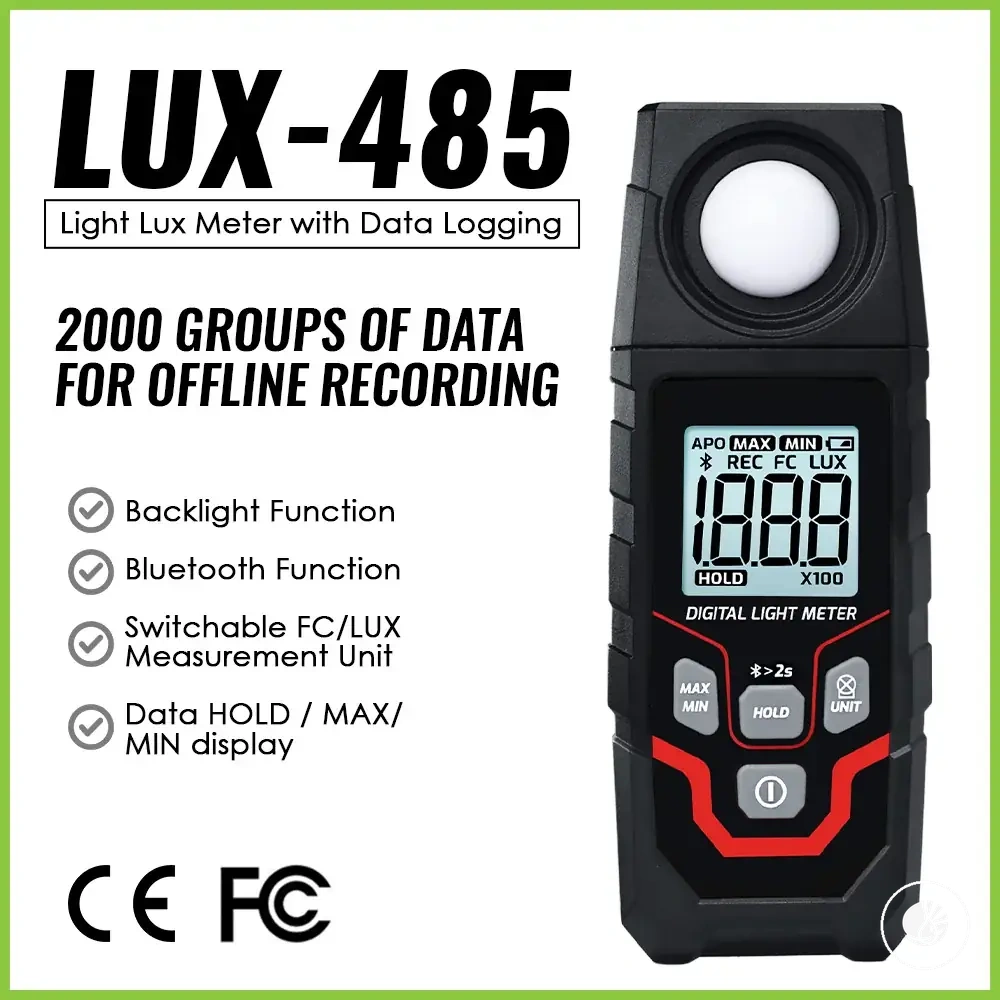
This chart shows the key measurements, interpretation factors, and decision rules for using a plant light meter effectively.
Foot-candles, lux, and practical measurement limits
Foot-candles and lux are measurement units used to estimate light intensity for indoor tropical plants. A plant light meter displays a reading in lux or foot-candles, allowing users to compare light levels across different locations and times. These units help organize light assessment, but their value depends on interpretation and plant observation. The main distinction is that a reading estimates light conditions rather than confirming plant suitability. :contentReference[oaicite:0]{index=0}
A plant light meter reading can vary by location, meter position, and time of day. Measured light near a window may differ from a reading taken at the plant canopy, and light levels can change throughout the day. Foot-candles and lux provide useful intensity information, but interpretation should also consider growth response and environmental conditions. A meter value may support an adjustment decision when plant observation and measured light indicate the same pattern. :contentReference[oaicite:1]{index=1}
Foot-candles, lux, and practical measurement limits can be organized through the criteria below to connect readings with interpretation:
- Unit meaning: lux and foot-candles indicate light intensity at a measured location.
- Reading variability: values may change with meter angle, position, and time of day.
- Measurement position: readings are most useful when taken near the plant canopy.
- Time of day: light levels may vary as natural light conditions change.
- Interpretation limits: readings should support plant observation and growth response rather than override them.
Light meter readings versus plant observation
Light meter readings versus plant observation depend on combining measured light with visible plant response. A plant light meter provides a reading in lux or foot-candles, while plant observation shows how a plant reacts to those light conditions over time. Both methods answer different parts of the lighting question and are complementary rather than fully sufficient on their own. The main distinction is balancing numeric measurements with observed growth response. :contentReference[oaicite:0]{index=0}
Measured light can vary by location, meter angle, and time of day, providing a snapshot of intensity, while plant observation captures leaf response and growth habit that a reading alone cannot reveal. For example, a fair reading may still require adjustment if the plant appears stretched or leaves show pale coloration. Seasonal change and plant position can influence interpretation, so adjustment decisions are usually more reliable when meter readings and observation patterns align. :contentReference[oaicite:1]{index=1}
Light meter readings versus plant observation can be compared using the following contrast to clarify what each contributes:
- Plant light meter: measures light levels at a specific location and time of day but cannot show long-term plant response.
- Plant observation: reveals leaf response and growth habit but does not quantify intensity at a specific point.
- Reading accuracy: depends on meter position, location, and changing light conditions.
- Adjustment decisions: are more reliable when meter readings and plant observation indicate the same pattern.
Common lighting mistakes in indoor tropical plant care
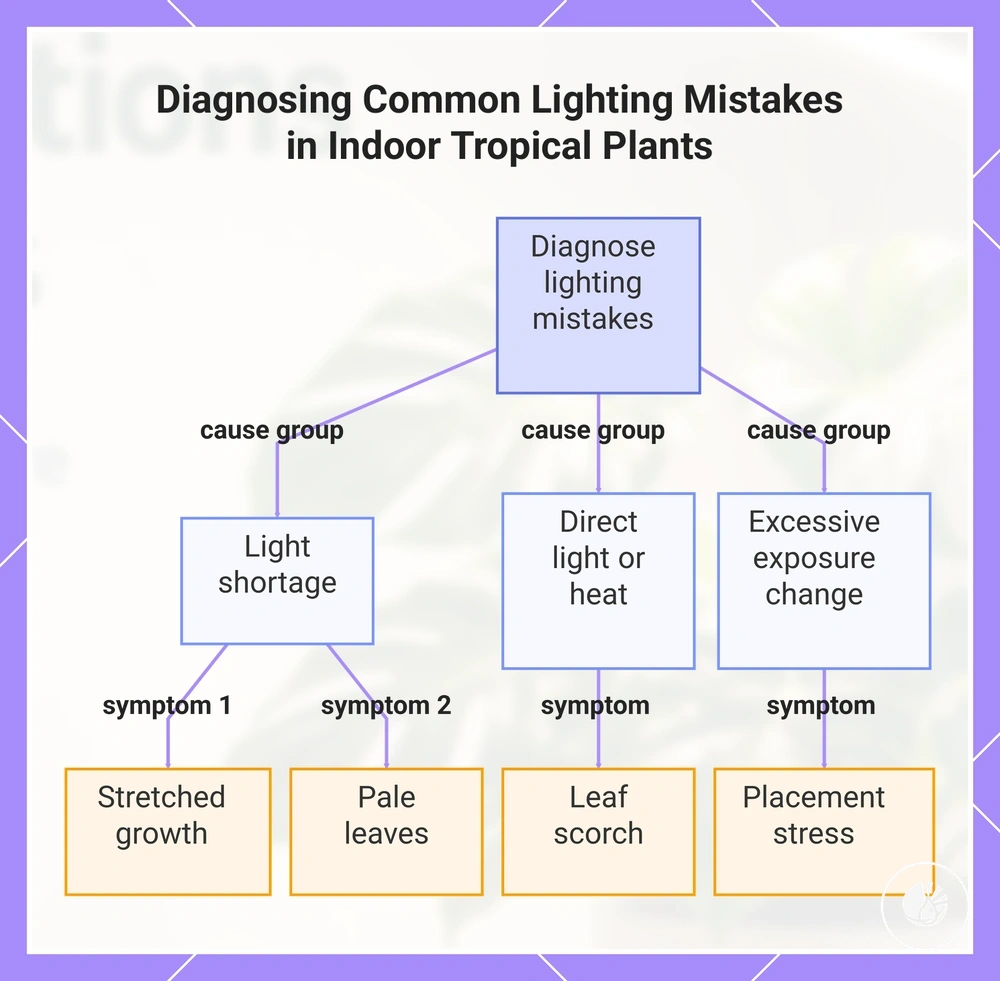
When stretched growth, pale leaves, or leaf scorch appear, a lighting mistake may be the cause. Indoor tropical plants often show light-related symptoms through growth patterns and leaf condition, but the visible cue should be connected to a likely lighting cause before making changes. The most common distinction is between light shortage from weak exposure and stress from excessive direct light or intense artificial exposure. :contentReference[oaicite:0]{index=0}
Stretched growth is often associated with weak exposure, especially when plant placement limits access to usable light. Pale leaves may suggest a light shortage when reduced growth and weak exposure occur together, although observation should precede any light decision. In contrast, leaf scorch is more commonly linked to direct light or excessive heat exposure near a light source. A safer adjustment is usually based on the symptom pattern, the likely cause, and the plant's response after a placement change. :contentReference[oaicite:1]{index=1}
Common lighting mistakes in indoor tropical plant care can be diagnosed with the checklist below. Each item connects a visible cue to a likely lighting cause and a safer adjustment.
- Stretched growth: visible cue is leggy growth; likely cause is weak exposure; safer adjustment is reviewing plant placement and available light.
- Pale leaves: visible cue is reduced leaf color; likely cause may be light shortage; safer adjustment is combining observation with a watering check before changing exposure.
- Leaf scorch: visible cue is damaged leaf tissue; likely cause is direct light or heat exposure; safer adjustment is relocation or reduced exposure intensity.
- Placement stress: visible cue is stressed leaves after a lighting change; likely cause may be excessive exposure change; safer adjustment is gradual adjustment rather than abrupt relocation.
This chart groups common lighting symptoms by their likely cause category to help diagnose the issue.
Too little light, stretched growth, and pale leaves
Stretched growth and pale leaves can signal that indoor tropical plants are receiving too little usable light when room exposure is weak. Stems may elongate, leaves may appear smaller or paler, and new growth can be slow, but these symptoms should always be interpreted with placement and seasonal conditions. The primary condition is light shortage caused by weak exposure. :contentReference[oaicite:0]{index=0}
Symptoms such as leggy stems, reduced leaf size, and directional leaning indicate insufficient light. Plants positioned far from a window or shaded by nearby objects may show these cues more prominently. Observing multiple indicators together helps determine whether adjustment in placement or supplemental light is needed. Seasonal reductions in natural light can amplify these patterns, but if symptoms do not align with expected light exposure, other factors like nutrient stress or watering imbalance should be considered. :contentReference[oaicite:1]{index=1}
Too little light, stretched growth, and pale leaves can be diagnosed with this symptom checklist, connecting visible cues to likely causes and safer adjustments:
- Stretched growth: symptom is elongated stems; likely cause is weak exposure; safer adjustment is repositioning for more usable light.
- Pale leaves: symptom is reduced leaf color; likely cause may be light shortage; safer adjustment is evaluating placement and light availability before acting.
- Leaning direction: symptom is growth toward a light source; likely cause is uneven exposure; safer adjustment is adjusting plant orientation or nearby obstructions.
- Slow new growth: symptom is reduced development of new leaves; likely cause may be insufficient light; safer adjustment is checking overall light conditions and making gradual placement changes.
- Edge-case cue: pale leaves without stretched growth may indicate watering imbalance or nutrient stress; interpret cautiously before adjusting light. :contentReference[oaicite:2]{index=2}
Too much direct light, leaf scorch, and placement stress
Scorched patches or stressed leaves can occur when tropical plants receive too much direct sunlight or intense artificial light. Leaf scorch may present as brown or dry edges, and stressed leaves often indicate placement stress. These symptoms should be interpreted separately from heat or watering stress, and adjustments should be gradual to reduce further damage. The main condition is excessive light exposure causing potential leaf damage. :contentReference[oaicite:0]{index=0}
Too much direct light, leaf scorch, and placement stress can be evaluated by checking sun and lamp exposure, leaf condition, and recent placement changes. Sudden exposure to strong direct light or a close lamp may increase the risk of leaf scorch, while dry edges or drooping can highlight stress from light intensity rather than water deficit. Observing which leaves are affected and the orientation of growth helps distinguish light-related stress. Gradual repositioning, increasing distance from intense sources, and monitoring response help reduce stress while maintaining adequate light. :contentReference[oaicite:1]{index=1}
Symptoms can be checked using this concise diagnostic checklist, focusing on visible cues and safer adjustments for too much direct light, leaf scorch, and placement stress:
- Leaf scorch: symptom is brown or dry patches; likely cause is direct light; safer adjustment is increasing distance or shading gradually.
- Stressed leaves: symptom is drooping or dry edges; likely cause is placement stress; safer adjustment is careful repositioning while observing response.
- Sudden exposure changes: symptom is rapid leaf damage; likely cause is abrupt light intensity change; safer adjustment is gradual acclimation to brighter conditions.
- Lamp distance: symptom is localized scorching near a light source; likely cause is too-close artificial light; safer adjustment is incrementally increasing distance or adjusting angle.
- Edge-case cue: if leaves appear stressed without direct light or close lamp proximity, consider temporary water imbalance; adjust placement cautiously and continue observation. :contentReference[oaicite:2]{index=2}