
Seasonal Care Adjustments for Indoor Tropical Plants
Seasonal care adjustments for indoor tropical plants are maintenance changes applied when indoor conditions fluctuate throughout the year. Factors such as light, watering, humidity, temperature, and growth rate can vary as rooms experience seasonal shifts. These adjustments help maintain stability in the care routine without replacing the entire system.

Effective seasonal care depends on observing the interplay between season, room conditions, and plant response. Adjustments may be necessary when natural light changes, indoor air becomes drier, watering needs shift, or growth patterns alter. This process belongs within the broader indoor tropical plant care solutions context because it modifies existing care inputs rather than creating a separate routine.
Indoor tropical plants require careful interpretation of signals rather than isolated observation. Variations in light can influence growth rate, indoor dryness may affect humidity stress, and temperature changes can alter soil moisture use. Seasonal care is most effective when each adjustment remains conditional on visible stress indicators, recent care, and the actual room environment.
Seasonal adjustment modifies the care routine, whereas a full care reset replaces it entirely. Before changing watering, light timing, humidity support, or feeding, it is important to assess the seasonal indoor conditions affecting the plants. Subsequent sections will address these conditions to guide appropriate adjustments.
Seasonal Conditions That Change Indoor Tropical Plant Care
Seasonal indoor conditions can change indoor tropical plant care by affecting how plants use light, moisture, and energy throughout the year. The degree of change depends on plant response, room setup, and seasonal shifts. The main conditions include light duration, window intensity, heater or AC use, humidity drop, evaporation speed, growth slowdown, and growth acceleration.
These conditions influence plant response because indoor climate changes can alter moisture use, growth patterns, and environmental stress. Changes in daylight may affect growth rate, while heater or AC use can contribute to indoor dryness. Humidity levels, temperature patterns, and room conditions often interact, so care needs may change even when the plant remains in the same location.
Seasonal Conditions That Change Indoor Tropical Plant Care become easier to recognize when the main environmental factors are viewed together. The image below clarifies how window light, room air movement, humidity cues, and plant placement can influence care needs. This section focuses on condition awareness rather than full fixes.
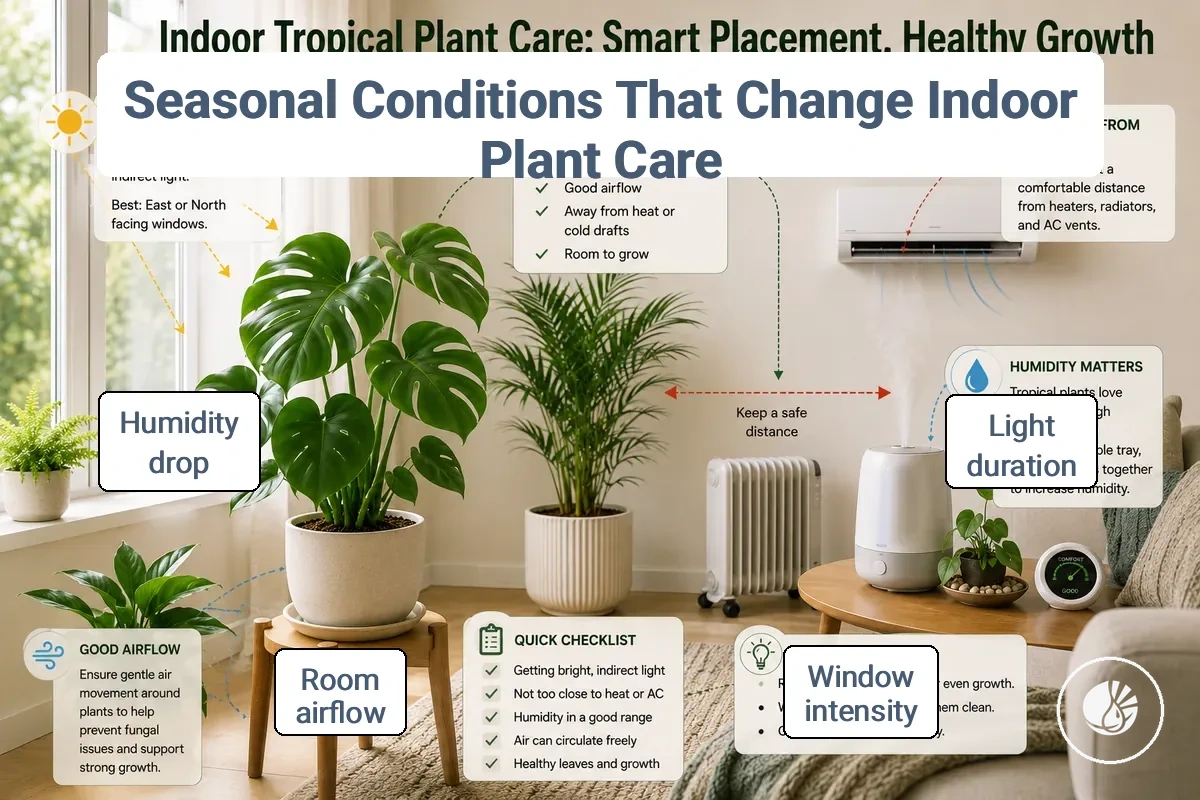
- Light duration: Changes in daily light exposure can influence growth rate and may affect how actively a plant uses resources.
- Window intensity: Stronger or weaker window light can alter plant response and may influence placement or observation needs.
- Heater or AC use: Indoor airflow and temperature changes can affect moisture loss and may change care needs.
- Humidity drop and evaporation speed: Drier indoor air can increase evaporation, which may affect how quickly moisture is used.
- Growth slowdown: Reduced growth may lower resource demand and can signal a need for more cautious routine adjustment.
- Growth acceleration: Faster growth may increase resource use and can indicate changing care requirements.
What changes are the seasonal indoor conditions and their effect on plant response. What does not change is the need to evaluate conditions before adjusting care inputs. Seasonal adjustment modifies existing care inputs, while detailed light, watering, humidity, and fertilizer topics are handled in their dedicated sections.
Adjust Light Exposure and Grow Light Timing Through the Year
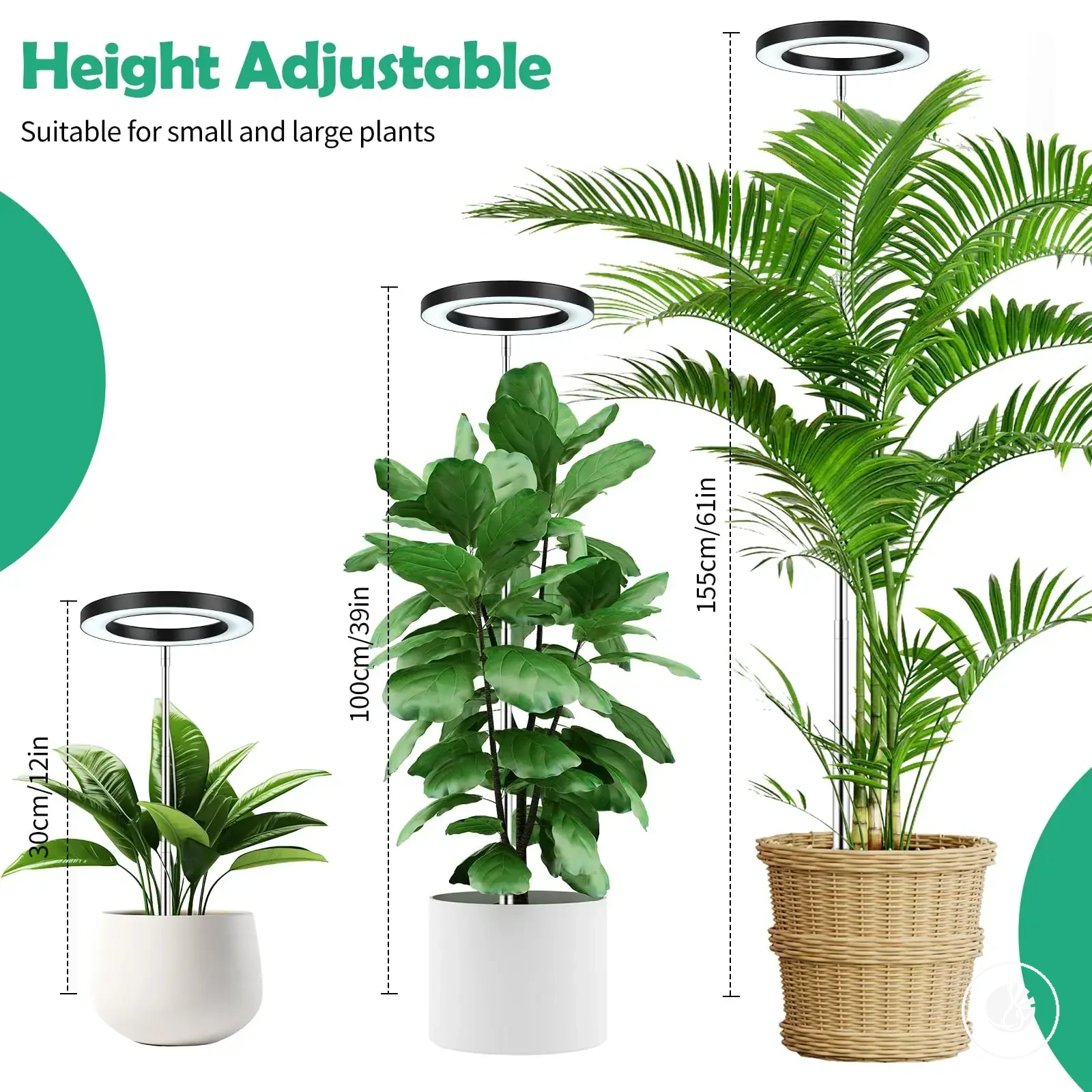
Indoor tropical plant light exposure may need adjustment when daylight length changes, window angle shifts, or indoor placement alters how much light reaches the leaves. Seasonal changes can increase shade risk, change leaf exposure, or influence the need for supplemental light. Effective light exposure management connects seasonal conditions to plant response.
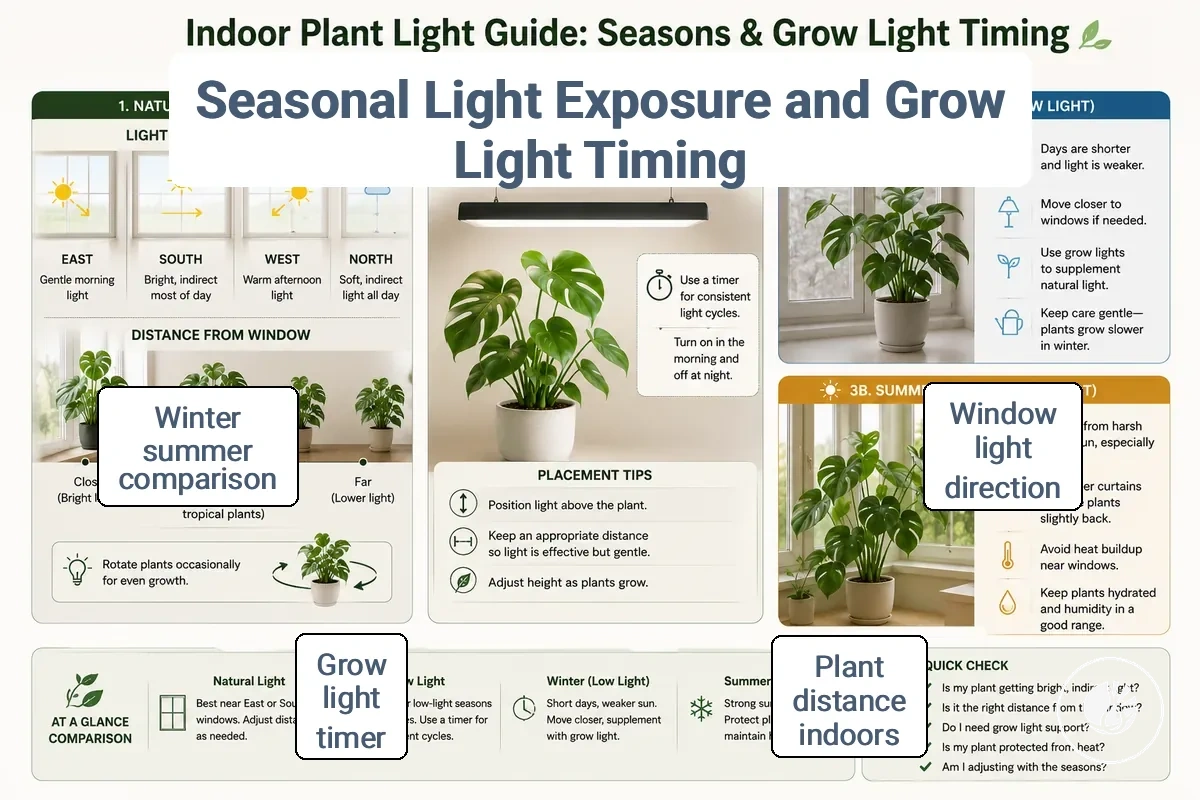
Daylight length often changes throughout the year, and window angle can affect how far window light reaches into a room. Indoor placement that provides suitable exposure during one season may create weaker or stronger plant light conditions in another. Winter conditions may increase shade risk, while stronger summer sun near a window may raise heat stress concerns. Plant response should guide whether adjustments are needed.
Adjust Light Exposure and Grow Light Timing Through the Year is easier when seasonal conditions are organized by issue, response, and risk. The comparison below highlights common maintenance situations. Timer consistency can be a useful aid when supplemental light duration needs to remain stable.
| Season condition | Light issue | Adjustment cue | Risk to watch |
|---|---|---|---|
| Winter low light | Reduced daylight length | Consider supplemental light when plant response suggests weaker exposure | Shade risk |
| Summer direct window heat | Higher leaf exposure | Review window distance and indoor placement | Heat stress |
| Shoulder-season window angle | Changing light pattern | Reassess plant position as exposure shifts | Uneven light exposure |
| Timer inconsistency | Irregular supplemental light duration | Maintain a consistent grow light schedule when needed | Variable plant response |
Light adjustments should remain tied to observed conditions rather than fixed assumptions. Increasing supplemental light may help when daylight becomes limited, while reducing direct exposure may be appropriate when summer conditions increase heat stress. Low-light drift and excessive exposure are both risks that depend on room conditions, window light, and plant response.
Winter Light Compensation and Timer Consistency
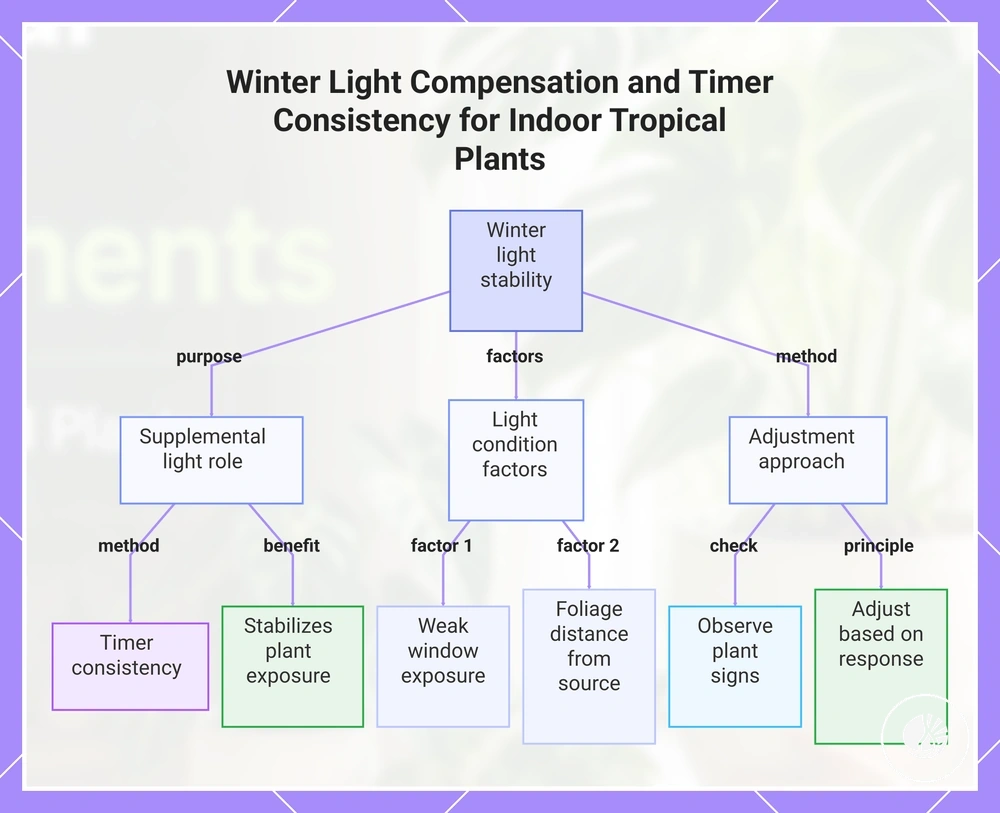
Reduced winter daylight can make indoor tropical plants receive inconsistent light, so steady supplemental light may help maintain stability during shorter days. Timer consistency clarifies when supplemental light should be applied to reduce fluctuations in plant exposure.
Local conditions affecting winter light include weak window exposure, the distance of foliage from the light source, and signs of insufficient light such as slowed growth or pale leaves. Adjustments should be made cautiously and based on observed plant response rather than fixed assumptions.
- Check winter daylight for noticeable reduction in natural light.
- Assess weak window exposure affecting leaf coverage.
- Maintain consistent timer settings for supplemental light.
- Evaluate foliage distance to ensure adequate light reaches leaves.
- Observe plant signs indicating insufficient light and adjust support if needed.
This chart illustrates how to maintain stable light for indoor tropical plants during winter using supplemental light with consistent timers, considering local conditions, and adjusting based on plant response.
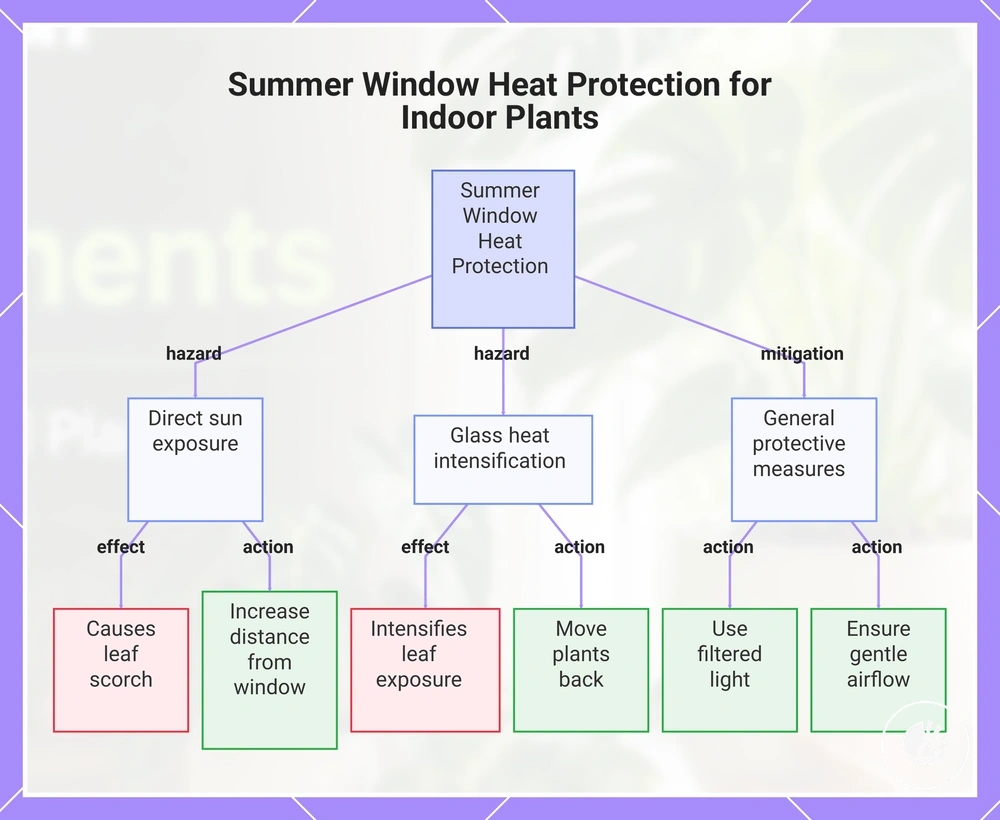
Summer Window Exposure and Heat Protection
Summer window exposure increases light intensity and can create heat buildup, which may require adjusting indoor tropical plant placement. Heat protection helps balance beneficial brightness with the risk of leaf scorch.
Placement changes are guided by visible light and heat conditions rather than broad temperature control. Direct sun, glass heat, and proximity to windows influence leaf exposure. Using filtered light and ensuring gentle airflow can mitigate stress on plants.
- Direct sun on leaves may cause leaf scorch; increase distance from window if necessary.
- Glass heat can intensify exposure; move plants slightly back from bright windows.
- Filtered light reduces excessive brightness while maintaining growth-supporting light.
- Airflow near the window can help reduce local heat buildup.
- Monitor leaves for signs of overexposure and adjust placement accordingly.
This chart shows the main hazards from summer window exposure and the recommended protective actions for indoor tropical plants.
Adjust Watering Around Growth Rate, Heat and Indoor Dryness
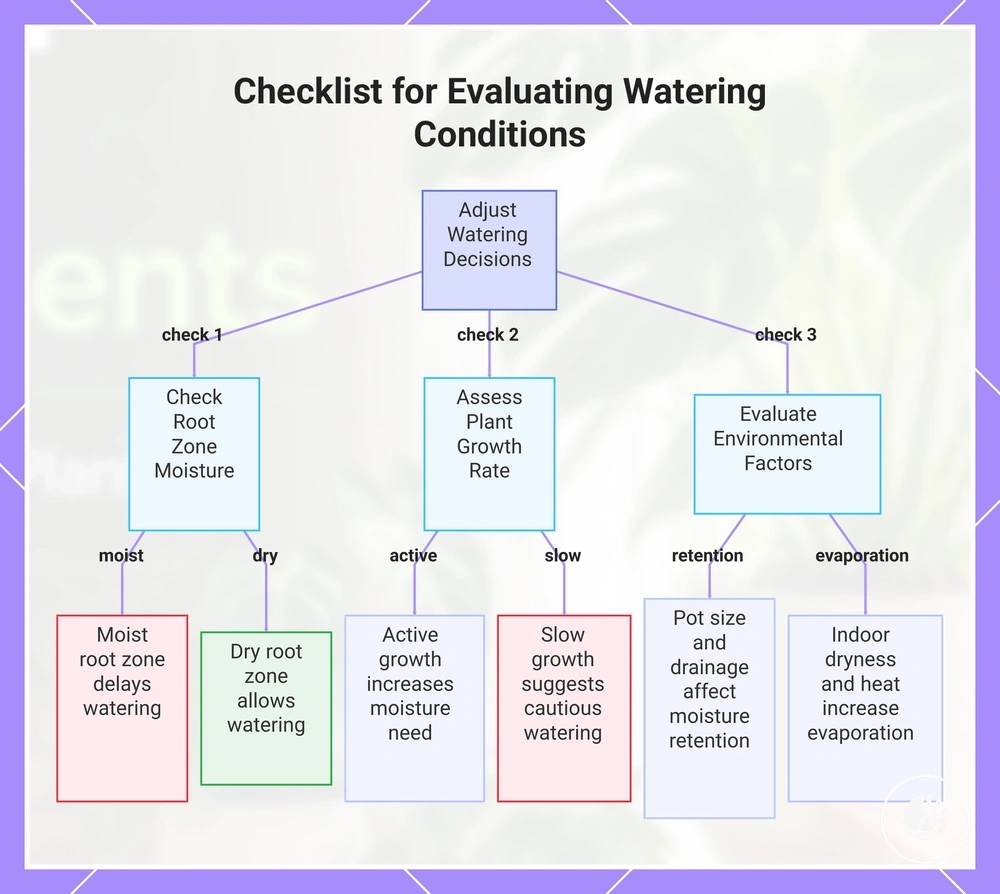
Adjust seasonal watering by checking soil moisture, growth rate, heat exposure, and indoor dryness before changing watering frequency or volume. Seasonal watering depends on soil condition and plant response rather than a calendar pattern. Check these conditions first before changing water.
Growth rate and evaporation help determine whether a watering adjustment is needed. Active growth may increase moisture use, while slow growth may reduce it. Heat exposure, indoor dryness, pot size, and drainage can influence how quickly soil moisture leaves the root zone.
Use this mini-checklist to evaluate conditions before making a watering decision:
- Check soil moisture below the dry surface; if the root zone still feels moist, watering may not be needed.
- Check the root zone directly; if root-zone moisture is limited, watering may be appropriate.
- Assess pot size and drainage; slower drainage may mean moisture remains available for longer.
- Observe active growth; increased growth can indicate greater moisture demand.
- Observe slow growth; reduced growth may support a more cautious watering frequency.
- Monitor indoor dryness and evaporation; faster moisture loss may justify closer moisture checks.
After evaluating these criteria, review seasonal watering changes for broader watering guidance. Final watering decisions should be based on root-zone moisture rather than surface appearance alone, because a dry surface and a dry root zone do not always indicate the same condition.
This chart shows the key checks to perform before adjusting watering, including soil moisture, growth rate, and environmental factors.
Reduced Winter Watering Without Root Dryness
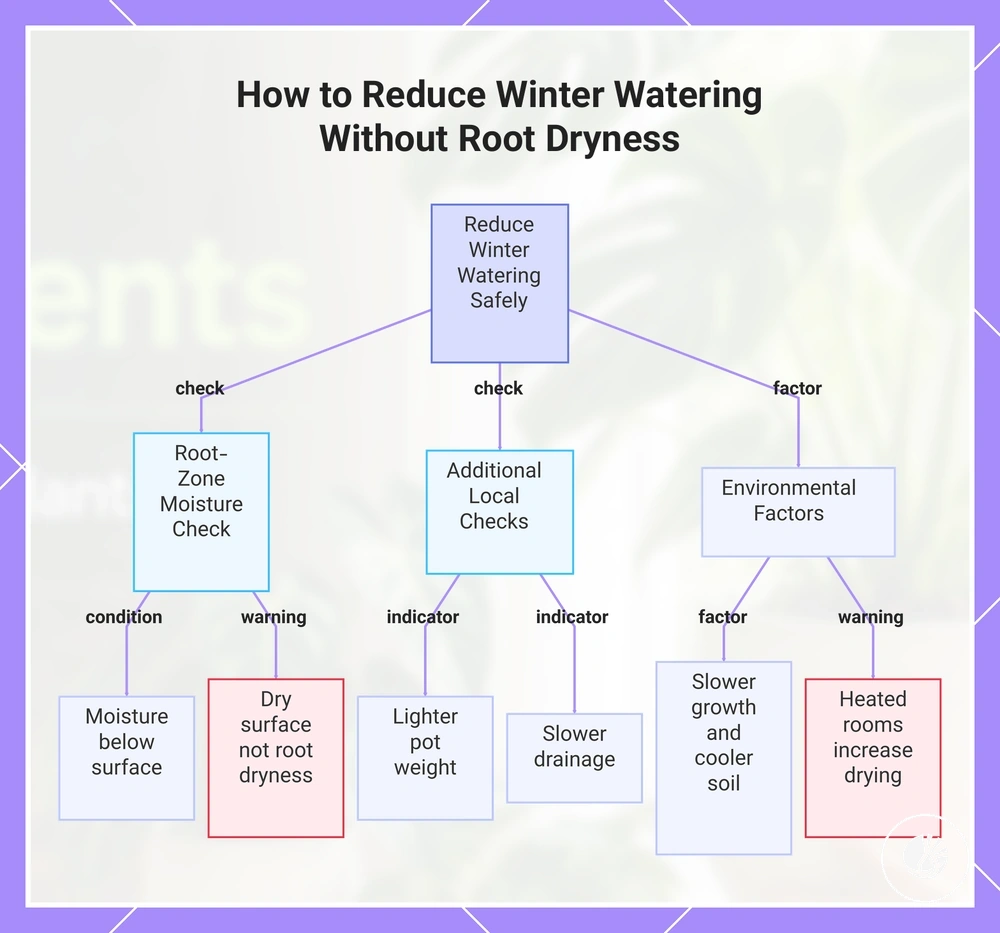
Winter watering can be reduced safely by checking root-zone moisture before lowering watering frequency. Slower growth and cooler soil may reduce moisture use, but reducing water too quickly can increase the risk of root dryness. Winter root-zone checking helps prevent unnecessary moisture loss while adjusting winter watering.
In heated rooms, soil may dry faster than expected even during winter. If indoor conditions increase drying, reduced watering should remain conditional on root-zone moisture rather than season alone.
Use these local checks before reducing winter watering:
- Check root-zone moisture; if moisture remains present below the surface, reduced watering may be appropriate.
- Check surface dryness; a dry surface does not always indicate root dryness.
- Observe pot weight; a lighter pot may indicate lower moisture availability.
- Review drainage behavior; slower drainage can mean moisture remains available for longer.
- Consider slower growth and cooler soil together; reduced moisture use may support a cautious reduction in watering.
This chart shows the checks and environmental factors to consider before reducing winter watering to prevent root dryness.
Increased Summer Moisture Checks Without Overwatering
Summer moisture checks should be more frequent due to faster drying caused by heat, but this does not require increasing every watering event. Verifying soil and pot conditions before watering helps prevent overwatering while accommodating active growth and evaporation.
Local summer cues guide moisture checks: faster drying, soil depth, pot drainage, airflow, and leaf response indicate when verification is needed. Checking frequency is separate from watering volume, ensuring that plants remain hydrated without excess water.
- Check soil depth; if deeper soil retains moisture, adjust watering carefully.
- Review pot drainage; rapid drainage may require closer monitoring without heavier watering.
- Observe leaf response; wilting or curling leaves indicate the need for moisture verification.
- Assess airflow around the plant; higher airflow increases evaporation and suggests more frequent checks.
- Consider active growth; vigorous growth may increase water use, but verify before adding more water.
Manage Seasonal Humidity and Temperature Stress
Seasonal humidity and temperature stress can affect indoor tropical plants when room conditions shift between heating, cooling, and seasonal weather patterns. Adjusting the room environment around visible plant responses can help reduce stress without changing the entire care routine. The goal is to connect symptoms to seasonal room stress.
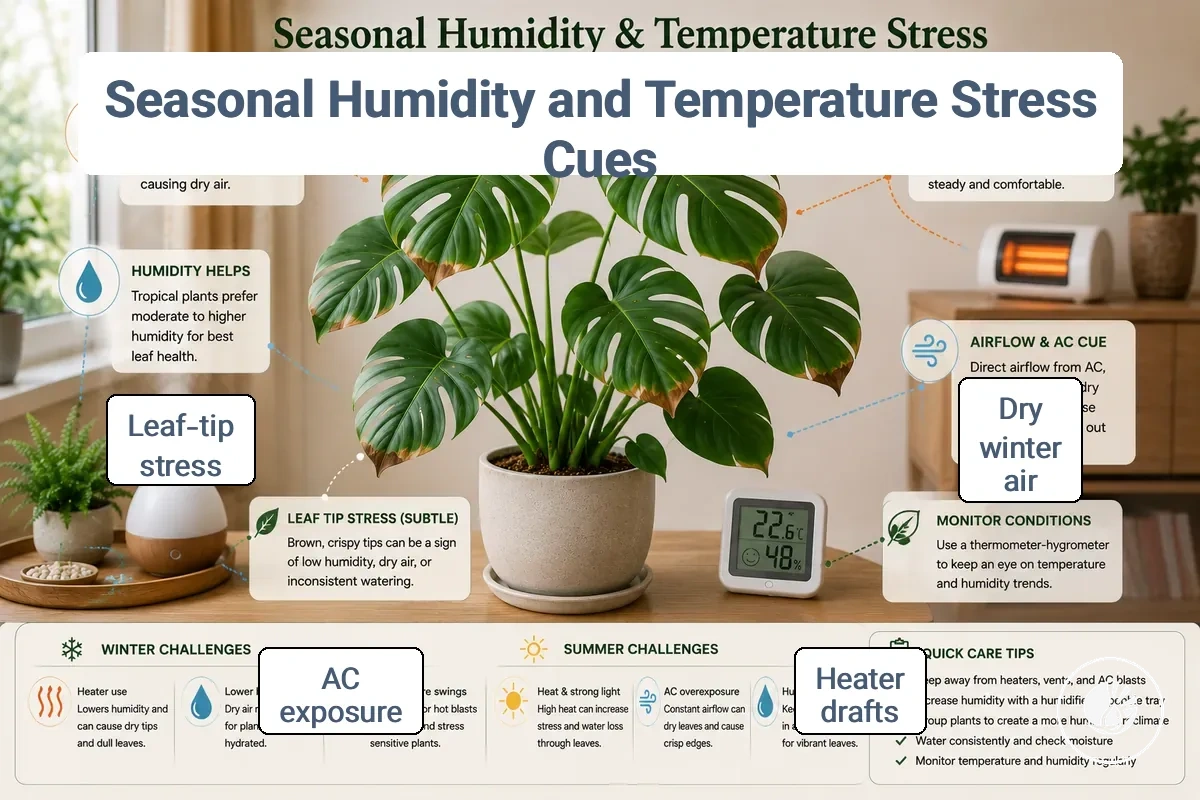
Dry winter air and heater drafts can lower indoor humidity around foliage and create localized temperature stress. When dry air remains consistent, leaf-tip stress may appear, especially when plants sit near direct heat sources. Adjustments should focus on reducing exposure to the room condition causing the stress.
AC exposure and summer heat can create different stress patterns within the same room environment. Direct airflow may contribute to drying effects, while summer heat can increase moisture loss and humidity swings. Plant response may vary depending on airflow intensity, room temperature, and plant placement.
Manage Seasonal Humidity and Temperature Stress by organizing room condition, plant symptom, response, and risk together. The table below summarizes common seasonal situations and adjustment cues.
| Seasonal room condition | Visible plant response | Adjustment cue | Boundary risk |
|---|---|---|---|
| Dry winter air | Leaf-tip stress | Review indoor humidity conditions | Continued dry-air exposure |
| Heater draft | Dry foliage edges | Reduce direct heat exposure | Localized temperature stress |
| AC exposure | Dry or stressed foliage | Limit direct airflow contact | Ongoing drying effect |
| Summer heat | Heat-related stress signals | Monitor room temperature changes | Heat buildup around foliage |
| Humidity swing | Variable plant response | Support more stable conditions | Repeated environmental fluctuation |
For broader environment planning, see humidity and temperature changes. This section focuses on seasonal stress adjustments, while broader room environment compatibility belongs to the dedicated environment page.
Match Fertilizer to Active Growth and Slow Growth Periods
Fertilizer should follow the plant’s seasonal growth pattern rather than a fixed yearly schedule. Active growth periods increase nutrient demand for new leaves and higher watering frequency, while slow growth periods reduce nutrient uptake. Adjusting fertilizer according to growth state helps minimize dilution risk and salt buildup.
Active growth cues include the emergence of new leaves, higher light availability, and more frequent watering. Fertilizer should support these conditions without exceeding the plant’s nutrient needs.
During slow growth, such as reduced winter development, plants require less fertilizer. Excess nutrients can accumulate and increase stress risk, especially under lower light or less frequent watering. Monitor plant response before adjusting feeding.
For conditional feeding guidance and broader nutrient adjustments, see seasonal fertilizer changes. Fertilizer decisions here are guided by growth state rather than fixed schedules or product-specific instructions.
| Growth state | Feeding cue | Fertilizer decision | Stress risk |
|---|---|---|---|
| Active growth | New leaves, high light, frequent watering | Apply nutrients according to needs | Low if balanced |
| Slow growth | Reduced leaf development, lower light, less watering | Reduce or pause fertilizer | Dilution risk, salt buildup |
Use Seasonal Readings Before Changing the Routine
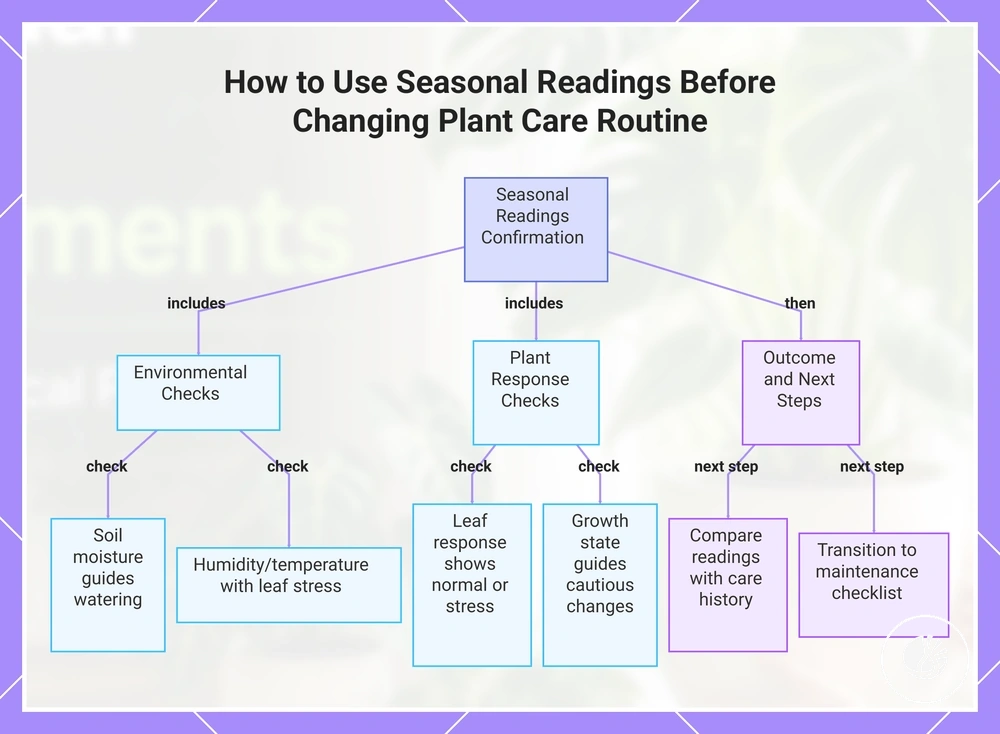
Seasonal readings confirm whether a routine change is needed before adjusting watering, room humidity, temperature, light timing, or feeding. These checks reduce guesswork in indoor tropical plant care by connecting plant response with room conditions. A care decision should start with reading-based confirmation.
Plant and room readings work as care criteria, not as a tool-first diagnosis. Soil moisture can support a watering decision, room humidity and temperature can show environment pressure, light timing can explain growth changes, and leaf response or growth state can show whether the plant is adapting or under stress.
Use this checklist to separate normal seasonal variation from stress that may need correction:
- Soil moisture: Root zone moisture supports whether watering should stay steady or change.
- Room humidity: A humidity change may support an environment adjustment when leaf response also shows stress.
- Temperature: A room temperature shift may explain stress when it matches recent plant changes.
- Light timing: Shorter or longer light exposure can support a light-timing adjustment when growth state changes.
- Leaf response: Stable leaves may indicate normal variation, while repeated stress signals may support correction.
- Growth state: Active or slower growth can guide whether feeding, watering, or light changes should remain cautious.
Use the maintenance checklist as the next transition for broader care review. After seasonal readings are compared with recent care and room conditions, the routine is ready for a measured care decision.
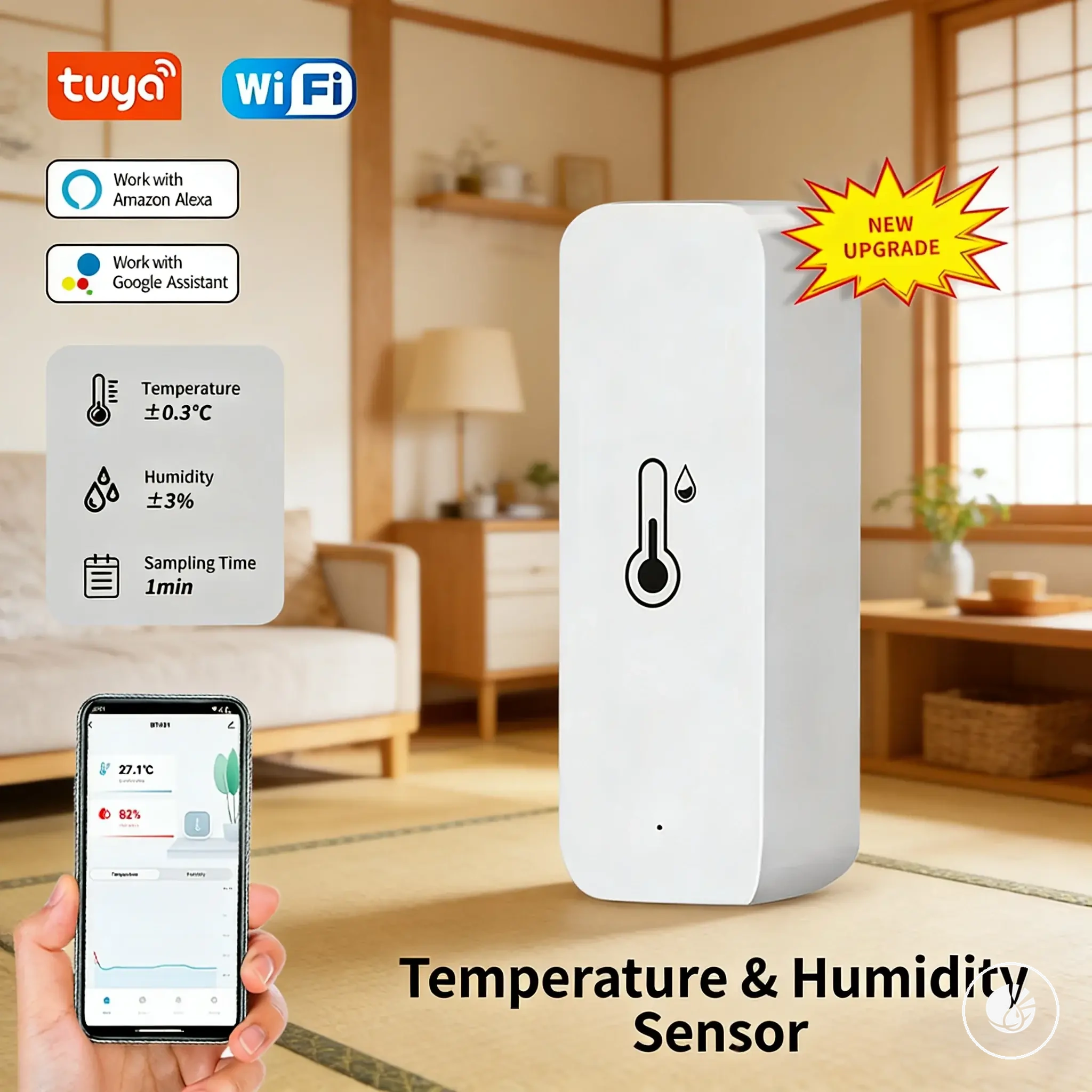
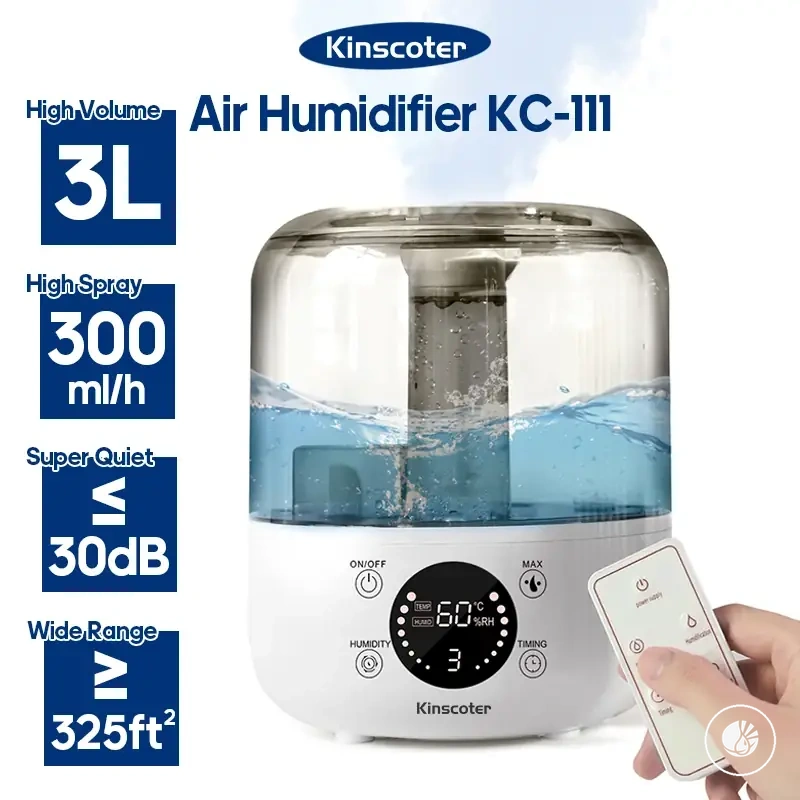
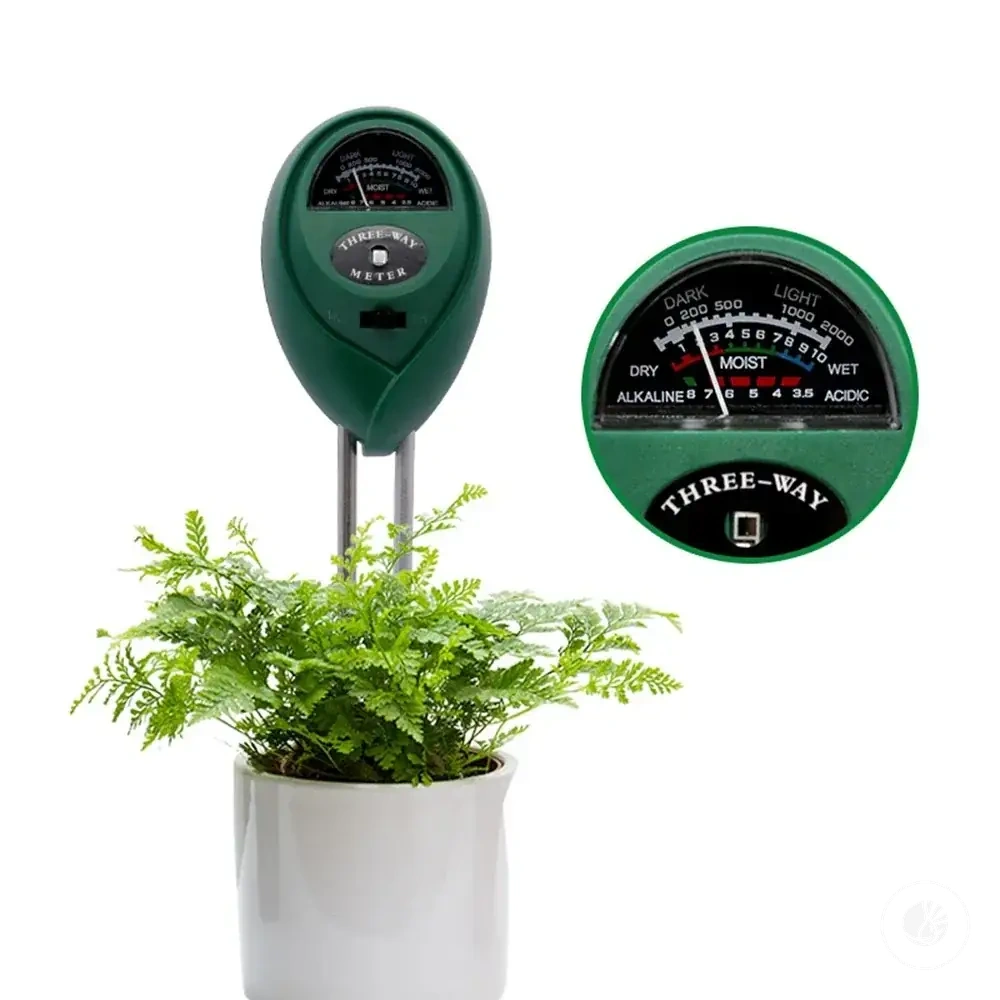
The products below are useful examples for comparing available options. Before buying, check that the compatibility criteria, key features, and product details match your needs.

This chart shows how to use seasonal readings to confirm whether a routine change is needed, covering environmental checks, plant response indicators, and the resulting decision steps.
Moisture Meter and Soil Condition Checks
Moisture readings can guide, but should not replace, soil condition verification for seasonal watering decisions. Checking soil moisture clarifies whether roots are adequately hydrated, and combining meter readings with physical assessments ensures an informed care decision.
Readings must be interpreted in the context of soil condition. Finger checks, pot weight, drainage, root-zone moisture, and recent watering history all provide context for meter readings, helping distinguish normal seasonal variation from conditions that may stress the plant.:contentReference[oaicite:0]{index=0}
- Meter reading: Indicates soil moisture levels; informs whether additional watering is needed.
- Finger check: Confirms surface and near-root hydration; supports meter reading accuracy.
- Pot weight: Lighter pots suggest moisture loss; helps determine watering volume.
- Drainage observation: Ensures excess water can exit; guides watering frequency adjustments.
- Root-zone moisture: Deep soil hydration signals sufficient water; prevents overwatering.
- Recent watering: Recent irrigation informs whether more water is required.
Humidity and Temperature Readings
Humidity readings and temperature readings can help confirm whether seasonal room conditions are stressing indoor tropical plants. A hygrometer and room temperature check provide context for interpreting plant response, and repeated patterns are more useful than a single room reading when assessing persistent stress. Persistent stress interpretation depends on both readings and plant response. :contentReference[oaicite:0]{index=0}
Humidity readings and temperature readings should be interpreted alongside leaf-tip response, condensation risk, airflow, and the influence of a heater or AC. A meter reading alone may not indicate stress, while changes in room condition that continue over time and align with plant symptoms can support an adjustment decision.
| Temporary fluctuation | Persistent seasonal stress |
|---|---|
| Short-term humidity or room temperature change with limited leaf response | Repeated humidity readings or temperature readings that align with ongoing leaf-tip response |
| Brief airflow, heater, or AC influence that settles quickly | Continued airflow, heater, or AC influence associated with recurring condensation risk or visible plant stress |
Seasonal Stress Signals and Routine Corrections
When yellowing, drooping, brown tips, leaf scorch, slow growth, or weak new leaves appear, they can indicate that seasonal conditions are affecting your indoor tropical plant care routine. Seasonal stress signals should be matched to recent watering, light, humidity, and temperature changes, allowing informed routine corrections without assuming a non-seasonal problem. Symptom-to-condition matching guides the first check before any correction. :contentReference[oaicite:0]{index=0}
Below is a diagnostic table connecting common stress signals to likely seasonal conditions, a first check, and routine correction suggestions. Winter dry air and summer heat can produce overlapping symptoms, so verifying the cause before correction is essential.
| Symptom | Likely seasonal condition | First check | Routine correction |
|---|---|---|---|
| Yellowing | Seasonal watering imbalance | Check soil moisture | Adjust watering after verification |
| Drooping | Dry soil or seasonal heat stress | Check root-zone moisture | Correct moisture conditions and monitor |
| Brown tips | Winter dry air or humidity stress | Check room humidity | Review humidity support and airflow |
| Leaf scorch | Summer heat or strong window exposure | Check light exposure | Adjust plant placement if needed |
| Slow growth | Reduced seasonal light or cooler conditions | Check light and temperature conditions | Review seasonal care inputs |
| Weak new leaves | Low seasonal energy availability | Check light exposure and growth conditions | Support active-growth conditions when appropriate |
After implementing a routine correction, continue monitoring plant response before making further adjustments. Overlapping symptoms between winter dryness and summer heat require careful observation to avoid misinterpreting seasonal stress as disease or pest issues.