
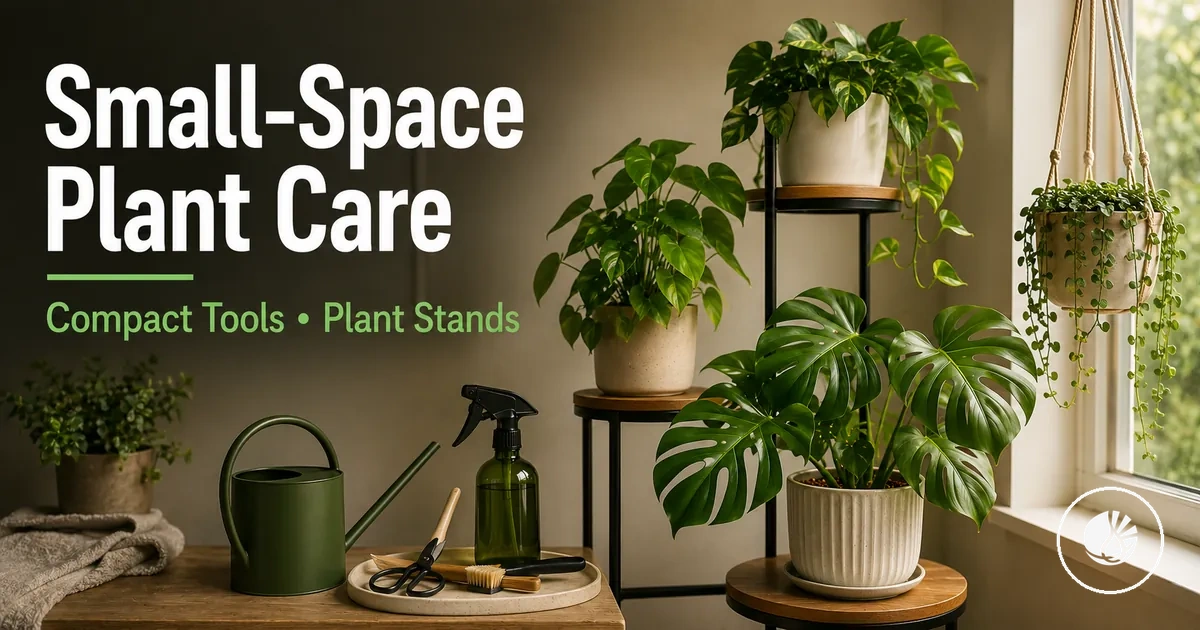
Small-Space Indoor Tropical Plant Care Solutions
Small-space indoor tropical plant care solutions refer to care choices that make limited room usable for plant placement, watering, light access, humidity control and airflow. A compact setup works when the plant habit, available floor area, vertical space and daily care access are matched before adding tools. In a limited room, plant health is affected not only by where a plant fits, but also by whether the user can reach the pot, check the soil and keep the area safe for movement.
A small apartment plant setup may use a shelf near a window, a narrow stand beside a light source or a grouped surface where watering access remains clear. Plant habit changes how the setup behaves: upright plants may need height clearance, trailing plants may need controlled spread and compact plants may need enough spacing for airflow. Light, water, humidity and airflow interact in the same tight indoor space, so a useful compact setup keeps window direction, plug access, drainage safety and the airflow path visible instead of treating plants as décor only.
The main problem in small-space indoor tropical plant care is that one crowded corner can hide several care needs at once. A better approach is to organize placement around care access first, then adjust tools, grouping and routine checks according to the room. This keeps the opening decision practical and prepares the next step: evaluating the room conditions that shape the setup.
Small-Space Conditions That Affect Indoor Tropical Plant Care
Small-space indoor tropical plant care is influenced by room conditions that affect placement, plant health and daily care access. Limited room does not automatically prevent healthy growth, but it can change how plants interact with available surfaces, movement paths and environmental conditions. The main condition frame is understanding how space-related factors shape care decisions before plant selection or tool use.
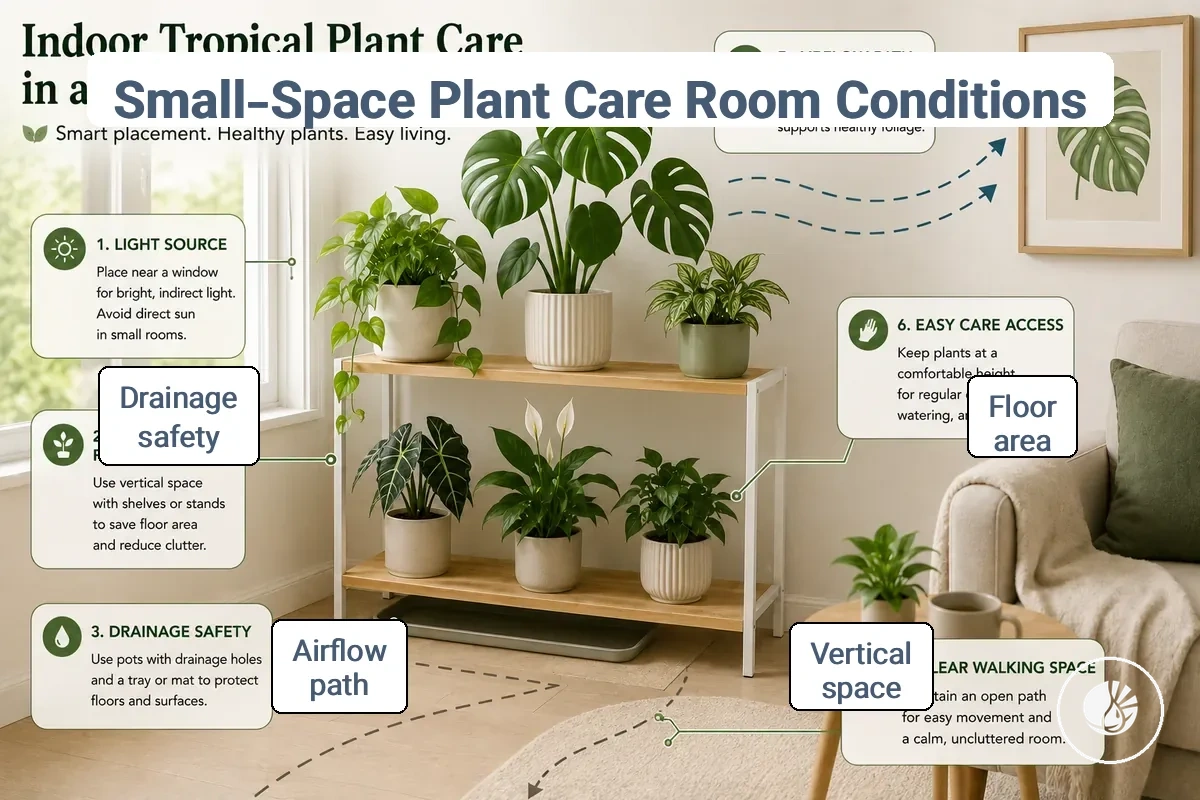
Floor area and vertical space influence where plants can be positioned without reducing walking clearance or maintenance access. Window direction may affect where a light source is available, while plug access can influence the placement of supporting equipment when needed. An unobstructed airflow path may help reduce stagnant conditions, and humidity concentration can vary when plants are grouped within a tight indoor space. Drainage safety also matters because water management becomes more important when plants are located near living areas or shared surfaces.
The checklist below helps verify whether a limited room supports practical placement and ongoing care access before focusing on plant-specific requirements.
- Enough floor area for stable plant placement and routine movement.
- Available vertical space for plant growth and shelf positioning.
- Clear walking clearance that allows regular maintenance access.
- Suitable window direction and nearby light source access.
- Open airflow path around the plant grouping.
- Safe drainage arrangement that can reduce the chance of water reaching surrounding surfaces.
Space limitation and light limitation are not the same condition. A room may have limited space while still providing adequate light, which is why low-light room care should be evaluated as a separate factor when assessing indoor growing conditions.
Plant Size and Growth Habits That Fit Limited Rooms
Plant habit and mature size should guide selection when room fit depends on available footprint and maintenance access. A plant that appears small today may change its space requirements over time because growth pattern, container size, light conditions and pruning tolerance can influence development. The most useful selection frame is matching plant habit and mature size to the space available for placement and routine care.
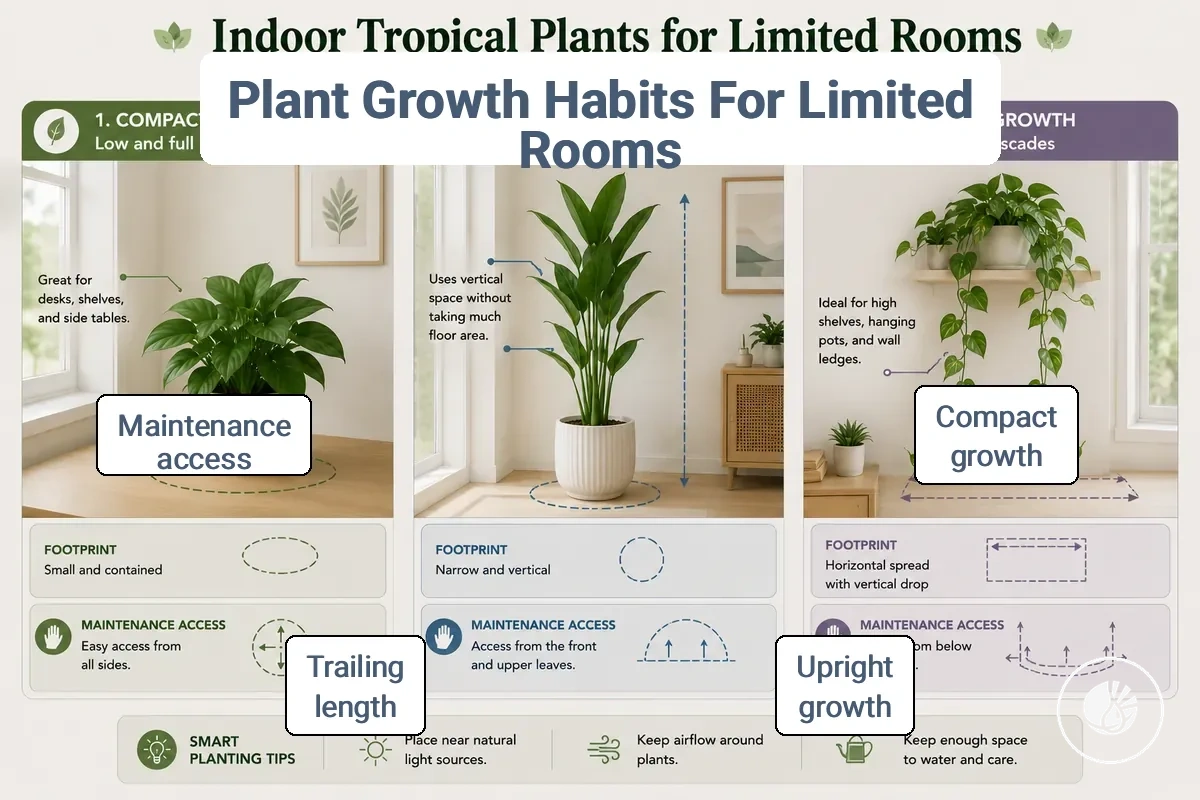
Plant habit affects how a plant occupies space beyond its initial footprint. Upright growth may use more height than width, while trailing length can extend beyond shelves, stands or wall-mounted surfaces. Mature width, spread and pruning tolerance also influence care burden because plants that expand beyond their intended area may require more frequent adjustment to maintain maintenance access. A compact growth pattern may provide easier room fit when placement options are limited, but suitability depends on how the plant develops over time.
Plant Size and Growth Habits That Fit Limited Rooms can be evaluated by comparing how different growth forms use space and affect ongoing access for care. The table below focuses on practical attributes rather than specific plant recommendations.
| Growth habit | Space attribute | Care-access effect | Best-fit condition |
|---|---|---|---|
| Compact growth | Smaller footprint | Usually supports easier access around the plant | Limited placement area |
| Upright growth | Uses vertical space | May preserve floor area | Available height with clear access |
| Trailing growth | Extended trailing length | May require route management | Elevated placement with open spread area |
The table is most useful when mature size, footprint and pruning tolerance are considered together. A growth habit that fits the room at one stage may require different placement later if spread, height or trailing length increases beyond the available space.
Compact, Upright and Trailing Growth Patterns
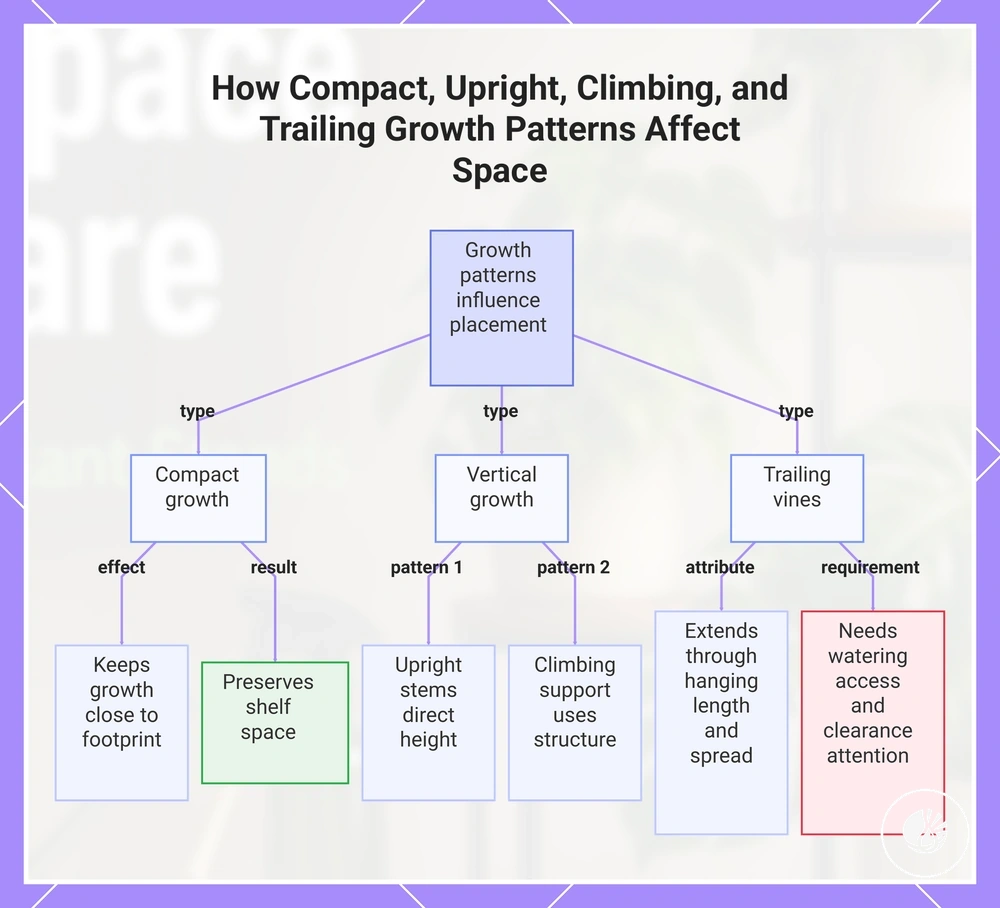
Growth pattern is the direction and form a plant uses as it develops. Compact growth, upright stems and trailing vines use small-space surfaces differently, and their effect on placement can vary by species, growth conditions and pruning. These differences influence how a plant uses its footprint and surrounding space.
Growth direction changes placement because the same footprint can use shelf space, height or spread in different ways.
- Compact growth: A compact rosette or dense plant form may keep more growth close to its footprint, which can help preserve shelf space and maintain access around the container.
- Upright stems: Upright stems often direct growth toward height rather than width. This pattern may support light reach while increasing pruning needs as vertical growth develops.
- Climbing support: Plants that use climbing support may occupy less horizontal space while directing growth onto a structure, which can change access around the growing area.
- Trailing vines: Trailing vines extend through hanging length and spread. As growth expands, watering access and nearby surface clearance may require more attention.
No growth pattern fits every situation. Room fit depends on how footprint, spread and growth direction develop over time and how regularly growth is managed.
This chart shows how four growth patterns—compact, upright, climbing, and trailing—influence a plant's footprint, height, spread, and care needs.
Low-Maintenance Plants for Small Apartments
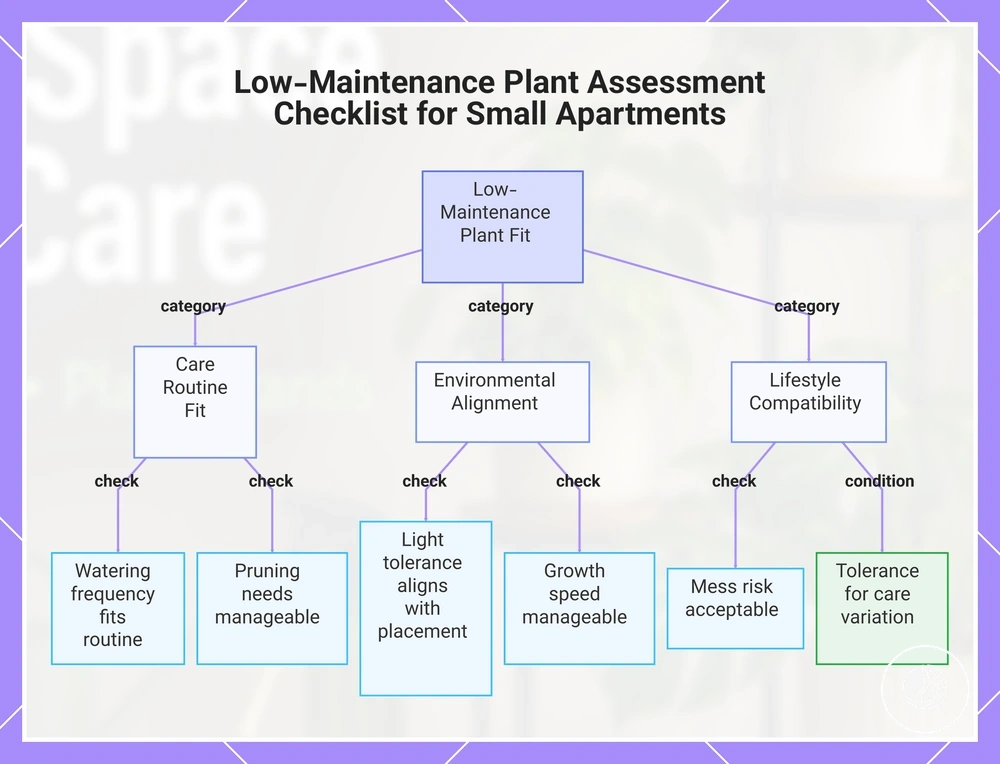
Low maintenance depends on selecting plants whose care demand fits an apartment routine rather than expecting plants to thrive without attention. A practical choice usually combines manageable watering frequency, suitable light tolerance and reasonable pruning needs. In a compact room, routine effort is often influenced by how consistently these requirements match daily conditions.
Use the checklist below to assess whether a plant aligns with the available time and conditions.
- Care demand matches the amount of routine attention available.
- Watering frequency fits a predictable apartment routine.
- Light tolerance aligns with the intended placement area.
- Pruning needs remain manageable as growth develops.
- Growth speed does not create frequent adjustment requirements.
- Mess risk remains acceptable for nearby surfaces and living spaces.
A plant may be considered beginner-friendly when its tolerance range allows occasional variation in care, but selection criteria still depend on the compact room and its conditions. Readers who need broader preparation guidance can review the beginner setup for indoor care page.
This chart shows the key criteria to evaluate whether a plant fits a small apartment routine, organized by care needs, environmental fit, and practical impact.
Care Zones for Light, Watering, Humidity and Airflow
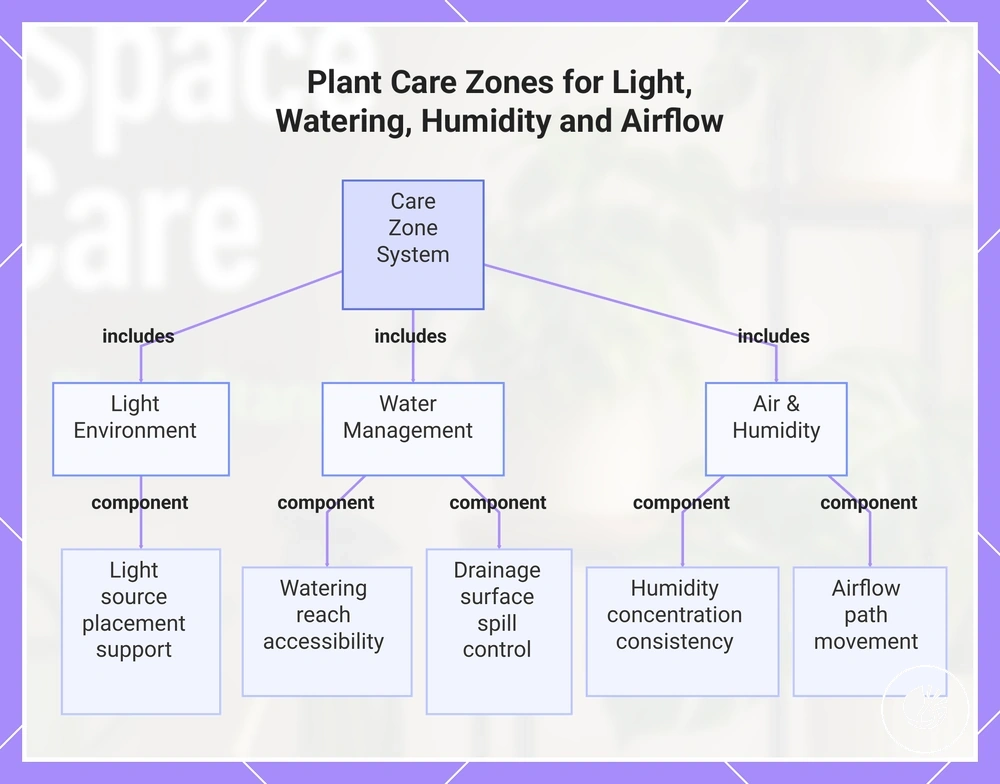
Care zones organize a plant area so that light, watering, humidity and airflow can be managed with less routine friction. Instead of treating each condition separately, care zones group related needs into a usable layout. This organization logic can make a shelf, stand or compact corner easier to manage when the conditions remain compatible.
Each zone connects a care requirement to a practical effect within the setup. A light source zone influences plant response based on plant distance and nearby obstruction. A watering reach zone supports easier access for routine care, while a drainage surface helps with spill control around containers. Humidity concentration may be easier to manage when plants share a suitable area, and an airflow path can help reduce stagnant conditions when air movement remains unobstructed.
The checklist below organizes the main care zones and the purpose each zone serves within a small-space plant area.
- Light source: Supports placement where available light can reach foliage with fewer obstructions.
- Watering reach: Keeps routine watering accessible without frequent repositioning of plants.
- Drainage surface: Helps contain excess water and supports spill control around the growing area.
- Humidity concentration: Groups conditions that may help maintain a more consistent moisture environment around plants.
- Airflow path: Preserves air movement around foliage and growing surfaces.
A single shelf, stand or compact corner may support multiple care zones when watering reach remains practical, the drainage surface is protected and the airflow path stays open. If drainage accumulates on surrounding surfaces or airflow becomes blocked, the setup may require adjustment because those conditions can increase maintenance challenges.
This chart shows how care zones group related plant needs into three main zone categories for easier management.
Light Access in Compact Indoor Plant Setups
Light access starts with arranging plants so that available light can reach the canopy position with minimal obstruction. In a compact setup, placement decisions depend on window exposure, plant distance and how consistently light reaches the plant area. The goal is to improve light reach while keeping the arrangement practical and easy to manage.
Window exposure influences how much natural light reaches the foliage, while plant distance can affect light response as placement changes. A grow light may provide supplemental light when natural light is limited, but a grow light is not necessary for every setup. When used, grow light height, coverage and timer settings should support the canopy position rather than create uneven light distribution. Obstruction from furniture, shelving or nearby foliage may reduce effective light access and influence placement decisions.
The checklist below organizes local light access considerations within a compact care zone.
- Window exposure: Position plants where available natural light can reach the foliage.
- Plant distance: Keep placement close enough to support light reach while maintaining practical access.
- Canopy position: Arrange foliage to reduce unnecessary shading from nearby plants.
- Grow light: Use supplemental light when additional coverage may be helpful.
- Obstruction: Check for objects that may block or reduce available light.
If low natural light is the primary placement constraint rather than limited space, the situation may relate more closely to low-light room care than to compact setup organization.
Watering and Drainage Access Without Crowding
Watering and drainage access should remain easy to reach so routine plant care can be completed without moving multiple containers. Good watering access depends on pot placement, reach and whether a drainage tray or saucer can be checked without disrupting the surrounding plant area. When access becomes restricted, spill control may become more difficult and care outcomes may be harder to monitor.
The checklist below focuses on access criteria that influence drainage access, spill control and soil visibility.
- Watering access: Keep enough reach to water plants without disturbing nearby containers.
- Drainage tray: Maintain access so excess water can be checked and managed when needed.
- Saucer: Position the saucer where it remains visible and reachable during routine care.
- Soil visibility: Keep the soil surface visible enough to support watering decisions.
- Surface protection: Use placement that supports spill control around shelves, stands or nearby surfaces.
- Watering can size: Choose a size that can be used comfortably within the available space.
Access conditions may change on shelves, with hanging pots or in a crowded corner. When a drainage tray or saucer becomes difficult to inspect, excess water may be harder to notice. Drainage outcomes and overwatering risk can vary by pot, soil and room conditions, so drainage access should remain practical as the plant area develops.
Humidity and Airflow Balance in Enclosed Rooms
Humidity and airflow should be balanced together because an enclosed room can concentrate humidity while also reducing air movement. A small plant area may benefit from humidity support, but increased humidity without adequate airflow can create a humidity pocket that may require adjustment. The goal is to support plant conditions while maintaining a usable balance between moisture and ventilation.
The checklist below highlights conditions that influence humidity and airflow balance in a compact room.
- Enclosed room: A more enclosed room may retain humidity longer while reducing natural airflow.
- Plant clustering: A plant cluster can create a localized humidity pocket that may influence adjustment choices.
- Humidifier: A mini humidifier may support humidity when placement allows moisture to disperse through the surrounding area.
- Leaf wetness: Humidifier placement and mist direction should avoid creating unnecessary leaf wetness.
- Ventilation path: Maintain a clear ventilation path so air movement can pass through the plant area.
- Fan use: Gentle airflow may support ventilation without directing concentrated air movement at foliage.
Humidity support and airflow control serve different purposes and often work best when considered together. If an enclosed room retains moisture easily, adjustment choices may focus more on airflow and ventilation than additional humidity. Readers who need broader guidance beyond compact-room setup can explore airflow and humidity in small rooms.
Vertical Displays, Plant Stands and Hanging Pots
Vertical displays, plant stands and hanging pots increase usable plant area by using height instead of relying only on floor space. Vertical placement can improve care access and plant visibility when light reach, watering access and drainage control remain easy to monitor. The main advantage is creating additional growing space while keeping routine plant care practical.
Placement outcomes depend on surface type, load support and plant growth direction. A plant stand can raise plants closer to available light while preserving floor space. A shelf can support multiple containers when watering access and drainage control remain visible and reachable. A hanging pot or wall-mounted pot may free surface area, but the result depends on suitable load support, watering reach and the ability to manage drip control. Trailing, upright and compact growth patterns may also influence which vertical placement option remains easiest to maintain.
The comparison below highlights how each vertical placement option affects space use and maintenance visibility.
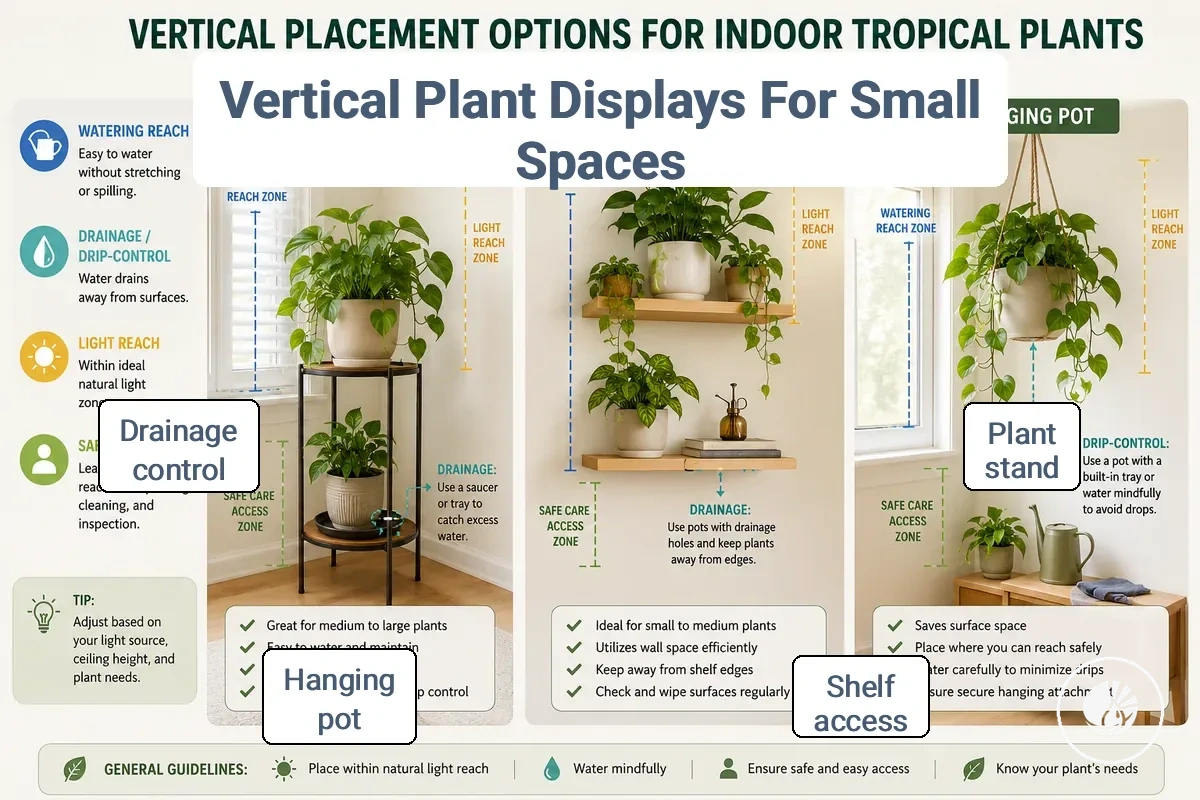
| Placement option | Primary space benefit | Care-access consideration | Key condition |
|---|---|---|---|
| Plant stand | Uses vertical height while preserving floor space | Usually keeps watering access visible | Suitable load support |
| Shelf | Supports multiple plants in one area | Light reach and drainage control should remain visible | Accessible placement |
| Hanging pot | Frees surface space | Watering reach and drip control may require closer attention | Appropriate mounting and load support |
Vertical placement can improve care efficiency when plants remain easy to inspect, water and adjust. It may create hidden maintenance problems when shelves become crowded, drainage control is difficult to observe or hanging placements reduce routine access to the plant area.
Plant Stands and Shelves for Narrow Floor Space
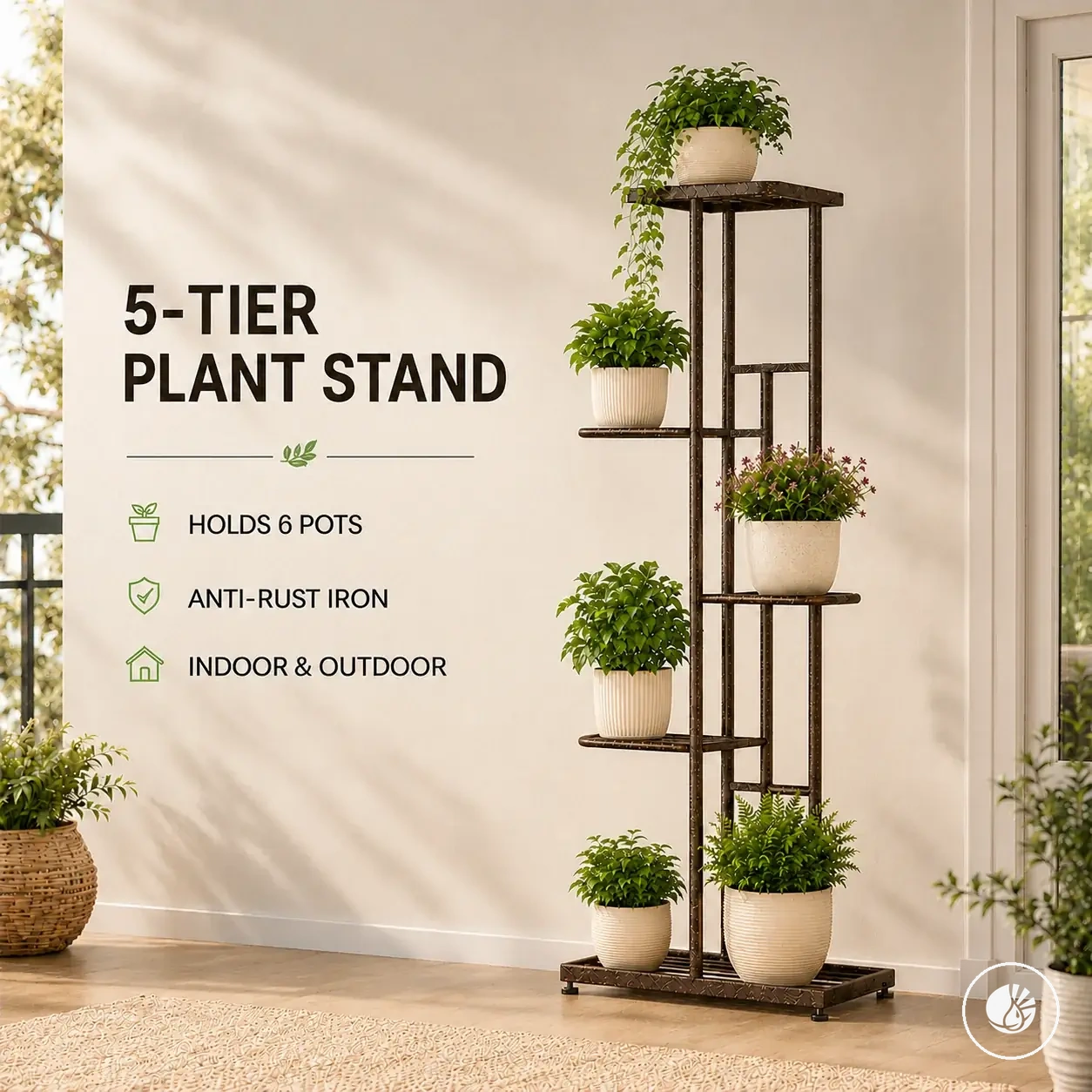
Plant stands and shelves should be used when narrow floor space limits placement options because they increase usable growing area without expanding the footprint across the room. A plant stand or shelf can support care access when light alignment, reach and drainage surface visibility remain practical. The goal is to use height efficiently while keeping routine plant care manageable.
The criteria below help evaluate stands and shelves in a narrow room.
- Footprint: A smaller footprint may preserve more floor space while still supporting plant placement.
- Height: Height should support light alignment without making watering reach difficult.
- Stability: Stability may depend on the surface, load distribution and plant arrangement.
- Tiers: A tiered stand can increase growing area, but each level should remain accessible for care.
- Load: Load considerations may influence how plants are distributed across a shelf or stand.
- Drainage surface: Drainage surface visibility can support spill control and routine inspection.
- Reach: Plants should remain easy to access for watering and observation.
A shelf or plant stand may become less practical if height reduces reach, if load exceeds what the supporting surface can reasonably handle or if drainage control becomes difficult to monitor. Narrow-floor-space solutions work best when added height improves care access rather than obscuring routine maintenance tasks.
Hanging and Wall-Mounted Pots for Indoor Plants
Hanging and wall-mounted pots support small-space indoor tropical plant care when overhead placement creates additional growing space while preserving care access. A hanging pot or wall-mounted pot may suit a trailing plant, but the arrangement remains practical only when watering reach, drip control and routine observation are easy to manage.
The checklist below highlights local conditions that affect use.
- Anchor support: Anchor support should be suitable for the load and mounting surface because support conditions can vary.
- Watering reach: Watering reach should remain comfortable enough for routine care and inspection.
- Drip control: Drip control may help reduce water reaching nearby floors or surfaces during watering.
- Trailing growth: A trailing plant can use overhead placement efficiently, but growth should not obstruct movement or care access.
- Light angle: Light angle may influence how much available light reaches foliage after placement.
- Airflow exposure: Airflow exposure should remain adequate around leaves rather than becoming restricted by tight wall positions.
A hanging pot or wall-mounted pot may become less practical when watering reach is limited, when drip control is difficult to monitor or when anchor support is uncertain. In rental spaces, mounting options may also depend on property conditions and installation restrictions.
Compact Care Tools for Small-Space Plant Setups
Compact care tools should be selected by space, care need and storage access rather than by the number of tools available. Useful compact tools reduce a specific care problem while remaining easy to store, reach and use within a limited indoor tropical plant setup. Tool value comes from solving a recurring task without creating additional clutter.
Selection should focus on tool size, reach, storage access, power source and measurement function. A small tool may be more practical when storage space is limited, while a larger tool may become difficult to store or access. Measurement function can support care decisions, but compact tools should complement plant observation rather than replace it.
The table below compares common compact tools by space attribute, care problem solved and decision signal.
| Tool type | Space attribute | Care problem solved | Decision signal |
|---|---|---|---|
| Moisture meter | Small storage footprint | Supports moisture assessment | Useful when measurement function supports watering decisions |
| Pruning scissors | Compact tool size | Supports grooming and trimming | Useful when routine pruning is needed |
| Watering can | Reach and access control | Supports targeted watering | Useful when plant placement limits access |
| Grooming tool | Easy storage access | Supports routine plant maintenance | Useful when care tasks occur regularly |
Tools that solve a clear care problem often provide more value than gadgets with no defined maintenance role. Readers looking for a broader overview of compact care tools and kits can compare how different care tools fit wider indoor plant routines.
Small Grow Lights, Timers and Light Meters
Small lighting tools support compact indoor plant setups when natural light is limited, uneven or difficult to judge. A grow light, timer or light meter is useful only when it solves a local light problem without adding unnecessary setup complexity. Tool necessity depends on plant species, room exposure and whether supplemental light improves placement decisions.
The checklist below helps evaluate lighting tools by coverage, control and placement fit.
- Grow light: Coverage should match the plant area and support light reach without crowding the setup.
- Placement distance: Distance should allow useful light coverage while keeping foliage easy to access.
- Adjustability: Adjustable height or angle may help adapt coverage as plant position changes.
- Timer: Timer control can support more consistent light timing when manual control is difficult.
- Light meter: Measurement can help compare room exposure and guide placement decisions.
Lighting tools should remain subordinate to plant response and room conditions. A grow light may help when natural light is limited, but no single lighting tool fits every tropical plant or compact room.
Mini Humidifiers and Humidity Checks
Mini humidifiers and humidity checks depend on measuring room conditions before adding humidity support. A mini humidifier may help in an enclosed room when a humidity check indicates a need, but adding moisture without measurement can increase the risk of damp conditions. A hygrometer reading provides a clearer basis for deciding whether humidity support is necessary.
The checklist below helps evaluate humidity support and potential risks.
- Hygrometer reading: A humidity check should guide decisions before changing room moisture levels.
- Mini humidifier size: Size should match the limited space available and the area receiving humidity support.
- Mist direction: Mist direction should avoid concentrating moisture directly on foliage or nearby surfaces.
- Runtime: Runtime may influence how much moisture accumulates within an enclosed area.
- Room ventilation: Ventilation can help reduce moisture buildup and support air movement.
- Leaf wetness: Persistent leaf wetness may indicate that moisture placement or airflow needs adjustment.
Humidity support and airflow control serve different purposes. A mini humidifier may add moisture when conditions suggest a benefit, while airflow helps limit damp conditions that can develop in enclosed spaces. Readers who need broader context can explore airflow and humidity in small rooms.
Small Watering, Grooming and Moisture-Check Tools
Small watering, grooming and moisture-check tools depend on access, storage and care needs within a tight plant area. A tool becomes more useful when it supports routine watering, grooming or checking without creating clutter or making care tasks harder to perform. Tool size can influence reach, visibility and ease of use around closely placed plants.
Tool selection depends on how each tool supports a specific care action. A small watering can may improve reach and spill control in a tight area, while a moisture meter can support a soil check when watering decisions are uncertain. Pruning scissors and cleaning tools may help with grooming tasks when foliage, stems or nearby surfaces need regular attention.
The checklist below helps evaluate practical tool fit for compact plant care.
- Small watering can: Choose a size that supports comfortable reach and controlled watering in limited space.
- Moisture meter: Use as a moisture-check tool when soil conditions are difficult to judge visually.
- Pruning scissors: Keep grooming tasks accessible without requiring large storage space.
- Cleaning tools: Support routine foliage and surface maintenance when care areas are compact.
- Compact kit storage: Storage should keep plant tools accessible without increasing clutter.
Small watering, grooming and moisture-check tools work best when their use matches the care task, available access and storage conditions. Tool value depends on whether the tool supports routine decisions and maintenance within the space rather than on the number of tools included.
The products below are useful examples for comparing available options. Before buying, check that the compatibility criteria, key features, and product details match your needs.
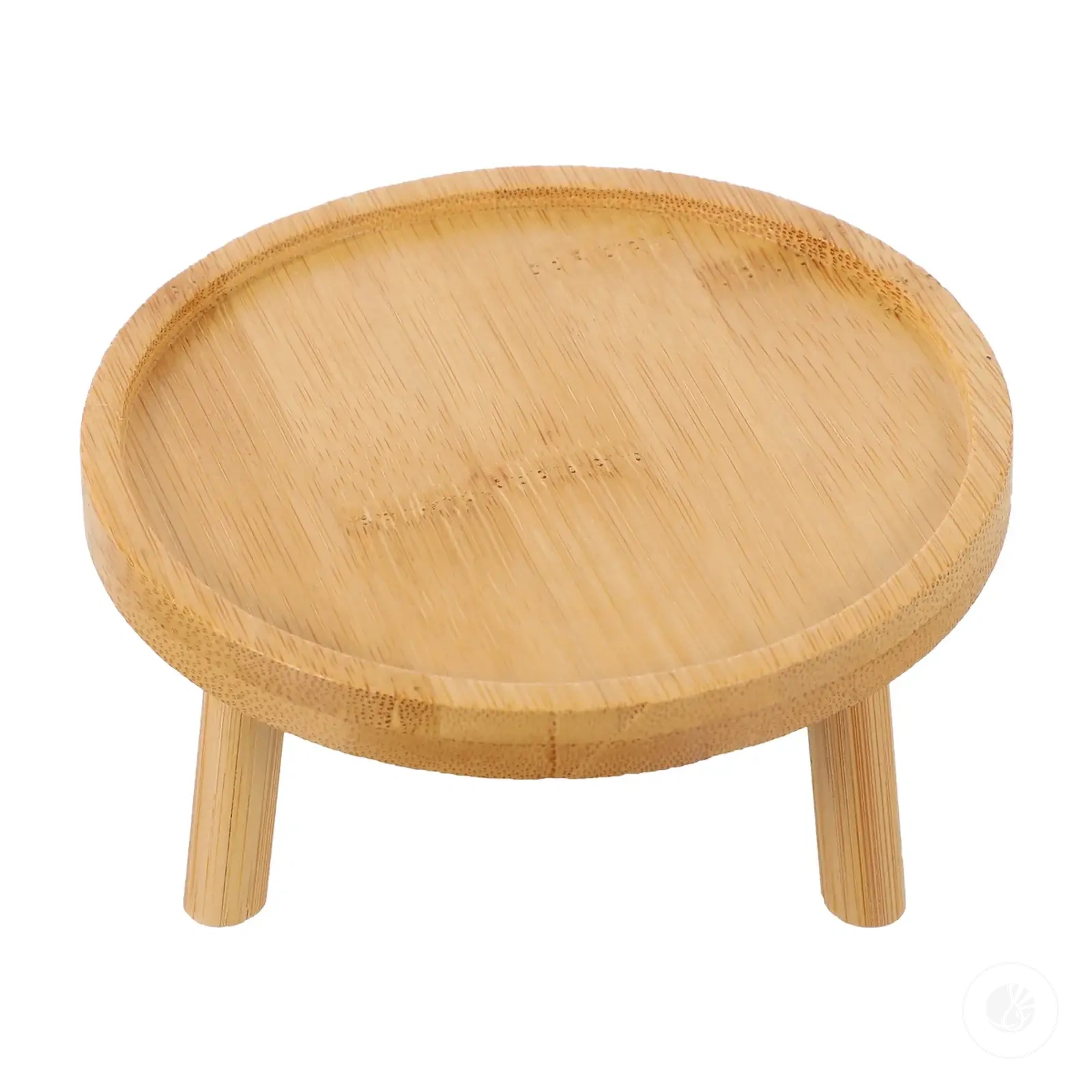
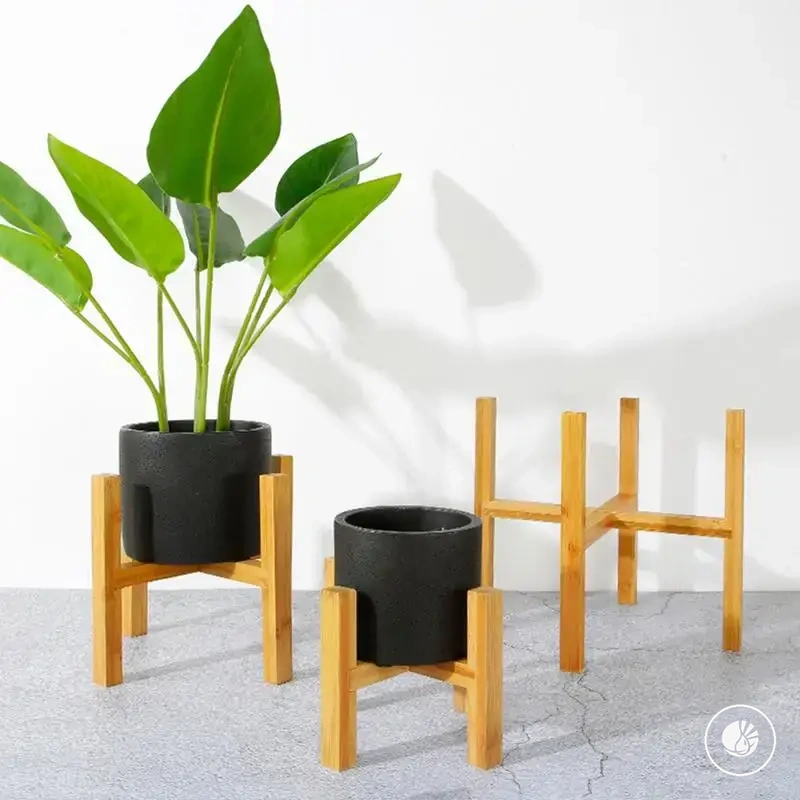
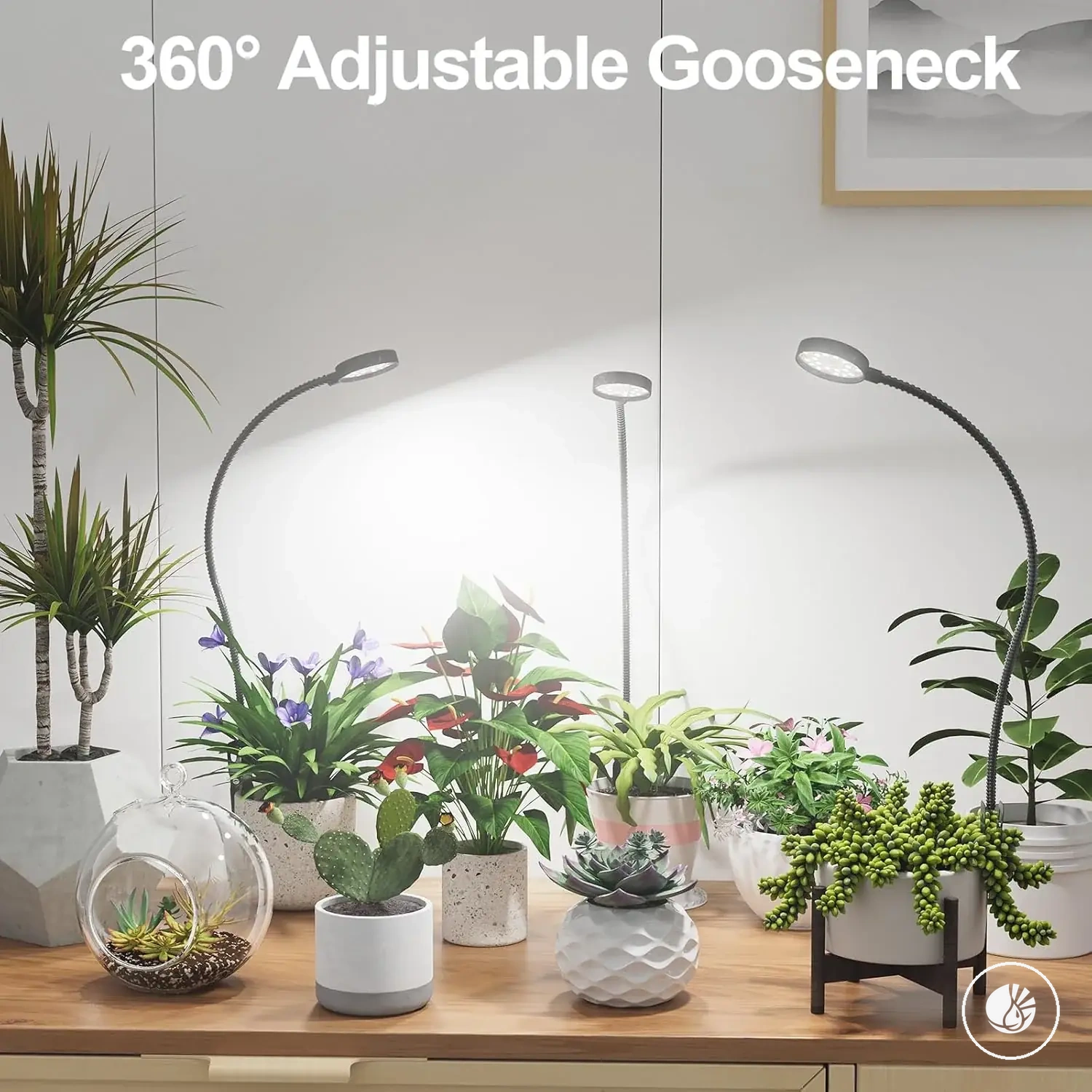
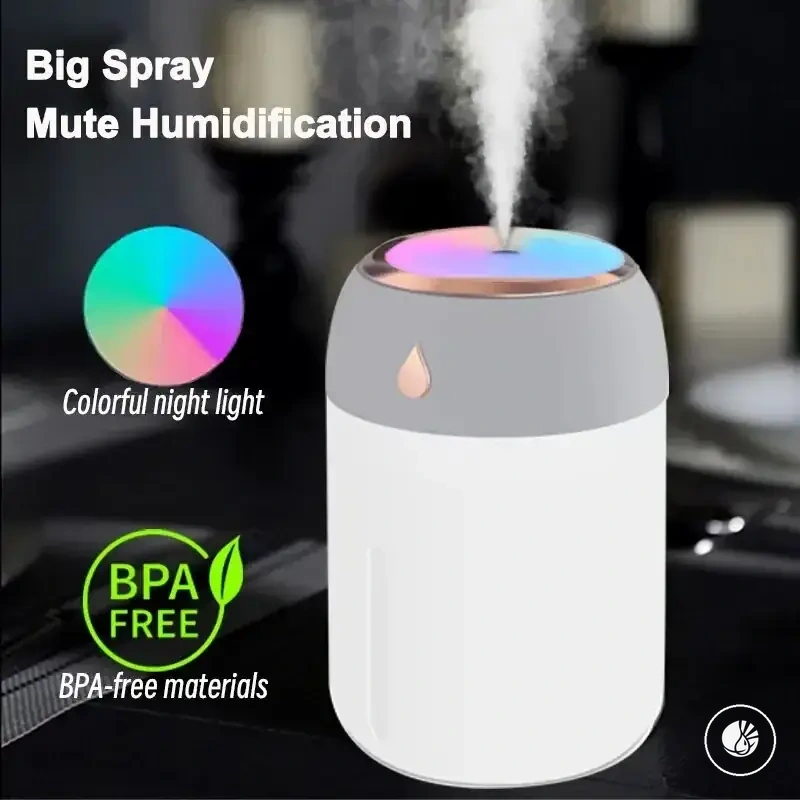
Routine Care Adjustments in Small Apartments
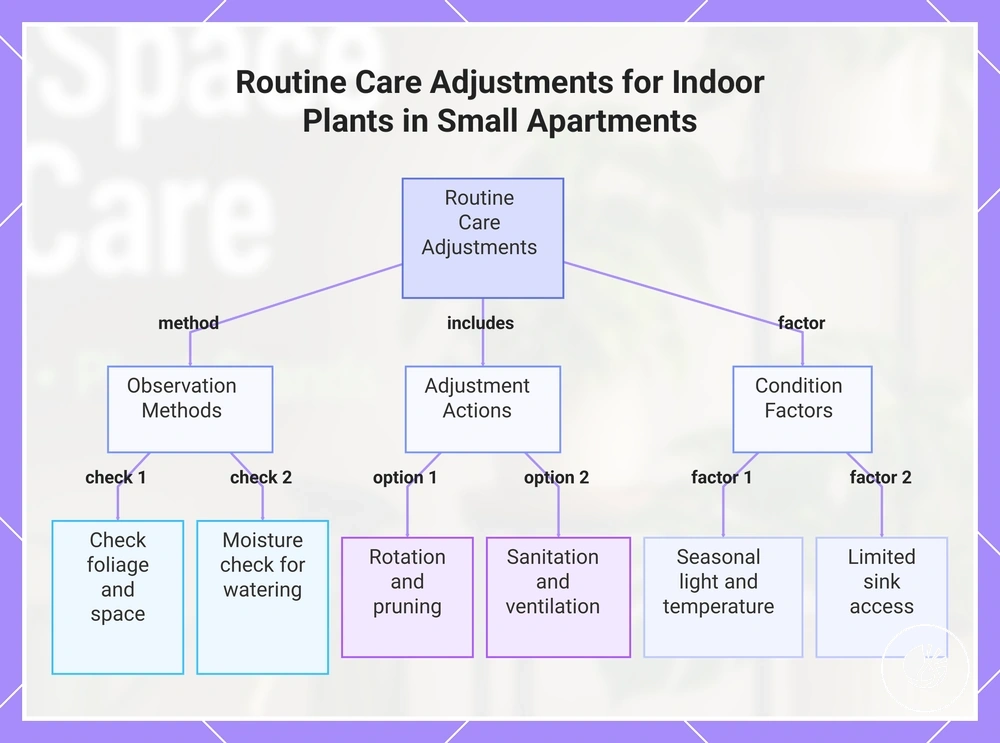
When indoor tropical plants share limited surfaces, light and airflow, routine care in small apartments often requires ongoing adjustment to prevent small setup problems from accumulating. An apartment routine may change as plants grow, placement shifts or room conditions vary, making observation more useful than relying on a fixed pattern.
Routine care depends on inspection and care adjustment rather than an exact schedule. A moisture check can help guide watering decisions because soil drying may vary by pot size, placement and ventilation. Rotation can be useful when available light changes across a shelf, while pruning may help maintain access and airflow between closely placed plants.
After the routine logic is clear, the checklist below can help guide maintenance decisions.
- Inspection: Check foliage, soil surface and growing space for changes that may affect plant care.
- Rotation: Adjust plant position when light exposure becomes uneven.
- Pruning: Reduce excess growth when crowding begins to limit airflow or access.
- Cleaning: Remove leaf dust and maintain surrounding surfaces to support observation and light capture.
- Moisture check: Use soil conditions to support watering decisions when conditions change.
- Spill control and ventilation: Monitor drainage areas and use ventilation windows when room conditions allow.
Apartment conditions may shift with seasonal light changes, heating, cooling or limited sink access. In these situations, routine care may require different watering intervals, more frequent inspection or adjusted cleaning practices. Practical maintenance depends on current conditions rather than treating every apartment setup the same.
Routine care in small apartments is usually easier to manage when inspection, rotation, cleaning and moisture checks remain connected to actual plant conditions. Small adjustments made over time can help keep maintenance manageable within limited space.
The products below are useful examples for comparing available options. Before buying, check that the compatibility criteria, key features, and product details match your needs.
This chart shows the observation methods, adjustment actions, and condition factors that guide routine care for indoor tropical plants in small apartments.
Rotating, Pruning and Cleaning Plants in Tight Areas
Rotating, pruning and cleaning help prevent crowding and uneven growth in tight areas by keeping plant orientation, canopy spread and leaf surfaces easier to manage. Rotation may support more even growth when light reaches one side more consistently, while pruning can help control canopy spread when foliage begins to limit airflow or available space. Cleaning helps remove leaf dust that may reduce light capture and make inspection more difficult.
Local action is usually more effective than large adjustments in compact plant arrangements. Rotation frequency may vary by plant type, growth rate and available light. Pruning frequency can depend on how quickly canopy spread affects airflow, crowding or access angle around nearby plants. Leaf cleaning may be useful when leaf dust accumulates and begins to affect maintenance visibility.
The checklist below supports local maintenance decisions.
- Rotation: Adjust plant orientation when growth becomes noticeably uneven.
- Pruning: Reduce excess growth when canopy spread begins to create crowding.
- Cleaning: Remove leaf dust when it affects observation or light capture.
- Access angle: Maintain enough access to inspect, clean and adjust plants without disrupting the entire setup.
Soil Drying and Humidity Changes in Small Rooms
Soil drying and humidity changes in small rooms depend on monitoring conditions before adjusting care because moisture outcomes can shift as airflow, pot size and plant clustering change. Soil drying may vary by soil volume, pot material and room ventilation, while humidity changes can be influenced by plant density and surrounding air movement.
The checklist below highlights conditions that can affect moisture outcomes over time.
- Pot size: Pot size may influence how quickly soil drying becomes noticeable between care checks.
- Soil volume: Soil volume can affect moisture retention and the watering interval.
- Pot material: Pot material may influence how moisture moves through the container environment.
- Room ventilation: Airflow and room ventilation can affect both soil drying and humidity changes.
- Plant clustering: Plant clustering and plant density may alter local moisture conditions around foliage and soil.
- Humidifier use: Humidifier use may influence humidity changes, especially when limited airflow increases the chance of leaf wetness.
Slow drying may occur when plant clustering, crowding or reduced airflow limit moisture loss around containers. In contrast, fast drying may occur when heat exposure, direct light or stronger airflow increase moisture loss. Because these conditions can change over time, watering interval decisions are usually more reliable when based on observed soil conditions rather than a fixed approach.
Common Small-Space Plant Care Problems to Prevent
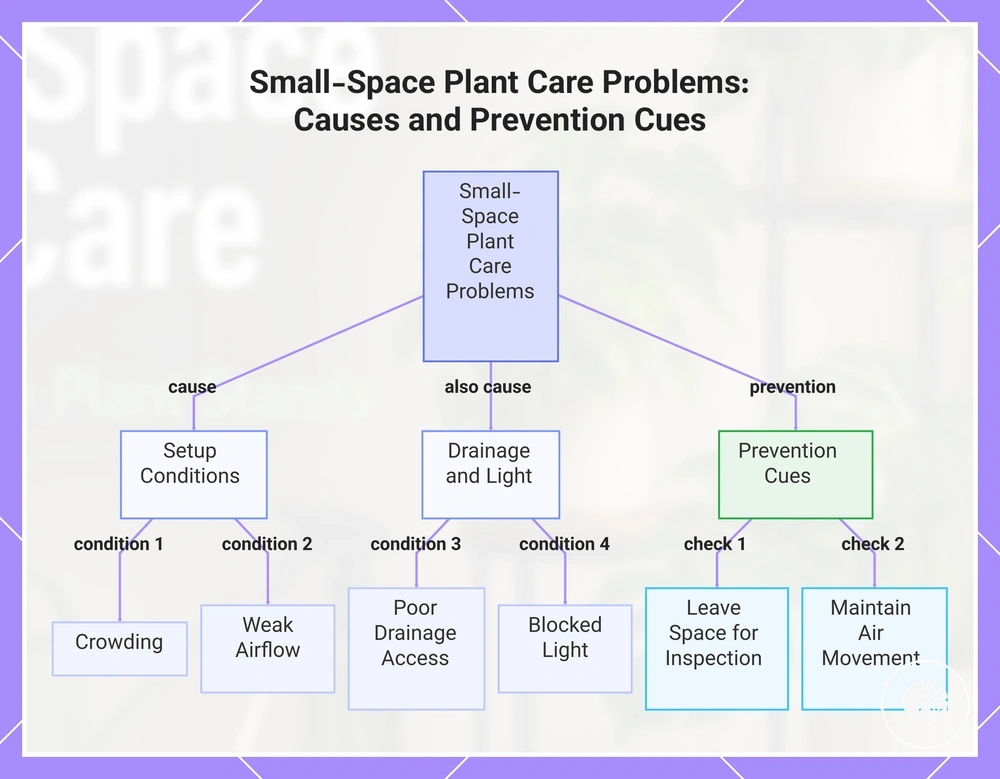
When small-space problems develop, the cause is often a setup condition that increases care risk over time. Crowding, weak airflow, blocked light, poor drainage access, overwatering and unstable placement can make routine observation more difficult, allowing preventable issues to develop before they are noticed.
Space constraints can create recurring risks because plants, containers and surrounding surfaces compete for limited room. Crowding can increase pest risk when dense foliage creates harder-to-inspect areas. Weak airflow may allow moisture to persist longer around plants, while blocked light can reduce consistent exposure across the growing area. Poor drainage access may make excess moisture less visible, which can increase the likelihood of overwatering. Unstable placement can also create a setup problem when containers become difficult to inspect, adjust or maintain safely.
The prevention checklist below focuses on layout-related risks and prevention cues.
- Crowding: Leave enough space for inspection and routine maintenance.
- Weak airflow: Maintain air movement around plants when room conditions allow.
- Blocked light: Check whether nearby plants, shelves or objects reduce available light.
- Drainage access: Keep drainage areas visible enough to monitor moisture conditions.
- Overwatering: Base watering decisions on observed soil conditions rather than convenience or habit.
- Pest risk: Inspect dense foliage and potential pest hiding spots because observation can become more difficult in crowded arrangements.
- Stability: Use stable placement that keeps containers accessible and less likely to shift during care.
A setup condition can increase risk without guaranteeing a specific outcome. Prevention cues are most useful when they help identify layout-related care risks before they become recurring maintenance problems.
This chart shows the setup conditions that cause common small-space plant care problems and the key prevention checklist items to avoid them.
Crowding, Weak Airflow and Pest Risk
When crowding and weak airflow occur in a compact plant area, inspection access may become more difficult and pest risk can increase. Higher plant density, leaf overlap and restricted air movement may create humidity pockets and localized stress conditions that are harder to observe during routine plant care.
The diagnostic checklist below helps identify layout-related risk factors.
- Spacing: Check whether plant density limits visibility between containers and foliage.
- Leaf overlap: Look for leaf contact that reduces inspection access or hides plant surfaces.
- Air path: Confirm that air movement can pass through the growing area rather than stopping at dense foliage.
- Stagnant corner: Identify areas where weak airflow may allow humidity pockets to persist longer.
- Pest hiding areas: Inspect crowded foliage and hard-to-reach spaces where observation is limited.
If crowding, weak airflow and reduced inspection access continue to coincide with persistent symptoms, broader troubleshooting may be appropriate because small-space layout is only one potential contributor to plant stress.
Light Gaps, Overwatering and Poor Placement
When light gaps, overwatering or drainage problems appear in a compact setup, poor placement is often a condition worth checking before changing the entire care routine. Blocked light, uneven light reach, inaccessible saucers and unstable plant positions can create local risks that affect observation, watering decisions and routine maintenance.
The problem-to-adjustment checklist below helps identify placement-related risks and possible setup correction points.
- Blocked light: Check whether nearby plants, shelves or room objects reduce available light.
- Uneven grow light reach: Look for areas where supplemental light reaches some plants more effectively than others.
- Inaccessible saucers: Confirm that drainage access remains visible enough to notice excess moisture.
- Oversized pots: Consider whether container size makes moisture conditions harder to monitor in a limited space.
- Cramped shelf: Check whether shelf arrangement restricts access for inspection, watering or drainage observation.
- Unstable hanging position: Identify hanging placements that may make watering, inspection or routine adjustments more difficult.
Small-space care stability often improves when placement supports consistent observation, drainage access and light distribution. For broader context, see indoor tropical plant care solutions.